Bengaluru's weather makes a balcony usable for much of the year, and in many flats it is the only outdoor space. Yet many balconies end up as storage for drying clothes and old boxes. A balcony works when it is given one clear job, furnished for sun and rain, and kept free of the clutter that has nowhere else to go.
What Should Your Balcony Be For?
Choose its main use first. A balcony trying to be a sit-out, a garden, a drying area and a store room does none of them well.
| Main use | What it needs |
|---|---|
| Sit-out | Comfortable weatherproof seating, shade, a small table, soft light |
| Garden | Planters, drainage, sunlight, a tap nearby |
| Work or reading nook | Shade from glare, a seat, a socket |
| Utility | Drying racks, washing machine space, closed storage |
In flats with two balconies, the usual arrangement is one for utility and one for sitting. Keeping the two uses apart makes both work better.
What Seating Works on a Balcony?
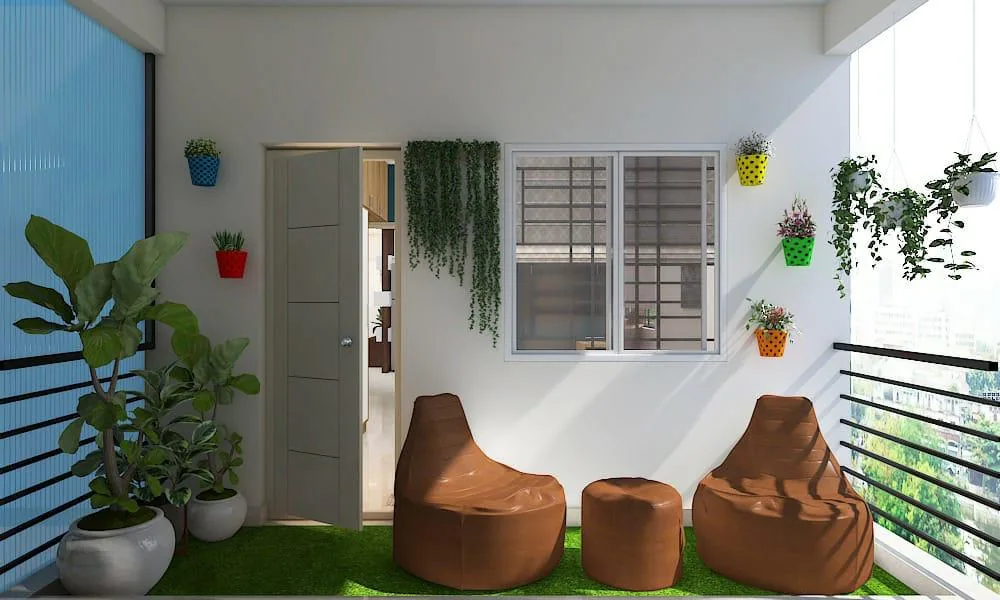
Furniture that tolerates sun, dust and occasional rain. Outdoor-rated rattan or synthetic weave, powder-coated metal, and teak or treated wood last well. Cushions should have removable, washable covers and be brought in during heavy rain.
In narrow balconies, a built-in bench along one wall with storage underneath, or folding chairs, save space. Bean bags in outdoor fabric are light and easy to move.
How Do You Shade a Balcony From Sun and Rain?
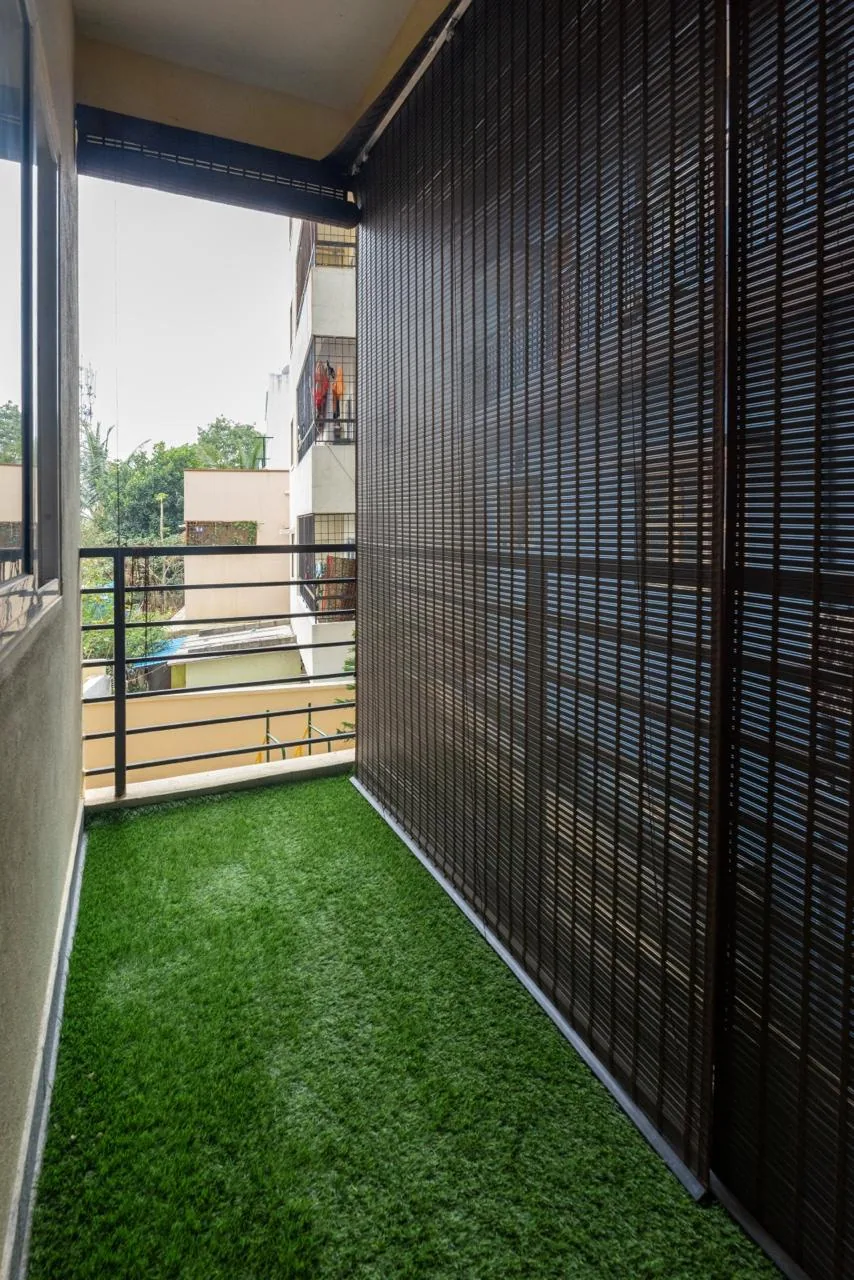
With blinds that can be raised and lowered. Bamboo chick blinds, outdoor roller blinds and PVC blinds all give shade, privacy and some protection from rain blowing in. Choose blinds rated for outdoor use, because indoor blinds fade and rot quickly.
Most societies restrict permanent glass enclosures or grilles that change the building's facade, so check the rules before planning anything fixed. Blinds are usually acceptable because they are removable.
How Should Plants Be Arranged on a Balcony?
Within the balcony's weight and drainage limits. Large, heavy planters are best placed near the edges over supporting walls. Wall-mounted and railing planters save floor space in small balconies. Every planter needs a tray or drainage route, so water does not stain the floor below or drip onto the balcony beneath.
Choose plants for the light the balcony actually gets. A balcony facing strong afternoon sun needs hardy plants; a shaded one suits ferns and foliage plants.
What Storage Works on a Balcony?
Closed, weather-resistant storage, used sparingly. A low cabinet or bench with storage inside, made in a moisture-resistant material, keeps gardening tools and cushions out of sight. Open shelves on a balcony collect dust and rain.
For a utility balcony, a tall unit enclosing the washing machine and cleaning supplies keeps the area tidy. Our guide to utility units covers materials for wet areas.
How Should a Balcony Be Lit?
Softly, with outdoor-rated fittings. A warm wall light or ceiling light is usually enough for an evening sit-out. String lights add atmosphere. Any socket on the balcony should be weatherproof and positioned away from where rain reaches. Plan these with the electrician before the balcony walls are painted.
What Has to Be Checked Before Furnishing a Balcony?
- Drainage: water should run off to the drain without pooling
- Waterproofing: no damp showing on the walls or ceiling of the room below or beside
- Railing safety, especially with children; nothing climbable placed against the railing
- Society rules on enclosures, grilles, blinds and what can be hung outside
Waterproofing, tiling and drainage are civil work, outside what Gunmala Interiors does. If a balcony needs them, that comes first, and we will say so. The existing balcony design cost guide covers budgeting.
How Should You Plan a Balcony?
- Decide its main job
- Check drainage, damp and society rules
- Choose outdoor-rated seating, blinds and fabrics
- Plan planters within weight and drainage limits
- Add weatherproof lighting and sockets
- Keep storage closed and minimal
On a turnkey fit-out, Gunmala Interiors includes balcony furniture, blinds and lighting with the rest of the flat.
Frequently Asked Questions
How can I make my balcony usable?
Give it one main job, such as a sit-out, garden or utility area, furnish it with outdoor-rated pieces, add blinds for sun and rain, and keep clutter out.
What furniture is best for a balcony?
Outdoor-rated rattan or synthetic weave, powder-coated metal, teak or treated wood, with washable cushion covers. Built-in benches with storage and folding chairs save space in narrow balconies.
Which blinds are best for a balcony?
Outdoor-rated bamboo chick blinds, roller blinds or PVC blinds. Indoor blinds fade and rot quickly outside.
Can I enclose my balcony with glass?
Many societies restrict permanent enclosures that change the building facade. Check your society rules first. Removable blinds are usually allowed.
How do I stop planters staining the balcony?
Use trays or a drainage route for every planter, and place heavy planters near the edges over supporting walls.
What should be checked before designing a balcony?
Drainage, any damp in nearby walls or ceilings, railing safety and society rules. Waterproofing and drainage problems are civil work and must be fixed first.
How should a balcony be lit?
With warm, outdoor-rated wall or ceiling lights and weatherproof sockets placed away from where rain reaches.
Can a balcony be both a sit-out and a utility area?
It can, but both work better apart. In flats with two balconies, use one for utility and one for sitting.
Key Takeaways
- Give the balcony one main job.
- Use outdoor-rated furniture, fabrics and blinds.
- Check drainage, damp and society rules before furnishing.
- Every planter needs drainage; heavy ones go near the edges.
- Weatherproof lights and sockets, planned before painting.
See our room-by-room 2BHK plan, or book a site visit to plan your balcony.