A bedroom is lit for three different moments: getting ready in the morning, winding down in the evening, and finding your way at night without waking anyone. A single bright ceiling light serves none of them well. Good bedroom lighting separates them, keeps light out of your eyes when you are lying down, and puts every switch within reach of the bed.
Which Lights Does a Bedroom Need?
| Light | Moment | Notes |
|---|---|---|
| Ambient (cove or soft ceiling light) | Evening, moving around | Dimmable if possible |
| Bedside reading lights | Reading in bed | One per side, individually switched |
| Wardrobe and dressing lights | Getting ready | Neutral white, good colour rendering |
| Night light | Moving at night | Low, warm, near the floor or under the bed |
How Do You Avoid Glare Over the Bed?
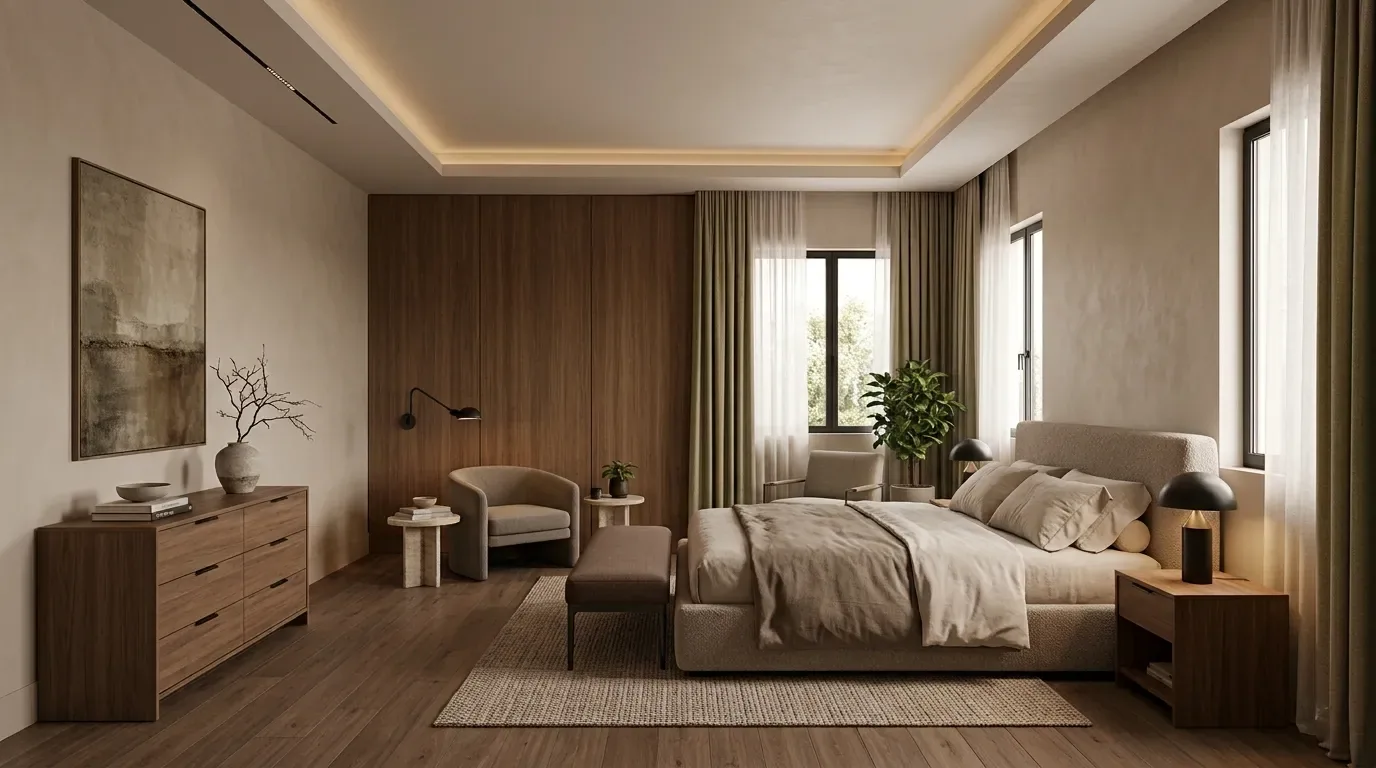
By keeping downlights off the area directly above the bed. Lying down, you look straight up into them. Place downlights over the walkway and the wardrobe instead, and use cove light or wall lights for ambient light near the bed.
What Makes a Good Bedside Reading Light?
A focused light that lights the page without lighting your partner. Wall-mounted adjustable lights or pendants at each side save side-table space; a directional head keeps the light on the book. Each side needs its own switch at the bedside.
Warm or Cool Light in a Bedroom?
Warm white for ambient and reading light, which is calmer in the evening. Use a more neutral white only for the wardrobe and dressing mirror, where colours need to look right. Our lighting guide explains colour temperature and rendering.
How Should Bedroom Lights Be Switched?
- Two-way switching for the main lights, at the door and the bed
- A separate switch for each bedside light
- Dimmers on the cove or ambient light
- A night light on a sensor or a low switch
Smart switches can set an "evening" or "night" scene; our smart switches guide covers what is needed.
Should the Wardrobe Be Lit?
Yes, either a downlight in front of it or lights inside. Sensor strips inside a wardrobe switch on when the door opens, which makes finding clothes easy in the morning without lighting the whole room.
What Should Be Decided Before the Bedroom Is Wired?
- Bed position, so downlights avoid it
- Bedside light type and switch on each side
- Ambient light and dimmer
- Wardrobe and dressing lights
- Night light position
See our bedroom planning guide for the full order of decisions.
Frequently Asked Questions
What lighting does a bedroom need?
Ambient light such as a cove, a reading light at each bedside, wardrobe and dressing lights, and a low night light.
Should a bedroom have downlights over the bed?
No. Lying down you look straight into them. Place downlights over the walkway and wardrobe, and use cove or wall lights near the bed.
What colour light is best for a bedroom?
Warm white for ambient and reading light, with neutral white only at the wardrobe and dressing mirror.
Which reading light is best for a bed?
A wall-mounted adjustable light or pendant on each side, focused on the page, each with its own bedside switch.
Should bedroom lights have dimmers?
A dimmer on the ambient or cove light lets the room go from bright to soft in the evening.
Do I need a night light in the bedroom?
A low warm light near the floor or under the bed lets you move at night without switching on the main lights.
Should the wardrobe have lights?
Yes, a downlight in front or sensor strips inside that switch on when the door opens.
Where should bedroom switches be?
Two-way switches for the main lights at the door and the bed, plus separate bedside switches for reading lights.
Key Takeaways
- Light the bedroom in layers for morning, evening and night.
- Keep downlights away from above the bed.
- Give each side of the bed its own reading light and switch.
- Warm light for rest; neutral light only for dressing.
- Put the main-light switch within reach of the bed.
See our bedroom planning guide, or book a site visit.