A child's room is redesigned by the child every few years, whether you plan for it or not. The furniture that suits a six-year-old (low shelves, a small desk, a playful theme) is outgrown long before the carcass wears out. The best kids' rooms are built around adaptable furniture and neutral bones, with the personality added in things that are cheap to change.
How Do You Design a Kids Room That Lasts?
Fix the expensive things for the long term and the cheap things for now. Wardrobes, desks and beds should suit a teenager as well as a child, with adjustable insides. Themes, colours and characters belong on walls, bedding, rugs and accessories, which can be changed in an afternoon.
| Long term (build once) | Short term (change often) |
|---|---|
| Wardrobe carcass with adjustable shelves and rods | Wall colour or mural |
| Desk at adult-adaptable size | Chair height, desk accessories |
| Bed frame | Bedding, cushions |
| Lighting and sockets | Lamps, decorations |
How Should a Kids Study Table Be Designed?
For posture and for growth. A desk at adult height with an adjustable chair and a footrest suits a child now and later, whereas a child-height desk is outgrown in a few years.
- Depth enough for a laptop or monitor and a book side by side
- Lighting from the side opposite the writing hand, so the hand does not cast a shadow
- Sockets just above the desk, for a lamp, laptop and charger
- Storage: drawers for stationery, shelves above for books, within reach when seated
- Position: near natural light, facing away from the TV or door if focus matters
Our guide on study table design covers materials and sizes.
When Is a Bunk Bed the Right Choice?
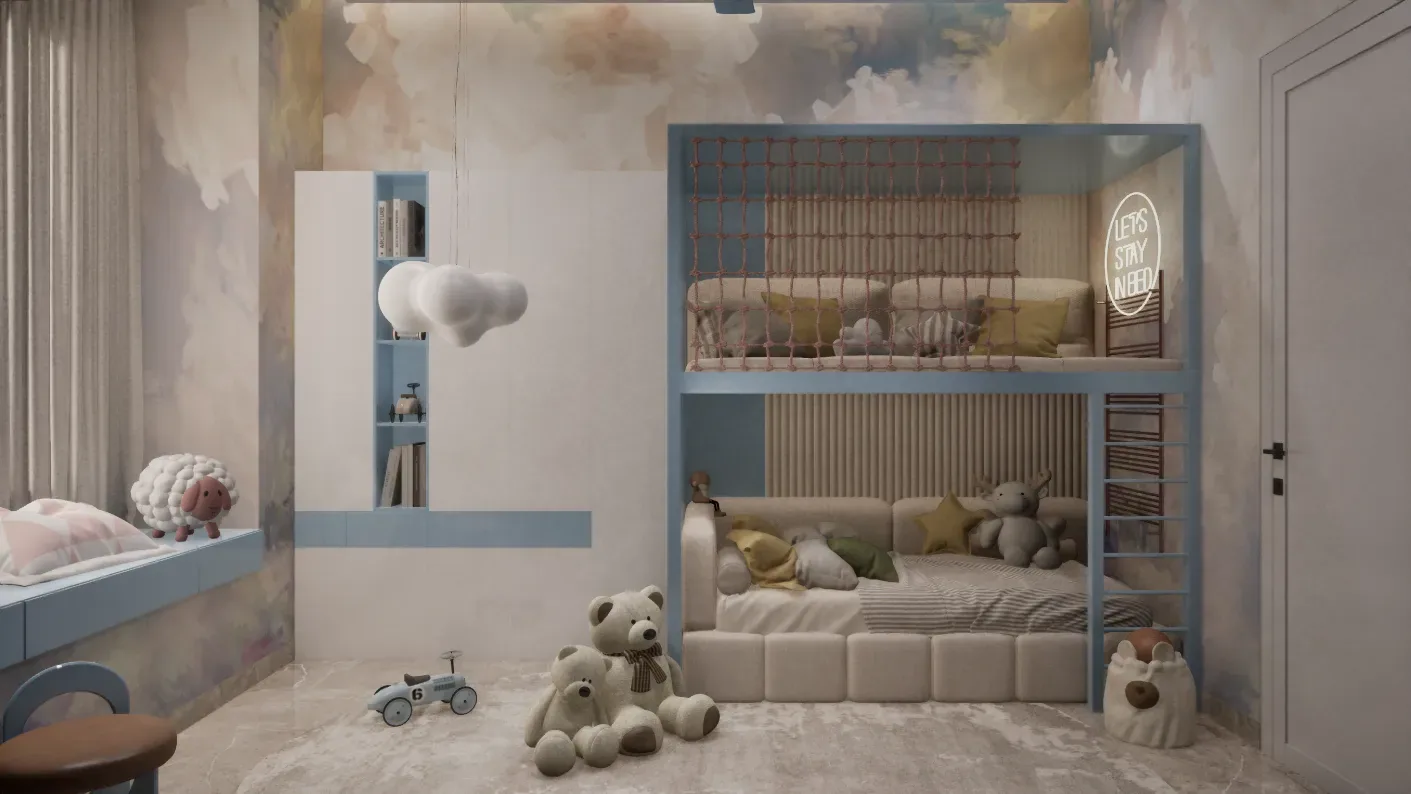
When two children share a small room, or when floor space for play matters more than a second bed. A bunk bed or loft bed frees a large part of the floor.
Safety comes first:
- A guard rail on all open sides of the top bunk
- A sturdy ladder or stairs, ideally stairs with storage for younger children
- Enough headroom above the top bunk to sit up without hitting the ceiling or a fan
- Fixed to the wall for stability
- The top bunk for older children only
Check the ceiling fan position before deciding where the bunk goes. A top bunk under a fan is a hazard.
What Storage Works Best in a Kids Room?
Storage the child can reach and use alone. Low open bins and shelves for toys, drawers that open easily, and hooks at child height make tidying possible for the child, not only the parent.
In the wardrobe, adjustable shelves and hanging rods that move up as the child grows extend its useful life by years. Our guide on modular wardrobe design for a new flat covers adjustable internals.
Which Finishes and Safety Details Matter?
- Rounded edges on desks, beds and shelves
- Washable paint on walls; children draw on them
- Matt or textured laminate, which hides fingerprints and scuffs better than gloss
- Soft-close hinges and drawers to protect fingers
- Tall units fixed to the wall so they cannot tip if climbed
- Socket covers for young children
What Should Be Decided Before Designing a Kids Room?
- The child's age now and the room's use in five to eight years
- One child or two
- Bed type: single, bunk or loft, and the fan position
- Desk position, light direction and sockets
- Wardrobe with adjustable internals
- Where the theme lives: walls and soft furnishings, not woodwork
Gunmala Interiors designs children's rooms as part of the bedroom woodwork on a new flat. For updating existing furniture as a child grows, see kids room furniture renovation.
Frequently Asked Questions
How do I design a kids room that will not be outgrown quickly?
Build wardrobes, desks and beds that suit a teenager as well as a child, with adjustable insides. Put themes and characters on walls, bedding and accessories, which are cheap to change.
What height should a kids study table be?
Adult height with an adjustable chair and a footrest lasts much longer than a child-height desk. Light it from the side opposite the writing hand and add sockets above the desk.
Are bunk beds safe?
With guard rails on all open sides of the top bunk, a sturdy ladder or stairs, enough headroom, wall fixing, and the top bunk used only by older children. Never place a top bunk under a ceiling fan.
How do two children share a room well?
Give each a defined zone: their own wardrobe section, drawers, shelf and bed light. Use two desks or one long desk with separate places, each with its own socket and light.
What storage suits a kids room?
Storage the child can use alone: low bins and shelves for toys, easy drawers, hooks at child height, and a wardrobe with adjustable shelves and rods.
Which finishes suit a kids room?
Washable paint, matt or textured laminate, rounded edges and soft-close hardware. Fix tall units to the wall so they cannot tip.
Should a kids room have a theme?
Keep themes in walls, bedding and accessories rather than built furniture, so the room can change as the child does without rebuilding the woodwork.
Is a loft bed a good idea?
For older children in small rooms, yes. It frees the floor for a desk or play area underneath. Check headroom and fan position.
Key Takeaways
- Build long-term furniture; keep themes in things that are easy to change.
- Adult-height desks with adjustable chairs outlast child-height desks.
- Bunk beds need rails, sturdy access, headroom and no fan above.
- In shared rooms, give each child a zone of their own.
- Round the edges, fix tall units to the wall, use washable paint.
See our guide to modular wardrobe design, or book a site visit to plan your child's room.