A mirror doubles whatever it faces. Facing a window or a well-lit room, it brings in light and makes a small space feel larger. Facing a cluttered corner, a blank wall or a bed, it doubles that instead. Good mirror placement starts with asking what the mirror will reflect from where people usually stand or sit.
What Should a Mirror Reflect?
Light, a view, or something worth seeing twice: a window, a balcony, an artwork, a lit display. Stand where you will usually be (at the door, at the dining table, on the sofa) and check what the mirror will show from there.
Avoid mirrors that reflect the kitchen counter, the shoe rack, a cluttered passage or a television, and think carefully about mirrors facing a bed or the front door if your family follows vastu guidance.
Where Do Mirrors Work Best in a Flat?
| Place | Why it works |
|---|---|
| Foyer | A last look before leaving; makes a narrow entrance feel wider |
| Dining wall | Reflects the table and pendant light; widens a compact dining area |
| Opposite or beside a window | Brings daylight deeper into the room |
| Wardrobe door | Full-length mirror with no extra wall space |
| Dressing area | Practical, with good face lighting |
Full Mirror Wall or a Feature Mirror?
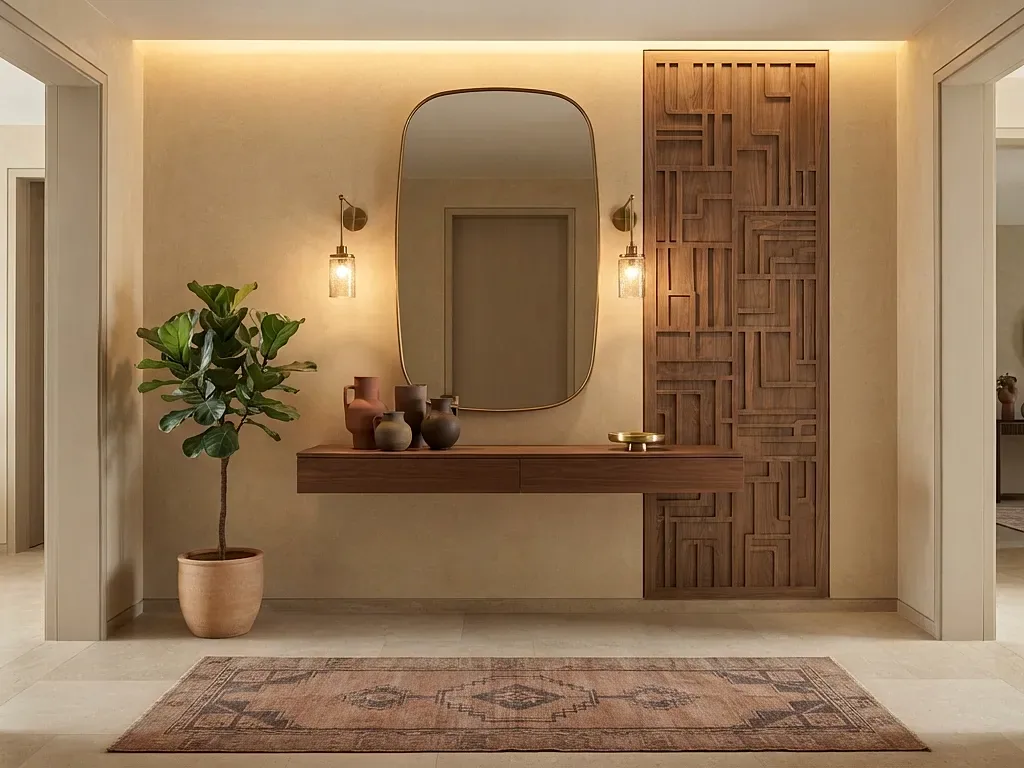
A feature mirror (round, arched, organic or framed) is easier to place well and adds a design element. A full mirror wall makes a dramatic difference to a small space but reflects everything, including clutter and anyone moving through the room, and needs a perfectly flat wall and careful fixing.
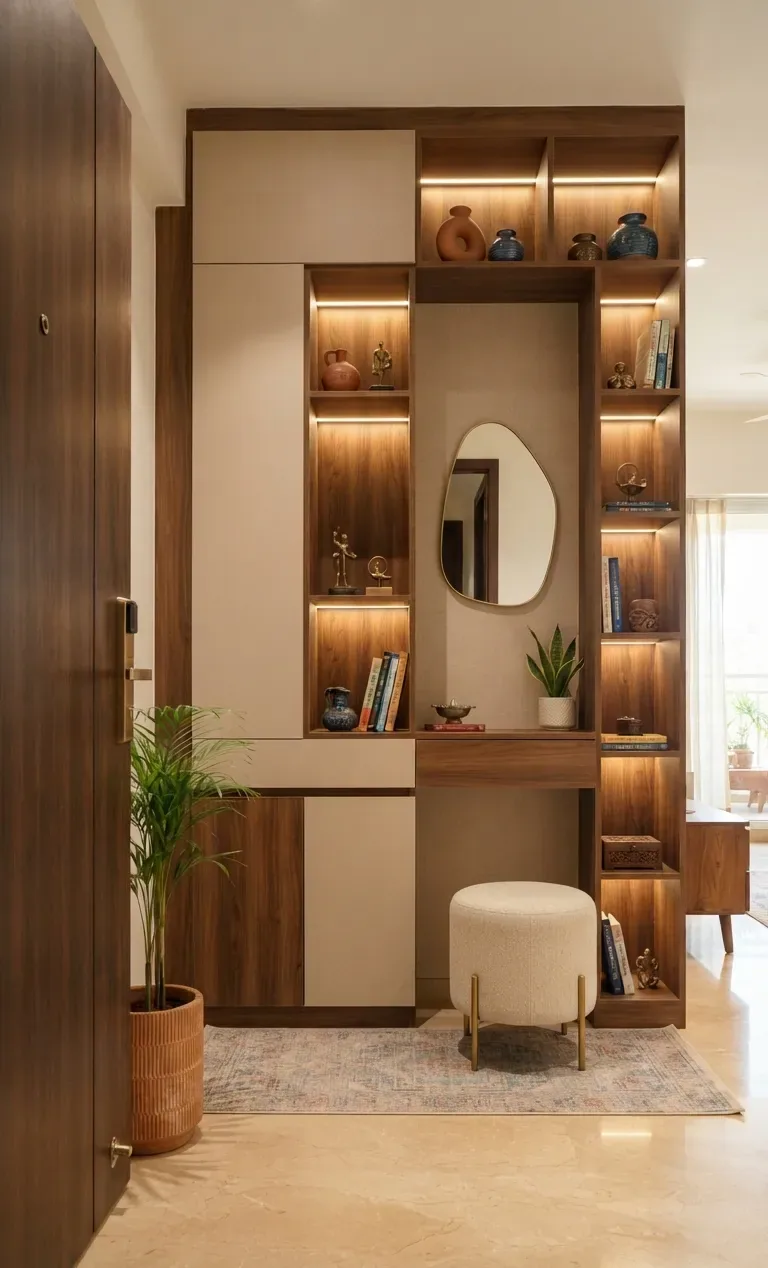
A mirror panel inset into woodwork, such as within a foyer unit or between shelves, is often a good middle ground.
Where Should a Mirror Go in a Bedroom?
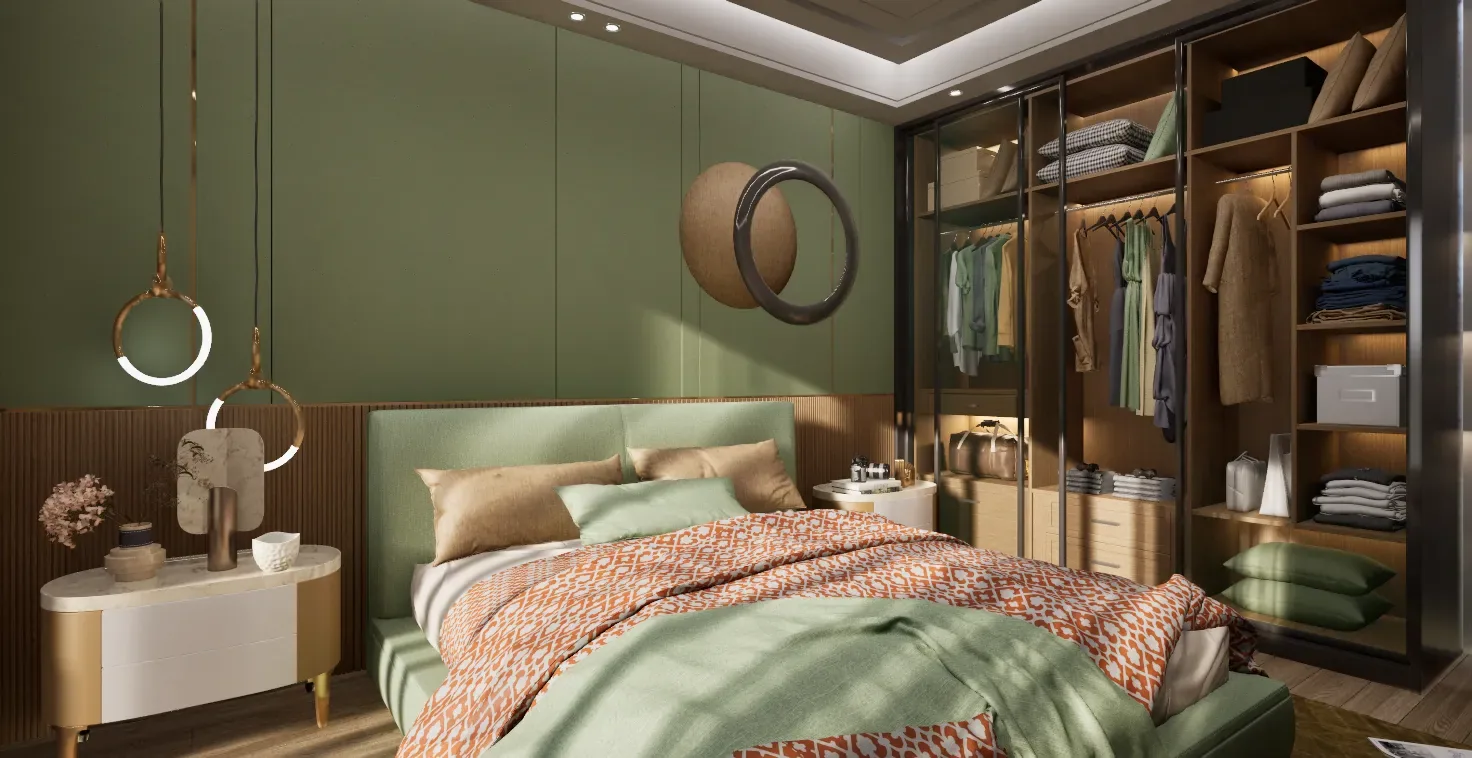
On a wardrobe door, in a dressing area, or on a wall that does not face the bed. A full-length mirror on the inside or outside of a wardrobe door saves wall space. Decorative mirrors above a side table or headboard wall add light without facing the bed directly.
How Should Large Mirrors Be Fixed Safely?
- Mechanical fixings or a proper mounting system, not adhesive alone, for large mirrors
- Safety-backed mirror glass, which holds together if broken
- Polished or framed edges, with no sharp corners in walkways
- A dry wall; damp behind a mirror causes silvering to blacken from the edges
Our guide on loose and cracked wardrobe mirrors covers what goes wrong.
How Should a Mirror Be Lit?
For a mirror used for dressing, light from both sides at face height, or a backlit mirror. For a decorative mirror, a wall washer or cove above adds a glow. Plan the points before painting. Our guide to dressing table design covers mirror lighting.
What Should Be Checked Before Fixing a Mirror?
- What it reflects from where people stand and sit
- Feature mirror, inset panel or full wall
- Wall is flat and dry
- Safety-backed glass and proper fixings
- Lighting points, if needed
Gunmala Interiors builds mirrors into foyer units, wardrobes and dressing areas as part of the woodwork. See our foyer design guide.
Frequently Asked Questions
Where should a mirror be placed in a flat?
Where it reflects light, a view or something worth seeing: the foyer, a dining wall, beside a window, on a wardrobe door or in a dressing area.
Does a mirror make a room look bigger?
Yes, when it reflects light or a view. A mirror facing clutter or a blank wall doubles that instead.
Is a full mirror wall a good idea?
It makes a dramatic difference in small spaces but reflects everything, needs a perfectly flat wall and careful fixing. A feature mirror or inset panel is easier to get right.
Where should a mirror go in a bedroom?
On a wardrobe door, in a dressing area, or on a wall that does not face the bed.
How should a large mirror be fixed?
With mechanical fixings or a mounting system rather than adhesive alone, using safety-backed glass with polished or framed edges, on a dry wall.
Why do mirror edges turn black?
Damp behind or around the mirror damages the silvering from the edges. Fix mirrors only on dry walls.
Should a mirror face the front door?
Many families following vastu avoid it. It also often reflects the shoe area, so a mirror on a side wall of the foyer is usually better.
How should a foyer mirror be lit?
With lights on both sides at face height, or a backlit mirror, so the face is lit evenly.
Key Takeaways
- Place mirrors by what they reflect from where people stand.
- Foyers, dining walls and beside windows suit mirrors best.
- Inset or feature mirrors are easier to get right than full walls.
- Use safety-backed glass, mechanical fixings and a dry wall.
- Light dressing mirrors from both sides.
See our foyer design guide, or book a site visit.