Indian cooking produces more smoke, oil and steam than most chimney marketing assumes. Tadka, deep frying and pressure cooking every day need extraction that pulls hard and handles grease. The right chimney is chosen for that, and then planned into the kitchen: its size relative to the hob, its height, and a duct route that the wall units are designed around.
Ducted or Ductless Chimney?
| Ducted | Ductless (recirculating) | |
|---|---|---|
| How it works | Pulls smoke and air outside through a duct | Filters air through carbon and returns it to the kitchen |
| Effectiveness for Indian cooking | High | Lower; heat and moisture stay in the kitchen |
| Needs | An outside wall or window route for the duct | Carbon filters replaced regularly |
For daily Indian cooking, a ducted chimney is strongly preferred. Plan the duct route to the outside early, because it passes through or above the wall units.
How Much Suction Does an Indian Kitchen Need?
More than a light-cooking kitchen. Suction is quoted in cubic metres per hour. Heavier frying and larger kitchens need higher suction; open kitchens need more still, because smoke spreads into the living area. A long duct with many bends reduces real-world suction, so a short, straight duct matters as much as the rated number.
Baffle, Mesh or Filterless?
- Baffle filters: steel panels that change the airflow direction to separate oil; suited to heavy Indian cooking; washable
- Mesh filters: layered mesh; clog quickly with oily cooking; need frequent cleaning
- Filterless (auto-clean): oil collects in a removable cup; less cleaning, but the cup and internals still need attention
Whatever type you choose, clean it on the schedule the manufacturer recommends. A clogged chimney pulls far less than its rating.
What Size Should the Chimney Be, and How High?
At least as wide as the hob, so smoke from the outer burners is caught. Mount it at the height the manufacturer recommends above the hob: too high and it misses smoke, too low and you hit your head and it gets greasy faster.
How Is the Chimney Planned Into the Kitchen?
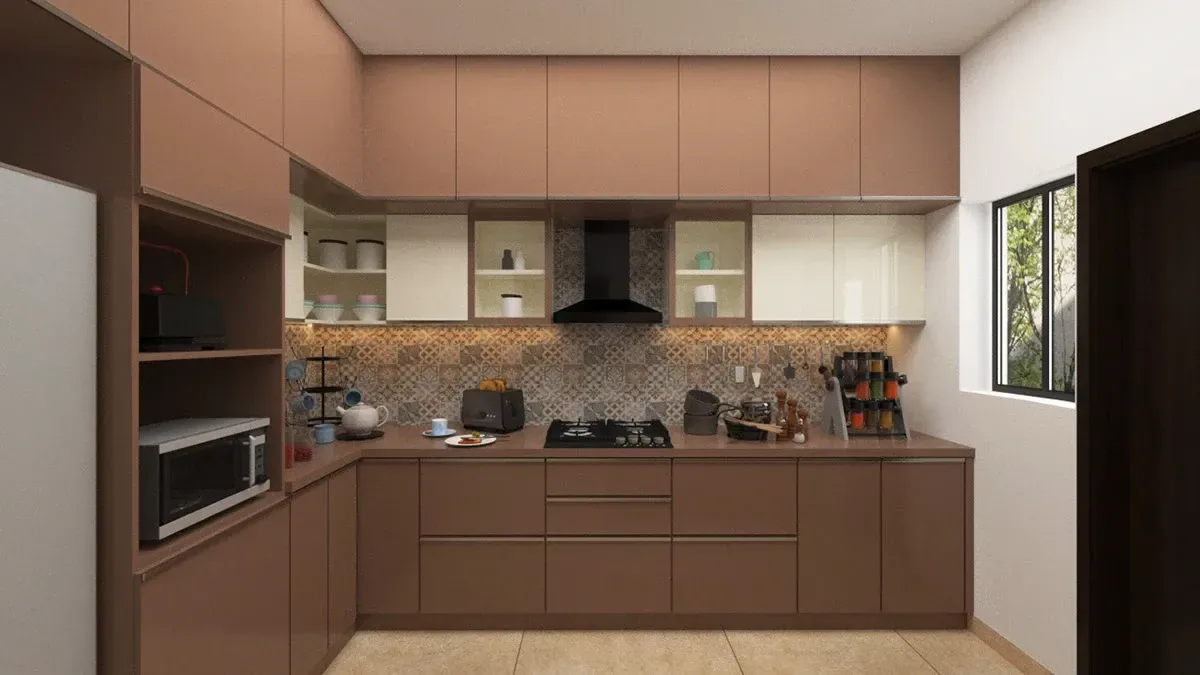
Before the wall units are designed. The chimney decides the gap between wall units above the hob, the duct route through or above them, and the position of its power point. A duct running through a wall unit takes that cabinet's space; a duct above the units needs a loft or ceiling detail to hide it.
How Noisy Is a Kitchen Chimney?
Noise rises with suction. In an open kitchen, noise reaches the living room, so look at the rated noise level as well as suction. A shorter duct lets a chimney run at a lower speed for the same effect. Our guide to open kitchens covers smoke and noise in open layouts.
How Should a Chimney Be Maintained?
Clean filters or the oil cup regularly, wipe the body and the area around it, and have the motor and duct serviced periodically. Grease on the cabinets near the chimney also needs attention; our guide on heat and grease damage near the hob explains what happens when it is ignored.
What Should Be Decided Before Choosing a Chimney?
- Ducted, with a route to the outside
- Suction for your cooking and kitchen type
- Filter type you will maintain
- Width matching or exceeding the hob
- Mounting height
- Power point and duct planned with the wall units
On a turnkey fit-out, Gunmala Interiors plans the chimney position, duct route and power point with the kitchen woodwork. See our kitchen planning guide.
Frequently Asked Questions
Which chimney is best for Indian cooking?
A ducted chimney with good suction and either baffle filters or a filterless auto-clean design, at least as wide as the hob, with a short straight duct to the outside.
Ducted or ductless chimney?
Ducted, for daily Indian cooking. Ductless chimneys recirculate air through carbon filters and leave heat and moisture in the kitchen.
Are baffle filters better than mesh?
For oily Indian cooking, usually yes. Baffle filters separate oil well and are washable; mesh filters clog quickly.
Is a filterless chimney maintenance-free?
No. Oil collects in a cup that must be emptied, and internals still need periodic cleaning and servicing.
How wide should a kitchen chimney be?
At least as wide as the hob, so smoke from the outer burners is captured.
How high should a chimney be above the hob?
At the height the manufacturer recommends. Too high misses smoke; too low gets greasy and is easy to hit.
Does duct length affect chimney performance?
Yes. Long ducts with many bends reduce real suction. A short, straight duct to the outside works best.
When should the chimney be planned?
Before the wall units are designed, because it sets the gap above the hob, the duct route and its power point.
Key Takeaways
- Choose a ducted chimney for daily Indian cooking.
- Baffle or filterless designs handle oil better than mesh.
- Match or exceed the hob width; mount at the recommended height.
- Keep the duct short and straight.
- Plan the chimney before the wall units are designed.
See our kitchen planning guide, or book a site visit.