Indian kitchens wash large, heavy vessels: kadhais, pressure cookers, big steel plates and tawas. A shallow designer sink that looks good in a catalogue fills up with one kadhai. Choosing a sink for an Indian kitchen starts with the biggest vessel you wash, then the material and how it sits in the counter.
How Big and Deep Should the Sink Be?
Big enough for your largest vessel to lie flat, and deep enough to stop splashing. Measure your biggest kadhai or pressure cooker and check it fits the bowl with room to scrub. Deeper bowls reduce splashing onto the counter and backsplash.
Single Bowl, Double Bowl or With a Drainboard?
| Type | Suits | Watch for |
|---|---|---|
| Large single bowl | Large vessels; most Indian kitchens | No separate rinsing area |
| Double bowl | Washing and rinsing separately | Each bowl may be too small for a kadhai |
| Bowl with drainboard | Drying vessels beside the sink | Takes counter length |
| Bowl plus small prep bowl | Vegetable washing while the main bowl is in use | Main bowl must still be large |
Stainless Steel or Quartz Composite?
- Stainless steel: durable, handles heavy vessels and heat, easy to maintain; scratches over time, which become a patina; choose a good grade and thickness
- Quartz or granite composite: comes in colours, quieter, scratch-resistant; can chip if a heavy vessel is dropped; lighter colours can stain
For heavy daily Indian cooking, a good stainless steel sink is the most forgiving. A dark composite suits households that want a colour-matched look.
Top-Mount or Undermount?
A top-mount sink sits on the counter with its rim visible; it is easy to fit and replace. An undermount sink is fixed below a stone counter, so you can wipe crumbs and water straight in. Undermount needs a stone counter with a polished cut-out edge, and is harder to replace later.
The sink model must be chosen before the counter is cut, because the cut-out is made to that model.
Which Tap Suits an Indian Kitchen Sink?
A tall, swivelling tap with enough height to fill and rinse large vessels, ideally with a pull-out spray. Check the tap reaches the whole bowl. Tap and plumbing connections are the plumber's work; the counter cut-out and tap hole are planned with the counter.
What Should the Cabinet Under the Sink Be Like?
Built from moisture-resistant board with sealed edges, open at the back for the pipes, with no drawers where the trap runs. A small leak under a sink is the most common cause of a swollen kitchen cabinet. Our guide to kitchen cabinet design covers the sink unit.
Where Should the Sink Go?
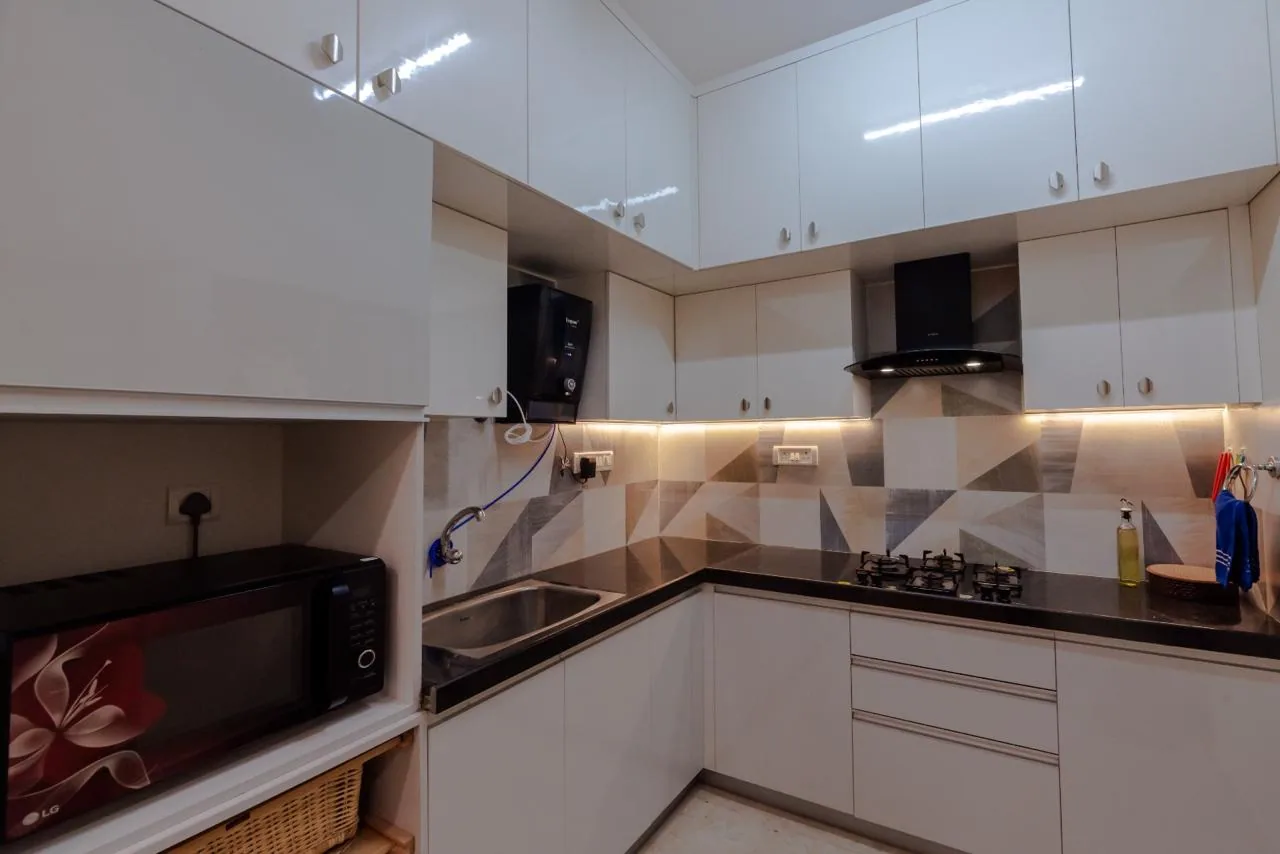
Where the plumbing point is, in most flats, often under the window. Leave counter space on both sides: one for dirty vessels, one for clean or for preparation, and keep a clear stretch between the sink and the hob. Moving the plumbing point is plumbing work outside a modular kitchen's scope.
What Should Be Decided Before the Counter Is Cut?
- Sink size, depth and bowl layout
- Material
- Top-mount or undermount
- Tap type and hole position
- Counter space on either side
On a turnkey fit-out, Gunmala Interiors plans the sink, cut-out and sink unit with the kitchen; the plumber makes the connections. See our kitchen planning guide.
Frequently Asked Questions
Which sink is best for an Indian kitchen?
A large, deep single bowl in a good stainless steel, big enough for your largest kadhai or pressure cooker to lie flat.
Single or double bowl sink?
A large single bowl suits most Indian kitchens because it fits large vessels. Double bowls help separate washing and rinsing but each bowl may be too small.
Is a quartz sink better than stainless steel?
Quartz composite is quieter, scratch-resistant and comes in colours, but can chip if a heavy vessel is dropped. Stainless steel is the most forgiving for heavy daily use.
Should I choose an undermount sink?
If you have a stone counter and want to wipe straight into the sink. It needs a polished cut-out and is harder to replace than a top-mount sink.
When should the sink be chosen?
Before the counter is cut, because the cut-out is made to fit that specific model.
What tap suits an Indian kitchen sink?
A tall swivelling tap, ideally with a pull-out spray, that reaches the whole bowl and clears large vessels.
Why do cabinets under the sink swell?
Small leaks and splashes reach the board edges. Use moisture-resistant board with sealed edges and check for leaks regularly.
Can the sink position be moved?
Moving the plumbing point is plumbing work, outside a modular kitchen's scope. Most kitchens are designed around the existing point.
Key Takeaways
- Size the sink for your largest vessel.
- A large single bowl suits most Indian kitchens.
- Stainless steel is the most forgiving for heavy use.
- Choose the sink before the counter is cut.
- Build the sink cabinet from moisture-resistant board.
See our guide to choosing a chimney, or book a site visit.