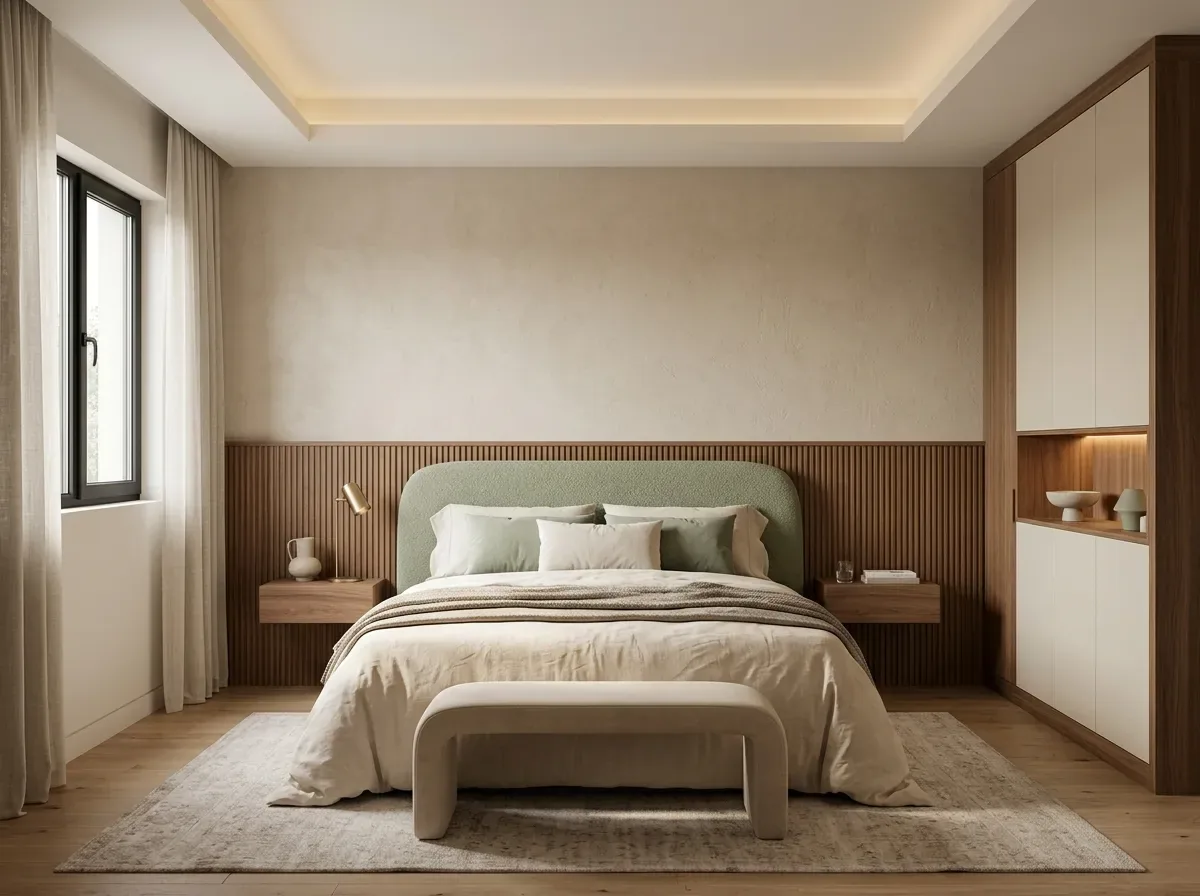
Fluted panelling is the most requested wall feature of the last few years: vertical grooves or slats that add rhythm, warmth and shadow to a flat wall. It works best as one deliberate surface, behind a bed or a TV, where light can rake across the grooves. The practical questions are the ones the pictures leave out: which material, what happens to dust in the grooves, and what the wall behind it is doing.
What Is the Difference Between Fluted and Slatted Panelling?
Fluted panels are a single board with rounded or square grooves cut or moulded into its face. Slatted panelling is made of separate strips fixed with gaps between them, often over a dark backing. From across a room they look similar; up close they behave differently.
| Fluted panel | Slatted panelling | |
|---|---|---|
| Construction | Grooves in one board | Separate strips with gaps |
| Look | Softer, continuous rhythm | Deeper shadows, more depth |
| Cleaning | Shallow grooves, easier | Gaps collect more dust |
| Acoustics | Modest effect | Can soften sound with felt backing |
| Hiding wiring | Behind the panel | Behind the slats and backing |
Which Material Should Fluted Panels Be Made From?
| Material | Finish options | Strengths | Watch for |
|---|---|---|---|
| MDF or HDHMR, routed | PU paint, laminate wrap, veneer | Crisp profiles, any colour | Edges and grooves must be sealed against moisture |
| Laminate-faced fluted boards | Woodgrain and solid colours | Durable, wipeable, consistent | Fewer profile choices |
| Veneer | Natural wood grain, polished | Richest look | Needs polishing care; marks more easily |
| WPC or PVC | Printed woodgrain, solid colours | Moisture resistant, light | Can look less natural up close |
| Solid wood slats | Oiled or polished | Authentic, repairable | Movement with humidity; needs a stable fixing |
For most bedroom and living room walls, a board-based panel with a laminate or PU finish is the practical balance. WPC is worth considering on walls that see moisture.
Where Does Wall Panelling Work Best?
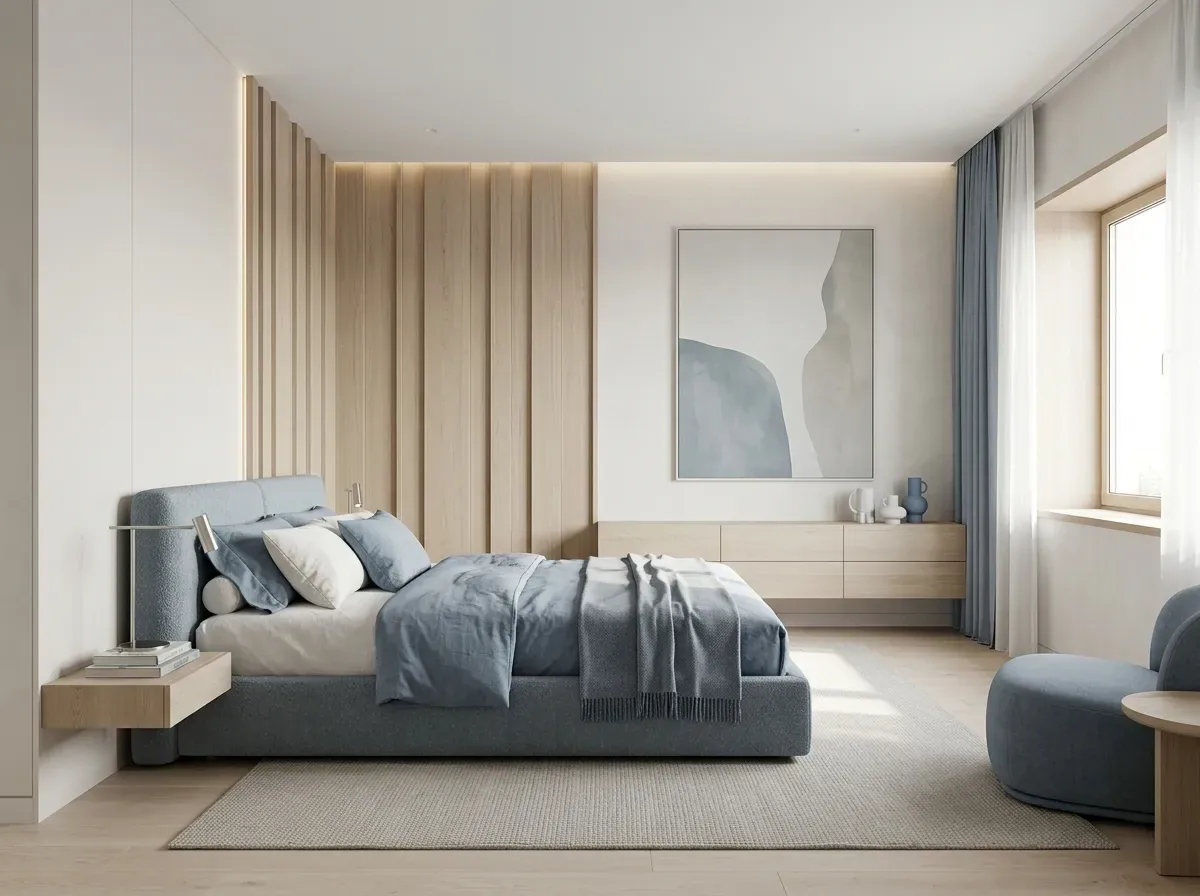
- Behind the bed, as the headboard wall, often stopping below the ceiling or running into side tables
- The TV wall, where it can hide wiring and frame the screen
- A foyer wall or partition, as the first thing seen on entering
- A partial band along a wall, as a wainscot at sitting height
Panelling looks best when light rakes across it: a cove above, a wall washer, or a side window. That is what makes the grooves cast shadows. Flat light straight onto it makes it look like a printed surface.
How Does Panelling Work on a TV Wall?
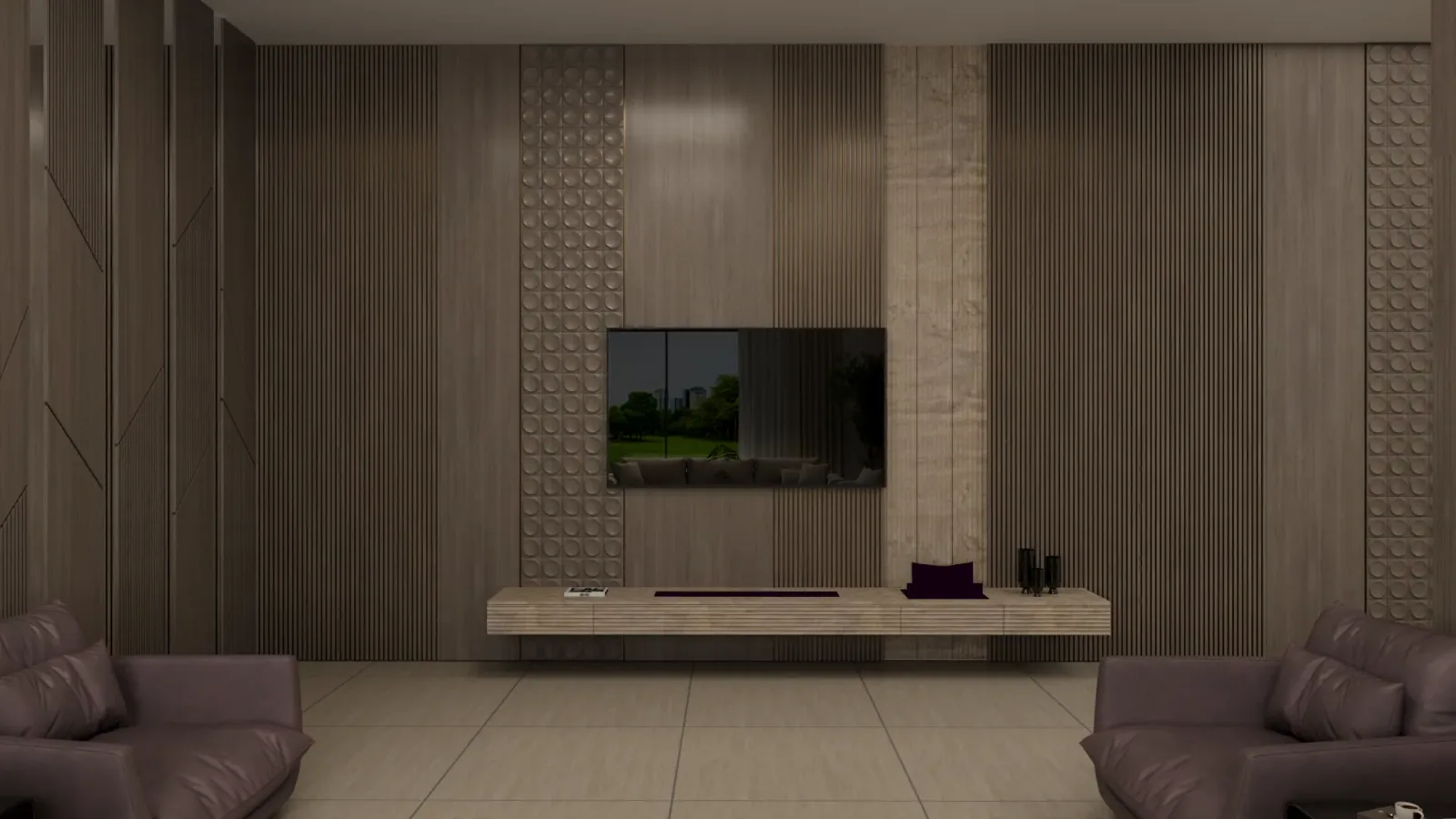
Very well, because it solves the wiring problem. Cables from the TV to the set-top box, speakers and router can run behind the panel, with a removable section or a cable channel for access.
Plan the TV height, the console, the power and data points and the cable route before the panelling is drawn. The TV mounting needs solid backing behind the panel; a heavy TV fixed only to a thin panel will pull away over time.
Do Fluted Panels Collect Dust?
Yes, more than a flat wall. Every groove is a ledge for dust, and in Bengaluru, with open windows and construction around many newer areas, that is a real maintenance point.
- Shallower, rounded grooves are far easier to clean than deep, sharp-edged ones
- Vertical fluting collects less than horizontal grooves, which act as shelves
- A soft brush or vacuum brush attachment once a week keeps it clean
- Matt and woodgrain finishes hide dust better than gloss
Ask to touch a sample and run a finger along the groove. If it is hard to reach the bottom, it will be hard to clean.
What Should Be Checked About the Wall Behind the Panelling?
That it is dry. Panelling fixed over a damp wall hides the damp, traps it, and lets it work into the back of the board, where it swells and grows mould unseen. Outside walls that take monsoon rain and walls shared with a bathroom are the ones to check.
If there is damp, the source has to be fixed first. That is civil and waterproofing work, which comes before any interior finish and is outside what Gunmala Interiors does; we will flag it during the site visit. On sound walls, a moisture-resistant board, sealed edges and a small air gap behind the panel are good practice.
Will Fluted Panelling Look Dated?
Any strong trend will eventually date. Fluting is likely to age best when it is used on one wall, in a natural wood tone or a quiet colour, in proportion to the room. It ages worst when it covers several walls, in gloss, in a strong colour, or alongside several other feature finishes in the same room.
One way to keep it timeless is to use it where it does a job: hiding wiring on the TV wall, forming the headboard, or dividing a space. Panelling with a purpose reads as architecture; panelling for its own sake reads as decoration.
What Should Be Decided Before Panelling Is Made?
- Which wall, and whether it runs full height or partial
- Fluted board or separate slats
- Material and finish, seen as a real sample
- Lighting that will rake across it
- Wiring, switches and sockets that must pass through or sit on it
- Backing for a TV or wall-mounted items
- The wall is dry and sound
Gunmala Interiors builds panelling as part of the woodwork, drawn together with the lighting and electrical plan. Our guide to wall panelling and jaali renovation covers updating panelling that already exists.
Frequently Asked Questions
What is a fluted panel?
A board with vertical grooves cut or moulded into its face, used to give a wall rhythm and shadow. It differs from slatted panelling, which uses separate strips fixed with gaps between them.
Which material is best for fluted panels?
For most bedroom and living room walls, MDF or HDHMR with a laminate or PU finish balances crisp profiles and durability. Laminate-faced fluted boards are the most wipeable. WPC suits walls that may see moisture. Veneer gives the richest look but needs more care.
Where should fluted panelling be used?
On one feature wall: behind the bed, on the TV wall, in the foyer or as a partial band. It looks best when light from a cove, wall washer or side window rakes across it.
Do fluted panels collect dust?
Yes, more than a flat wall. Shallow, rounded, vertical grooves in a matt finish are easiest to keep clean. A soft brush or vacuum brush attachment once a week is usually enough.
Can fluted panels hide TV wiring?
Yes. Cables can run behind the panel with a removable section or cable channel for access. The TV mounting needs solid backing behind the panel, not just the panel itself.
Can panelling be fixed on a damp wall?
No. Panelling over damp traps the moisture, hides it and lets the board swell and grow mould from behind. Fix the source of the damp first, then use a moisture-resistant board with sealed edges.
Will fluted panelling go out of style?
It ages best on one wall, in a natural wood tone or quiet colour, where it does a job like hiding wiring or forming a headboard. It ages worst across several walls, in gloss or bright colours.
Is WPC panelling good for homes?
WPC is moisture resistant and light, which suits walls that may see some damp. Up close, printed woodgrain can look less natural than laminate or veneer, so see a sample on the wall first.
Key Takeaways
- Fluting works as one deliberate wall, with light raking across it.
- Board-based panels with laminate or PU suit most walls; WPC suits damp-prone ones.
- Shallow, rounded, vertical grooves collect less dust and clean more easily.
- Never panel over damp. Fix the source first.
- On a TV wall, plan the cable route and solid backing before drawing.
- Panelling with a purpose ages better than panelling for decoration.
See our guide to false ceiling design for the lighting that brings panelling out, or book a site visit.