Most Bengaluru apartments are not built with a pooja room, so the mandir has to find a place in a room that also does something else. That is a design brief, not a compromise. A well-planned pooja unit in a living or dining corner can be calm, dignified and practical, provided three things are solved: where it goes, how the heat and smoke of a daily diya are handled, and where everything else used for pooja is kept.
Where Can a Mandir Go in a Flat Without a Pooja Room?
Several places work. Each has a trade-off.
| Location | Works well because | Watch out for |
|---|---|---|
| A living room corner | Space to stand and sit in front of it | Keep it away from the TV and shoe storage |
| The dining area | Quiet, near the kitchen for offerings | Enough clearance from the dining chairs |
| Beside or within the TV unit | Uses one wall efficiently | Needs a clear visual separation from the TV |
| A foyer niche | Greets you on entering | Away from the shoe unit |
| A wall-mounted unit in a bedroom | Private, uses little floor | Many families prefer to avoid bedrooms |
Many families follow vastu guidance on which direction the mandir should face. If yours does, settle the direction first and let it decide the wall; the design can work to any wall once that is known.
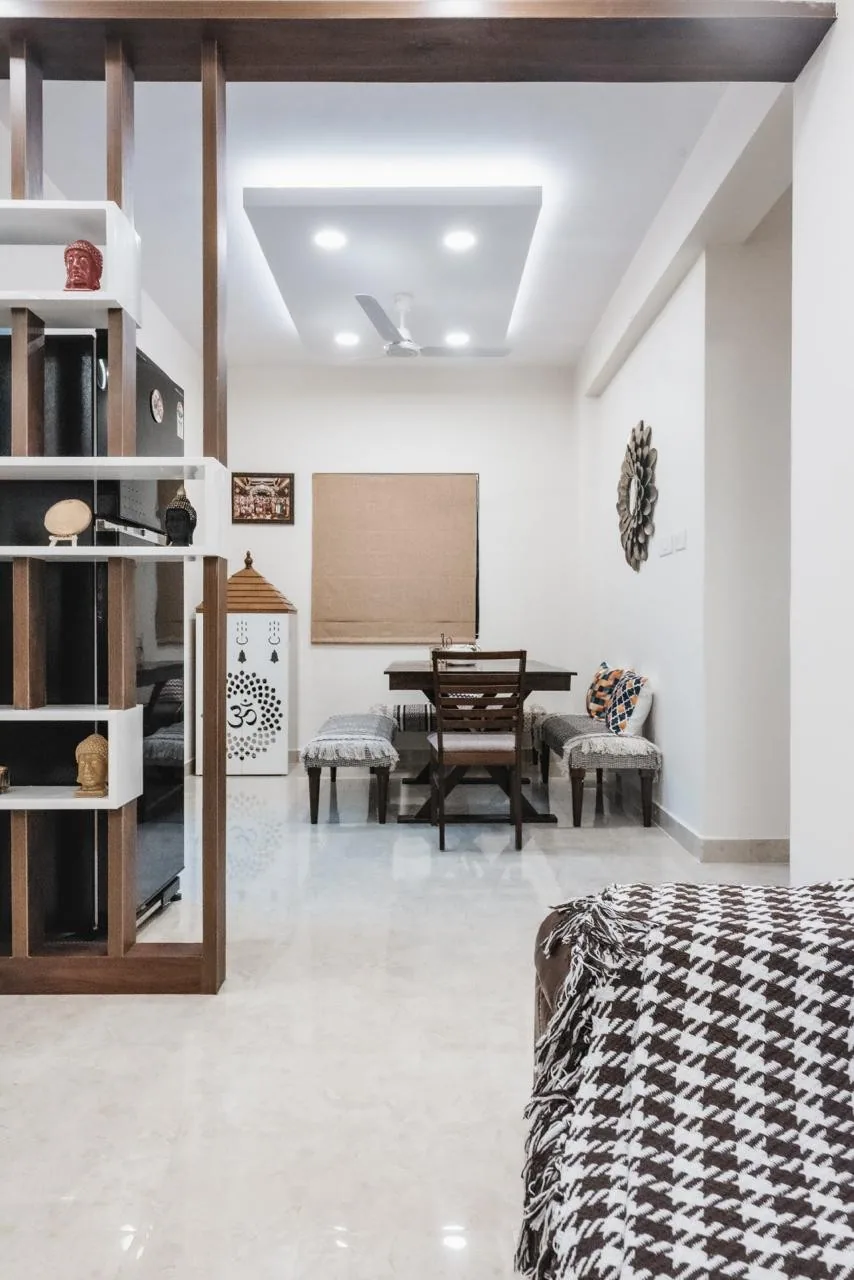
Which Mandir Format Suits Your Space?
- Wall-mounted unit: a shelf or small cabinet fixed to the wall, with no floor footprint. Suits very small flats. Check the wall can take the fixing, and keep it at a height where the idols are at or just above eye level when standing
- Floor-standing unit: a cabinet with storage below and an open or door-fronted shrine above. The most common format; works in a corner
- Niche in a wall of woodwork: a recess within a larger run of storage, such as a TV or crockery unit. Efficient, but needs a clear distinction from the surrounding units
- Full-height panel unit: a tall unit with doors that close the mandir when not in use. Useful in living rooms where the mandir should be closed during guests or work
Decide whether the family sits or stands for daily pooja. Sitting needs the shrine lower and floor space in front for a mat; standing puts it higher.
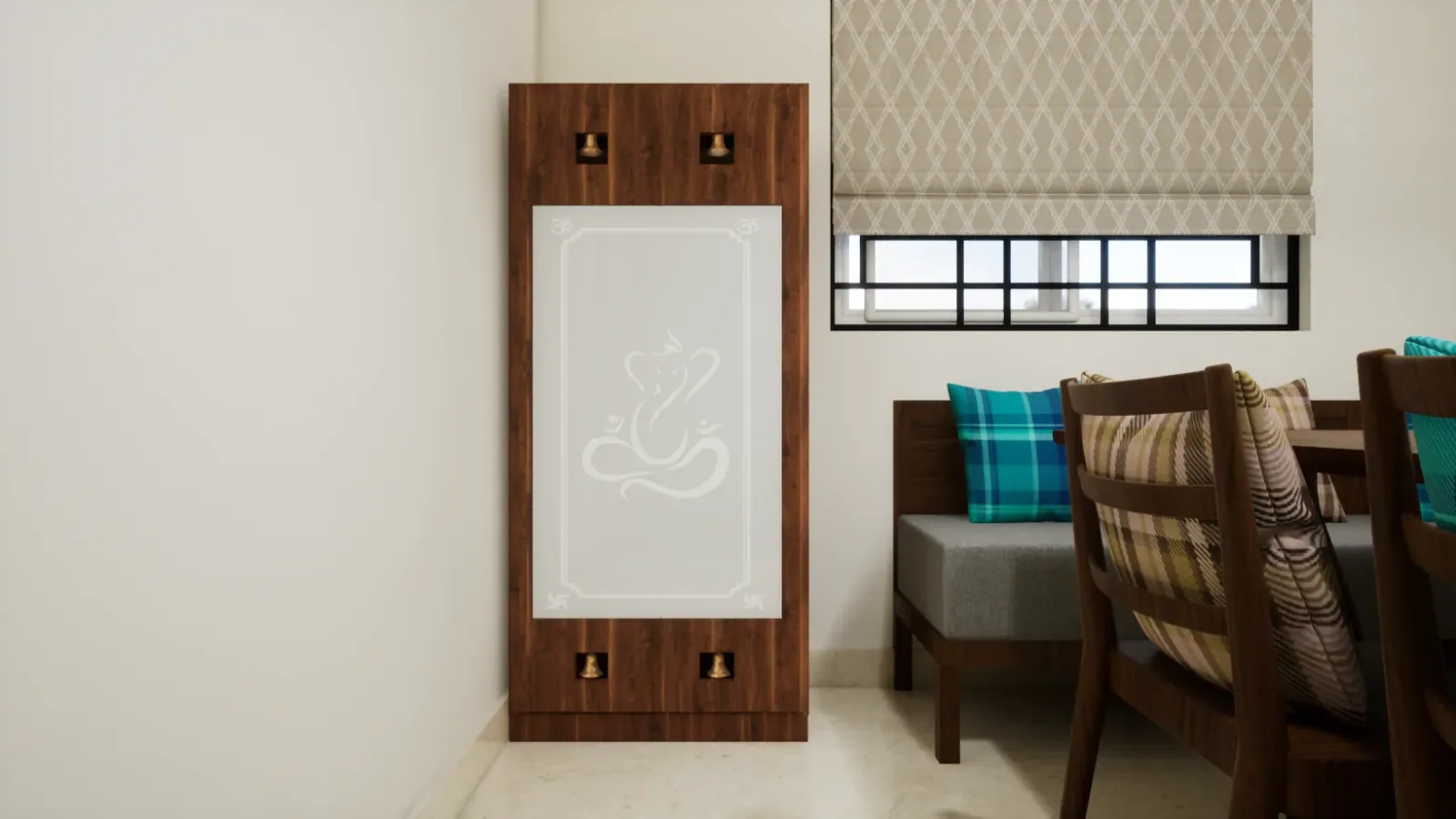
How Do You Protect the Woodwork From Diya Heat and Smoke?
This is the most important practical detail, and the one catalogue designs often ignore. A diya or agarbatti lit daily puts heat and soot onto whatever is directly above and behind it.
- Heat-resistant surface where the flame sits: a stone, quartz or metal base or tray, not bare laminate or veneer
- Clearance above the flame: enough height that the top of the unit is not directly heated; a low shelf over a diya will discolour and can scorch
- Ventilation: a jaali back or sides, or an open top, so smoke can escape rather than staining the inside
- A wipeable back panel behind the flame, since soot settles there first
- Distance from curtains and anything that can catch
If the family uses an electric diya for daily lighting and an oil lamp only on special days, the design can be lighter. Ask the question before the unit is drawn.
Should a Mandir Have Doors or a Jaali?
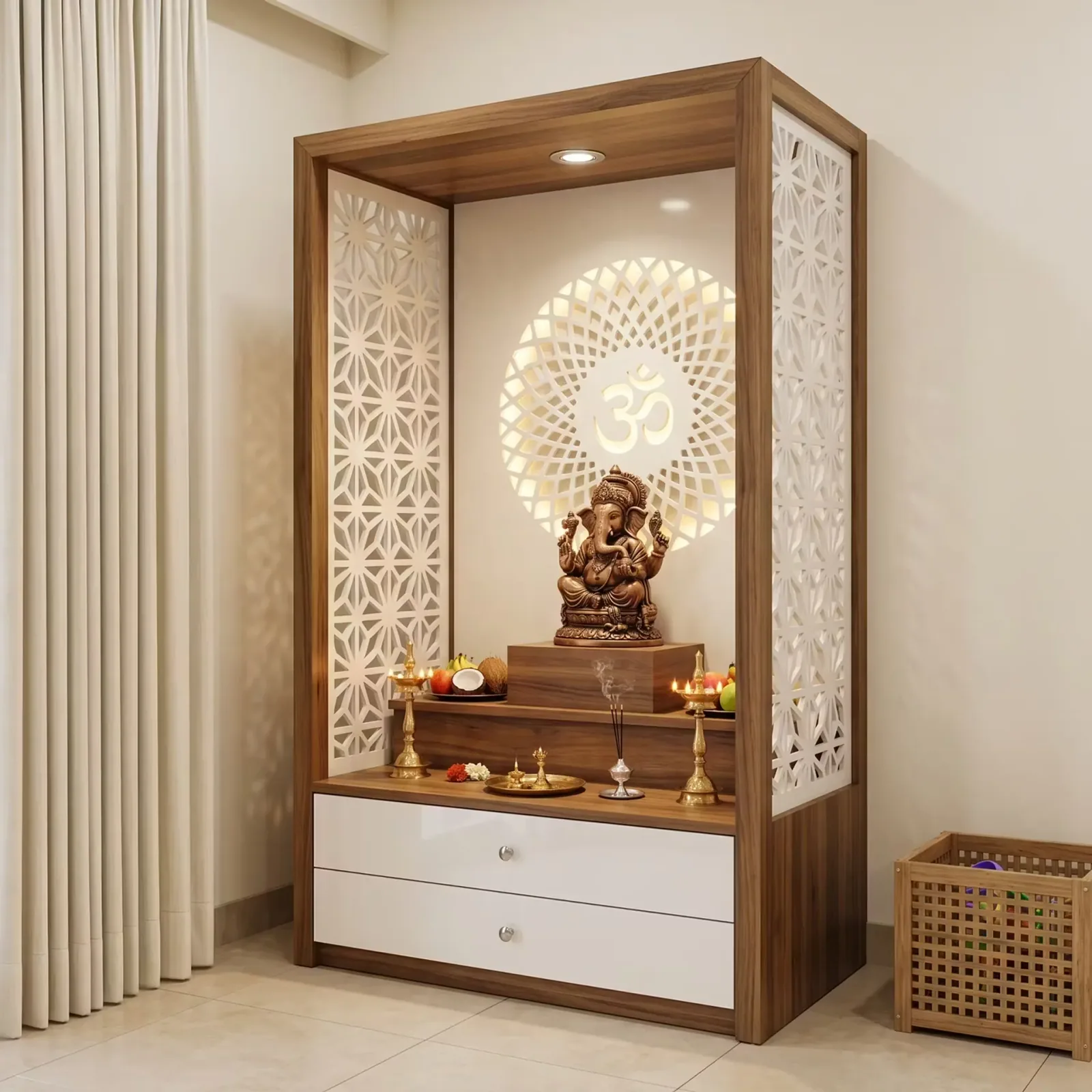
A jaali, or a door with jaali panels, solves two problems at once: it lets smoke out and lets light through, while still allowing the mandir to be closed. Solid doors keep the shrine private but trap smoke if a diya is lit inside.
CNC-cut jaali panels in MDF or HDHMR are common and can be finished in paint, laminate or veneer. Brass or metal jaali is more durable near heat. Backlighting a jaali panel with an LED behind it gives a soft glow without a visible bulb.
Where Should Pooja Items Be Stored?
Right below or beside the shrine, so nothing has to be fetched from the kitchen. Plan storage for:
- Diyas, oil and wicks
- Agarbatti, dhoop and matches
- Puja thali, bells and kalash
- Books and prayer texts
- Festival items used a few times a year
Drawers work better than shelves for small items. A shallow top drawer for daily items and a deeper lower drawer or cabinet for festival items is a practical arrangement. Keep oil in a closed container in a drawer with a wipeable base, because oil spills soak into exposed board edges.
How Should a Mandir Be Lit?
With a warm, soft light that shows the idols without glare. A small downlight inside the top of the unit, a backlit panel, or an LED strip hidden along the inside edges are common choices.
Plan a dedicated power point for the mandir before the electrical work begins, positioned where it is hidden inside the unit. A visible wire running down the wall to a socket is one of the most common details that spoils an otherwise good unit. Our guide to lighting a new flat covers how this fits into the overall plan.
Can a Mandir Share a Wall With the TV Unit?
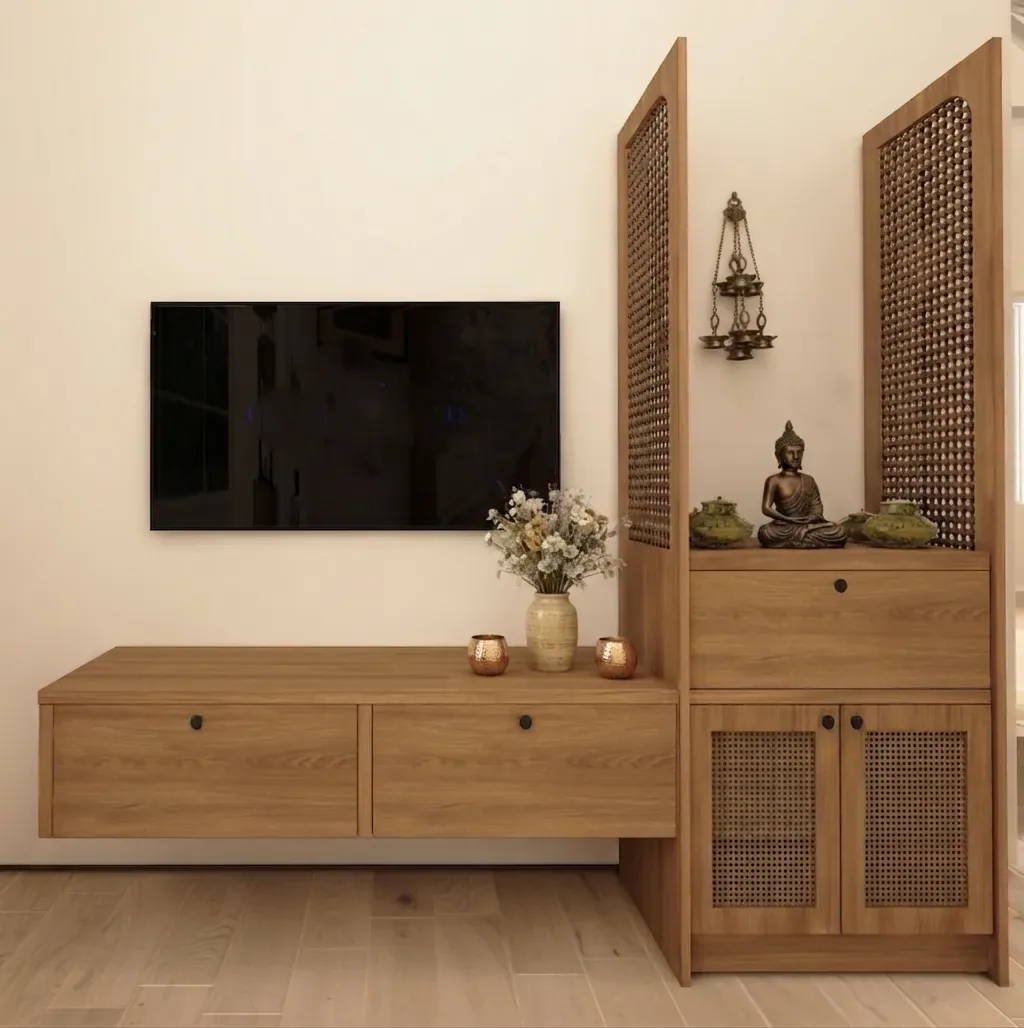
Yes, if the two are clearly separated. Many flats have only one long wall in the living room, so combining them is practical. Give the mandir its own unit or panel, a change of material or a vertical divider, so it does not read as a shelf of the TV unit. Some families prefer the two not to face the same seating; others are comfortable with it.
What Should Be Decided Before the Mandir Is Designed?
- The direction and wall, if your family follows vastu
- Whether pooja is done sitting or standing
- Whether an oil diya is lit daily, occasionally or not at all
- The idols and frames that must fit, with their sizes
- What needs to be stored with it
- Whether it should close when not in use
- The power point position for its lighting
Gunmala Interiors designs pooja units as part of the woodwork on a new flat, or as a standalone unit. Our pooja unit design guide covers materials and finishes, and our inspirations gallery has more pooja unit visualisations.
Frequently Asked Questions
Where should a mandir go in a flat without a pooja room?
A living room corner, the dining area, beside the TV unit with a clear separation, or a foyer niche are common choices. If your family follows vastu, decide the direction first and let it choose the wall.
What size should a home mandir be?
Size it to the idols and frames that must fit, plus storage below. Decide whether pooja is done sitting or standing: sitting puts the shrine lower with space for a mat in front, standing puts it closer to eye level.
How do I stop diya smoke from damaging the mandir?
Use a heat-resistant stone, quartz or metal surface where the flame sits, leave clearance above it, add ventilation through a jaali or open top, and use a wipeable back panel. Keep it away from curtains.
Should a pooja unit have doors?
Doors with jaali panels are a good balance: they let smoke out and light through while allowing the mandir to be closed. Solid doors trap smoke if a diya is lit inside.
Can a mandir be placed next to the TV?
Yes, with a clear separation: its own unit, a change of material or a vertical divider, so it does not read as part of the TV unit. Some families prefer the two not face the same seating.
Where should pooja items be stored?
In drawers directly below or beside the shrine: a shallow drawer for daily items like diyas, wicks and agarbatti, and a deeper drawer or cabinet for festival items. Keep oil in a closed container in a drawer with a wipeable base.
How should a home mandir be lit?
With warm, soft light: a small downlight inside the top, a backlit panel or a hidden LED strip. Plan a hidden power point for it before the electrical work begins.
Is a wall-mounted mandir a good idea?
In a small flat, yes. It takes no floor space. Check the wall can carry the fixing and place it so the idols are at or just above eye level when standing.
Key Takeaways
- A mandir in a shared room is a design brief, not a compromise.
- Decide direction, sitting or standing, and diya use before drawing it.
- Put a heat-resistant surface under the flame and clearance above it.
- Jaali panels let smoke out and light through while still closing.
- Store pooja items in drawers right below the shrine.
- Plan a hidden power point for its lighting before wiring starts.
See our pooja unit design guide, or book a site visit to plan a mandir for your flat.