A pooja room door does something no other door in the home does: it has to close off a space where a flame is lit daily, while still letting smoke out and light in. That is why so many pooja doors use jaali or glass. The right door depends on whether you have a separate pooja room or a pooja unit in a shared space, and on how you use it every day.
What Are the Main Types of Pooja Room Door?
| Type | Ventilation | Visibility | Suits |
|---|---|---|---|
| Jaali (CNC-cut or carved) | Good | Partial | Most pooja rooms and units where a diya is lit |
| Glass in a frame | Poor unless vented | Full | Pooja rooms where the shrine should stay visible |
| Solid with motifs | Poor | None | Units closed except during pooja; electric diyas |
| Combination (solid below, jaali above) | Good at the top | Partial | Balance of privacy and airflow |
Smoke rises, so ventilation at the top of the door matters most. A solid door with a jaali or open top band ventilates far better than one closed all the way up.
How Do You Stop Diya Smoke Staining the Pooja Room?
By giving it a way out. A diya or agarbatti lit daily behind a closed door leaves soot on the ceiling and inside surfaces. A jaali panel, an open top band, or a gap above the door lets smoke escape.
For a separate pooja room, a small exhaust or ventilation opening to the outside is the most effective solution where the layout allows. For a pooja unit in a living or dining area, a jaali door or open top is usually enough. Our guide to mandir design for flats covers heat-resistant surfaces near the flame.
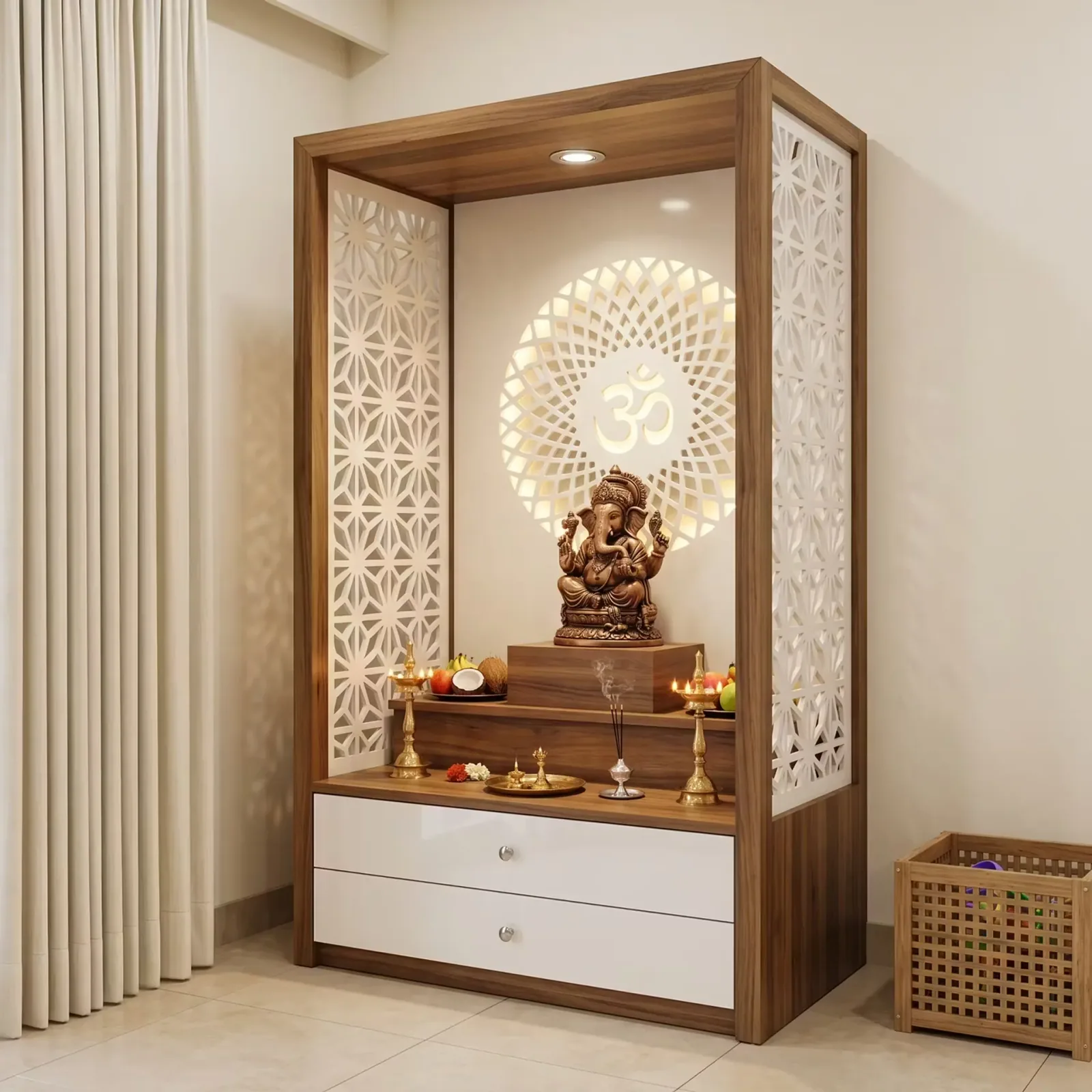
What Makes a Good Jaali Pooja Door?
A pattern open enough for airflow and light, a material that holds its shape, and a finish that cleans easily.
- CNC-cut MDF or HDHMR: wide range of patterns; finished in paint, laminate or veneer; seal all cut edges against moisture
- Metal jaali: thinner, stronger, more heat-tolerant, can be powder-coated or brass-finished
- Carved wood: traditional and rich; needs care and polishing
Very fine patterns collect dust and soot in their gaps and are hard to clean. A medium pattern is easier to maintain.
When Do Glass Pooja Doors Work?
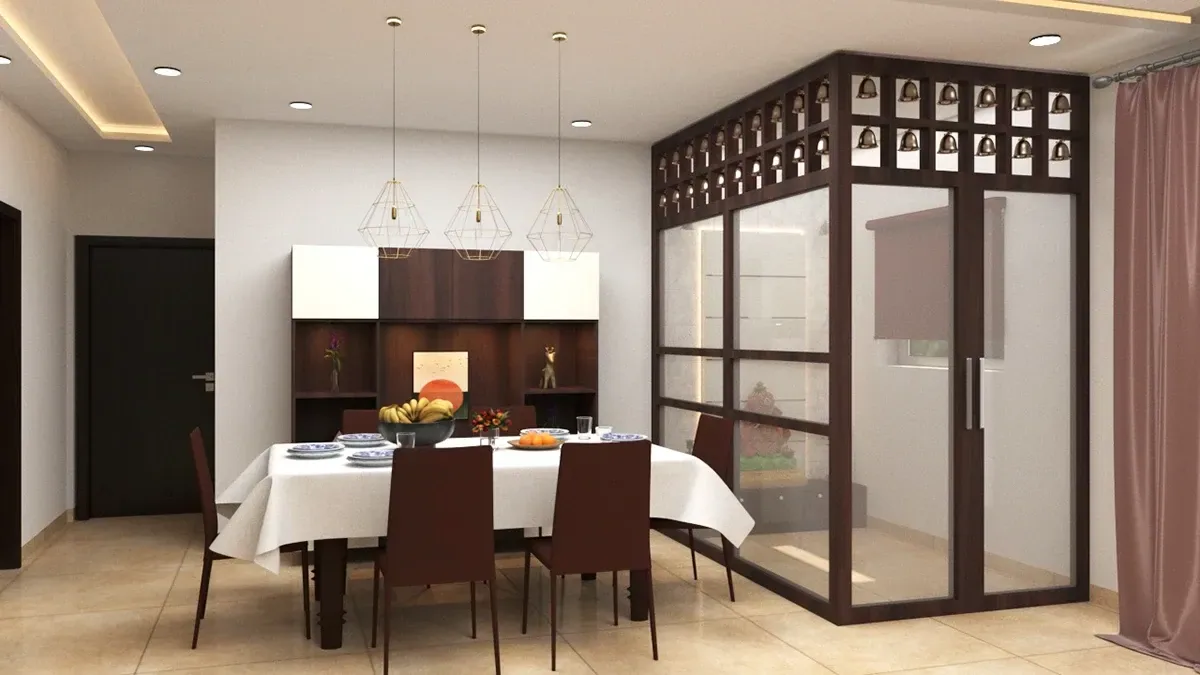
When you want the shrine visible from the room at all times, and when there is ventilation elsewhere. Frosted or etched glass with a motif, such as an Om or a deity outline, gives a sense of the shrine without full visibility. Clear glass shows everything.
Glass alone traps smoke, so pair it with a jaali top band, a gap above the doors, or an exhaust. Use toughened glass in a sturdy frame.
When Are Solid Doors the Right Choice?
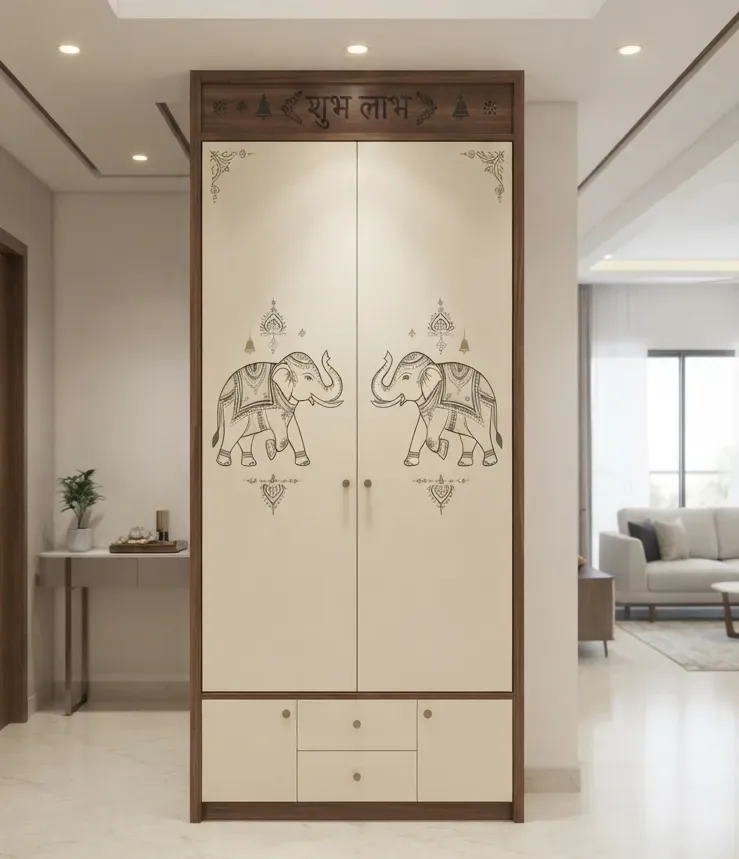
When the pooja unit should be fully closed outside pooja time, for example in a living room used for work or guests, and when a lit diya is not left inside with the doors shut. Solid doors carry motifs well: elephants, bells, lotus, Shubh Labh, or engraved deity outlines.
Should Pooja Doors Be Hinged, Sliding or Folding?
- Hinged: the most common; need clear space in front to open
- Sliding: suit pooja rooms in tight passages, but the track must stay clean
- Folding or bi-fold: open wide without taking much space; good for larger pooja rooms
- Pocket doors: slide into the wall or unit side, fully out of the way during pooja
Whichever you choose, make sure the doors can stay fully open during pooja without blocking the person standing or sitting in front.
What About Bells, Handles and Thresholds?
Small brass bells on the door add sound and tradition; fix them so they do not hit the frame. Handles in brass or wood suit pooja doors better than modern steel. A small raised threshold is traditional in some homes; check it will not be a trip hazard in a passage.
What Should Be Decided Before the Door Is Made?
- Pooja room or pooja unit, and the space in front of it
- Whether a diya is lit daily behind the door
- How smoke will escape
- Jaali, glass, solid or a combination
- Hinged, sliding or folding
- Motifs and finishes
Gunmala Interiors designs pooja units and doors as part of the woodwork. See our pooja unit design guide for materials.
Frequently Asked Questions
Which door is best for a pooja room?
Where a diya is lit daily, a jaali door or a door with a jaali or open top band, because it lets smoke out while screening the shrine. Glass suits rooms where the shrine should stay visible, if ventilation is provided elsewhere.
How do I stop smoke staining the pooja room?
Give the smoke a way out: jaali panels, an open top band, a gap above the doors, or an exhaust opening for a separate pooja room.
Are glass pooja doors a good idea?
They keep the shrine visible, but glass traps smoke. Pair them with a jaali top band, gap or exhaust, and use toughened glass in a sturdy frame.
What material is best for a jaali pooja door?
CNC-cut MDF or HDHMR offers many patterns and finishes, with sealed edges. Metal jaali is thinner, stronger and more heat-tolerant. Carved wood is traditional but needs care.
Should pooja doors be sliding or hinged?
Hinged doors are most common but need space in front. Sliding, folding or pocket doors suit tight passages. Make sure doors can stay fully open during pooja.
Which motifs suit a pooja door?
Common choices include Om, bells, lotus, elephants, Shubh Labh and deity outlines, carved, engraved, printed or cut as jaali.
Are fine jaali patterns hard to clean?
Yes. Very fine patterns collect dust and soot. A medium pattern balances screening and ease of cleaning.
Can a pooja unit have solid doors?
Yes, if the unit is closed outside pooja time and a lit diya is not left inside with the doors shut. Solid doors carry motifs well.
Key Takeaways
- Pooja doors must close the space and still let smoke out.
- Ventilation at the top matters most, because smoke rises.
- Jaali suits daily diya use; glass needs ventilation elsewhere.
- Choose the opening style for the space in front of the shrine.
- Medium jaali patterns are easier to keep clean than fine ones.
See our guide to mandir design for flats, or book a site visit to plan your pooja space.