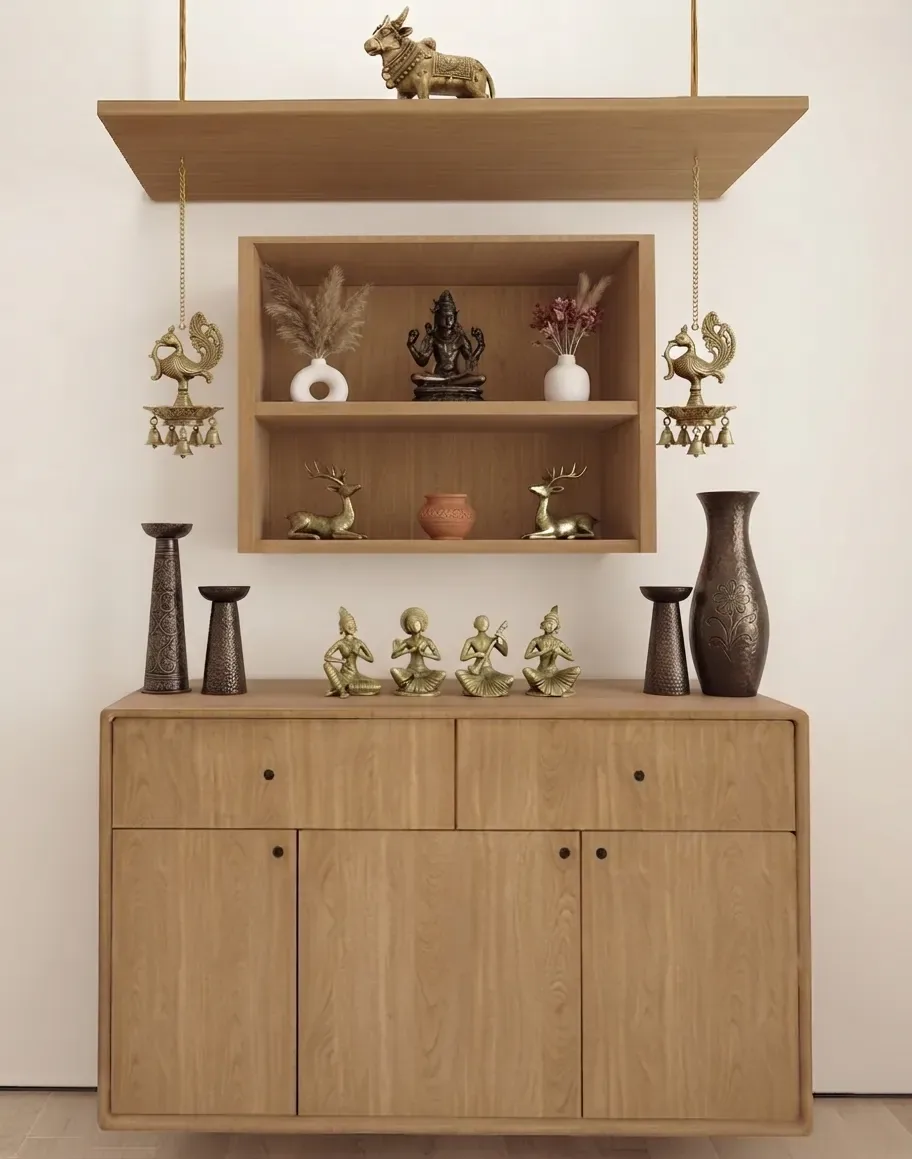
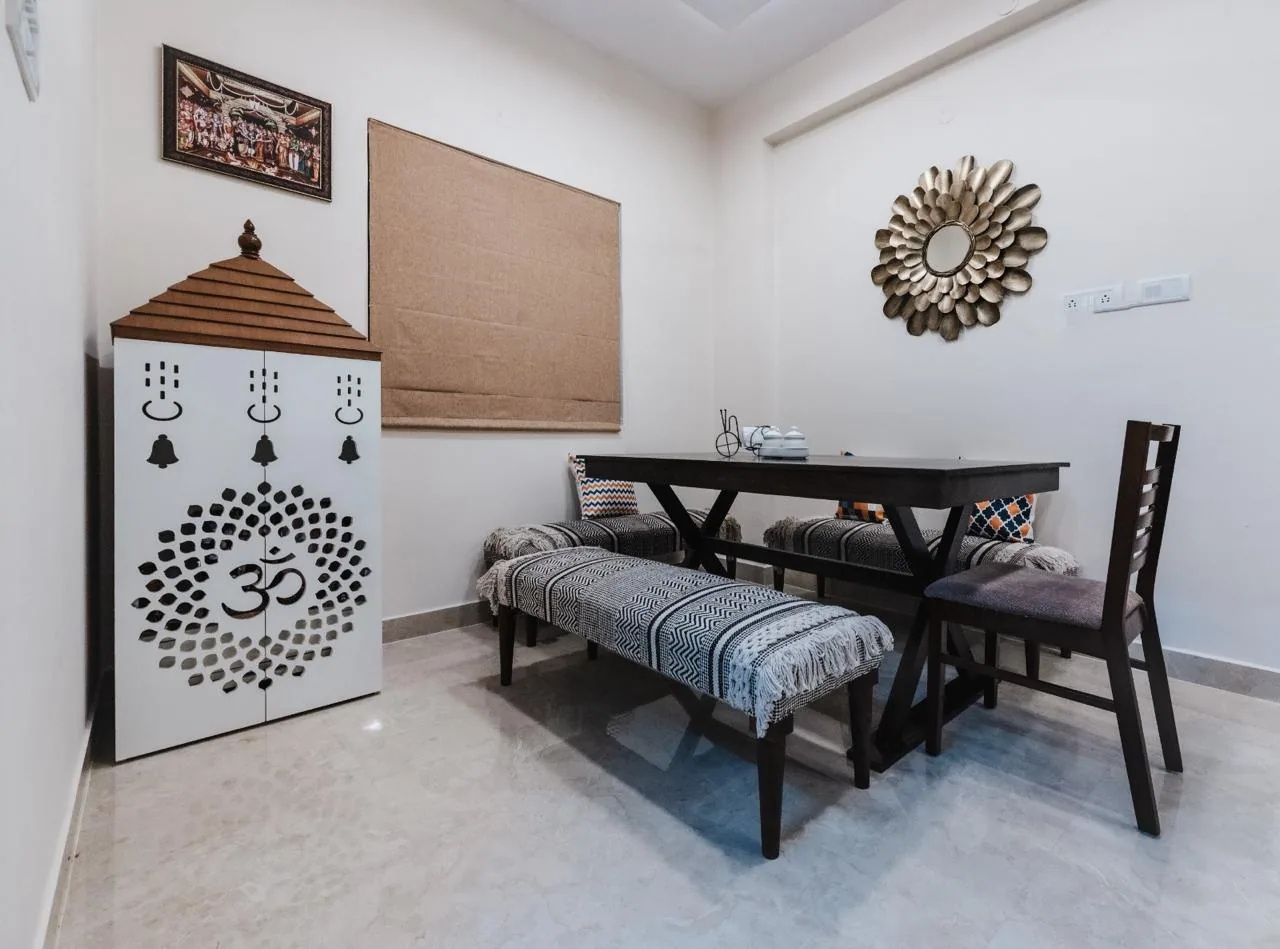
A wooden mandir can be bought ready-made or built into the home's woodwork. A ready-made mandir is quick and can move house with you. A built-in one fits the space exactly, matches the rest of the furniture and can include storage and lighting. Either way, the decisions are the same: the size of the idols, the wood or board, and how the diya's heat is handled.
Ready-Made or Built-In Mandir?
| Ready-made | Built-in | |
|---|---|---|
| Fit | Standard sizes | Made to the exact space |
| Storage | Limited | Drawers and cabinets as needed |
| Lighting | Often a plug-in light | Concealed lights with a hidden point |
| Moving house | Goes with you | Stays, or needs dismantling |
| Matching | May not match other woodwork | Matches the room |
Solid Wood or Board?
Solid wood such as teak is traditional, strong and can be carved; it is heavier and moves slightly with humidity. Board-based mandirs, plywood or HDHMR finished in veneer or laminate, are stable, lighter and match modular furniture easily. Carved details can be added as solid wood or CNC-cut panels.
What Size Mandir Do You Need?
Start with the idols and frames that must fit, then add space for diyas, flowers and the pooja thali. Decide whether pooja is done sitting or standing: sitting puts the shrine lower with floor space in front; standing puts it at eye level. Allow headroom above the flame.
Wall-Mounted or Floor-Standing?
Wall-mounted mandirs save floor space and suit small flats; they need a solid wall and proper fixings. Floor-standing mandirs hold more storage below and suit a corner where there is floor space. Our guide to mandir design for flats covers placement.
How Do You Protect a Wooden Mandir From Diya Heat?
Place a stone, brass or metal plate where the diya sits, leave clearance above the flame, and ventilate the top or back so smoke escapes. Wood and veneer near a daily flame will darken and can scorch without these. Our pooja door guide covers ventilation.
Which Finish Suits a Wooden Mandir?
A durable polish, such as PU, on wood and veneer, which resists oil, kumkum and occasional water. Matt or satin hides small marks better than gloss. Laminate is the most wipeable. Avoid untreated wood near oil lamps.
What Should Be Decided Before Choosing a Mandir?
- Ready-made or built-in
- Idol and frame sizes
- Sitting or standing pooja
- Wall-mounted or floor-standing
- Heat-resistant base and ventilation
- Storage and lighting
Gunmala Interiors builds custom mandirs as part of the woodwork, with storage and lighting planned in. See our pooja unit design guide.
Frequently Asked Questions
Should I buy a ready-made or built-in mandir?
Ready-made is quick and moves house with you. Built-in fits the space exactly, matches other woodwork and can include storage and concealed lighting.
Is solid wood or board better for a mandir?
Solid wood such as teak is traditional and strong but heavier. Board finished in veneer or laminate is stable, lighter and matches modular furniture.
What size mandir do I need?
Start with the idols and frames, add space for diyas, flowers and the thali, and decide whether pooja is done sitting or standing.
Is a wall-mounted mandir a good idea?
In small flats, yes. It saves floor space but needs a solid wall and proper fixings.
How do I stop a wooden mandir burning or darkening?
Use a stone, brass or metal plate under the diya, leave clearance above the flame, and ventilate the top or back.
Which polish suits a wooden mandir?
A durable polish such as PU, preferably matt or satin, which resists oil and kumkum. Laminate is the most wipeable.
Can a mandir have storage?
Yes, especially a built-in one: drawers below for diyas, agarbatti and pooja items.
Can a mandir have lighting?
Built-in mandirs can have concealed lights with a hidden power point planned before the electrical work.
Key Takeaways
- Ready-made moves with you; built-in fits and matches.
- Board with veneer or laminate is stable and easy to match.
- Size the mandir from the idols and how pooja is done.
- Protect wood from the flame with a metal or stone base and ventilation.
- Choose a durable polish or laminate near oil lamps.
See our guide to mandir design for flats, or book a site visit.