A bedroom TV is watched lying down or sitting up in bed, which changes the right height from the living room. It also shares the room with sleep, so the unit should be modest, the cables invisible, and the screen easy to ignore when it is off. In a small bedroom, it often has to share a wall with a dresser or a desk.
How High Should a Bedroom TV Be?
Higher than in the living room, because you watch from bed, usually propped up against the headboard. Sit in bed in your usual position and check where your eye line falls on the opposite wall; the screen centre should be near there. Tilting wall mounts help if the TV has to be higher.
Wall-Mounted Panel or a Console Unit?
Most bedrooms suit a wall-mounted TV on a simple panel with a slim floating console below. It takes little floor space and keeps the room light. A full TV wall with heavy panelling suits larger master bedrooms. Our living room TV unit guide covers panels and consoles in detail.
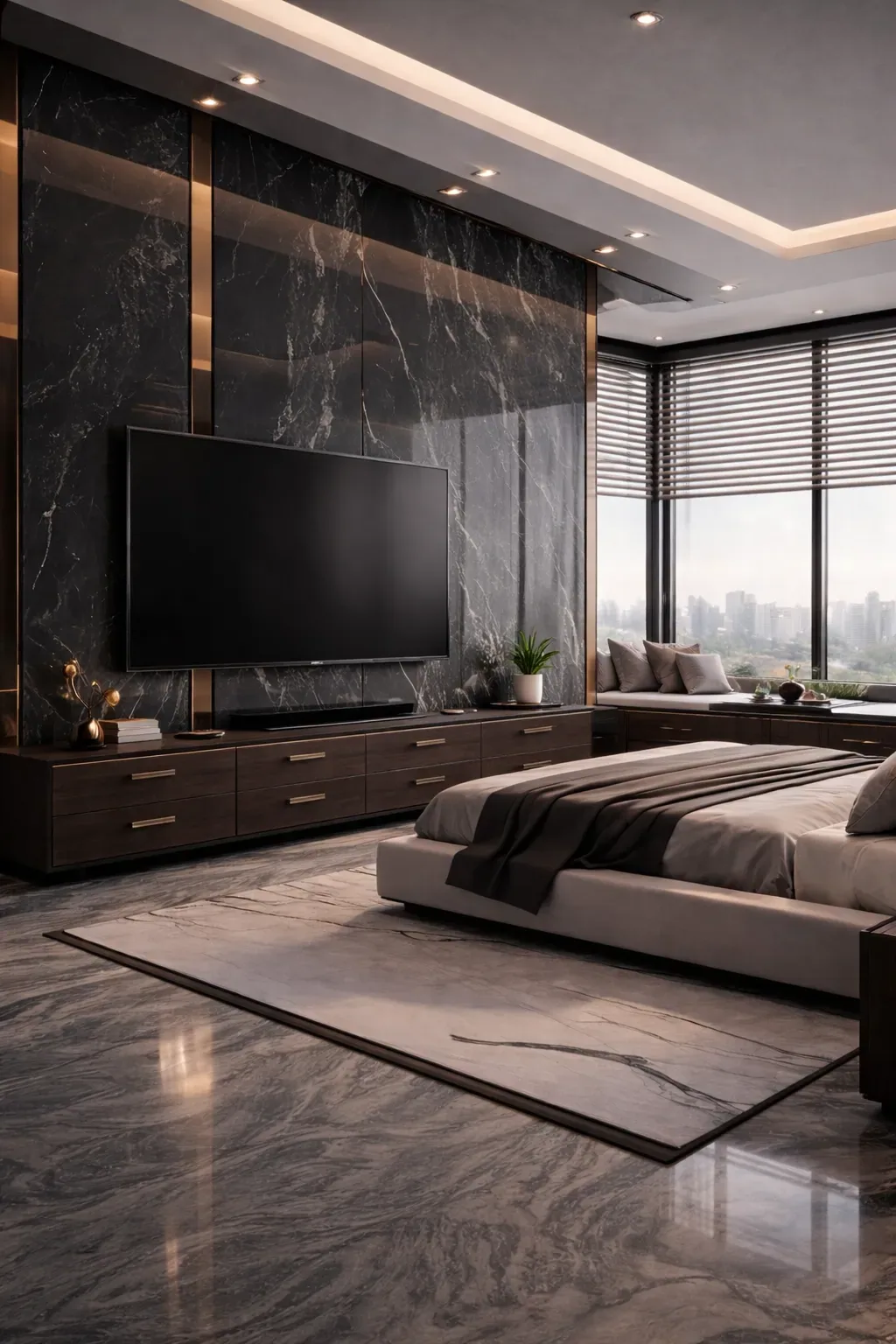
Can the TV Wall Share Space With a Dresser or Desk?
Often it has to. A long floating console can serve as both TV unit and dressing counter, with a mirror to one side. A study desk beside the TV works if the desk faces the wall rather than the bed. Keep the TV and the mirror separated so the screen does not reflect in it.
How Do You Hide Bedroom TV Cables?
With a power socket and data point behind the TV at mounting height, and a conduit or panel for any cables down to the console. Plan these before painting. Our guide to switch and socket planning covers placement.
How Do You Keep a TV From Dominating the Bedroom?
- Choose a screen size in proportion to the room
- Use a dark or mid-tone panel behind it, so the black screen blends in when off
- Keep open display shelves to a minimum
- Avoid bright backlighting; a soft glow is enough
What Storage Should a Bedroom TV Unit Have?
A few drawers for remotes, chargers and small items, and an open section for a set-top box. In a small bedroom, the console can carry extra clothes storage in deep drawers.
What Should Be Decided Before Building a Bedroom TV Unit?
- Viewing height from your usual position in bed
- Screen size for the room
- Whether it shares the wall with a dresser or desk
- Power and data points behind the TV
- Console storage
Gunmala Interiors builds bedroom TV units with the rest of the bedroom woodwork. See our bedroom planning guide.
Frequently Asked Questions
How high should a TV be in a bedroom?
Higher than in a living room, with the screen centre near your eye line when sitting up in bed. Check from your usual position before fixing the mount.
Should a bedroom TV be wall-mounted?
Usually yes, on a simple panel with a slim floating console below, which takes little floor space.
Can a TV unit be combined with a dressing table?
Yes. A long console can serve both, with a mirror to one side. Keep the mirror away from reflecting the screen.
How do I hide TV cables in a bedroom?
Put a power and data point behind the TV at mounting height and run any other cables through a conduit or panel, planned before painting.
How big should a bedroom TV be?
In proportion to the room and viewing distance from the bed. Bedrooms usually suit a smaller screen than the living room.
How do I stop the TV dominating the bedroom?
Use a dark or mid-tone panel so the screen blends in when off, keep display shelving minimal, and avoid bright backlighting.
What storage should a bedroom TV unit have?
A few drawers for remotes and chargers and an open section for devices. Deep drawers can add clothes storage in small rooms.
Can a study desk sit next to the bedroom TV?
Yes, if the desk faces the wall rather than the bed, with its own sockets and task light.
Key Takeaways
- Set the TV height from your position in bed.
- A wall-mounted TV with a slim console suits most bedrooms.
- Share the wall with a dresser or desk if space is tight.
- Plan power and data behind the TV before painting.
- Keep the TV wall calm so it disappears when off.
See our bedroom planning guide, or book a site visit.