Paint is the easiest thing in a flat to change and the hardest to choose. Colour on a shade card is not the colour on your wall: the wall gets different light, sits next to different wood and fabric, and is seen at night under lights you have not bought yet. A good colour combination is chosen with the room's woodwork, light and furniture in view, not from a card on its own.
Why Should Paint Be Chosen After the Woodwork Finish?
Because paint comes in thousands of shades and laminates and veneers come in far fewer. It is easy to find a paint that suits a wardrobe; it is much harder to find a wardrobe finish that suits a paint already on the wall.
So the order is: decide the wardrobe, kitchen and TV unit finishes, then choose paint to work with them. A large wardrobe wall in walnut or oak laminate is the biggest colour surface in most bedrooms, and the walls should be chosen to sit with it.
Bring an actual laminate or veneer sample home and hold it against the paint patch. Catalogue images on a phone screen are not reliable for this. Our comparison of wardrobe shutter finishes covers the options.
How Much Does the Wall Colour Change a Room?
More than almost any other single choice. The three visualisations below show the same furniture and layout with only the accent wall and sofa changed.
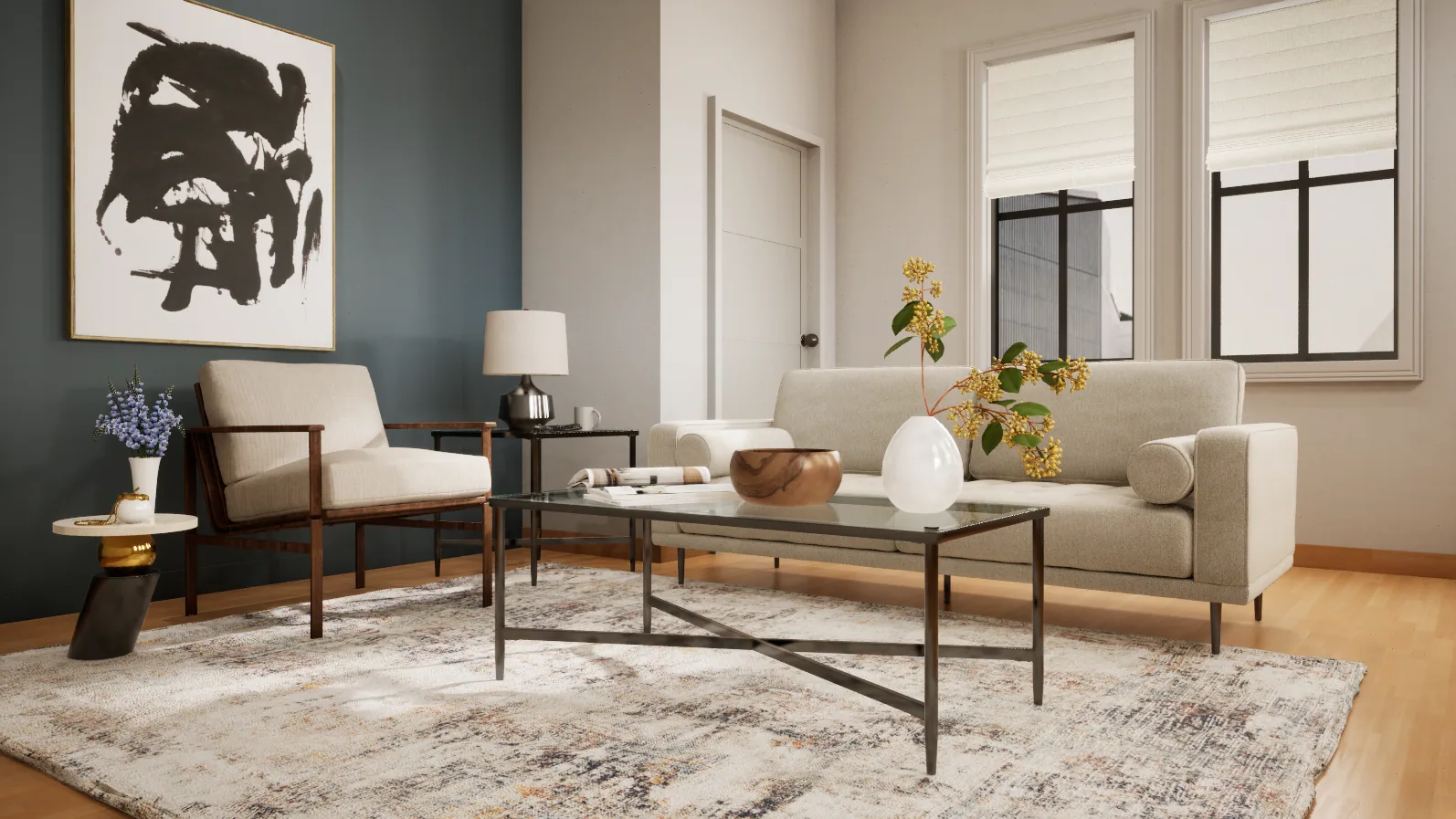
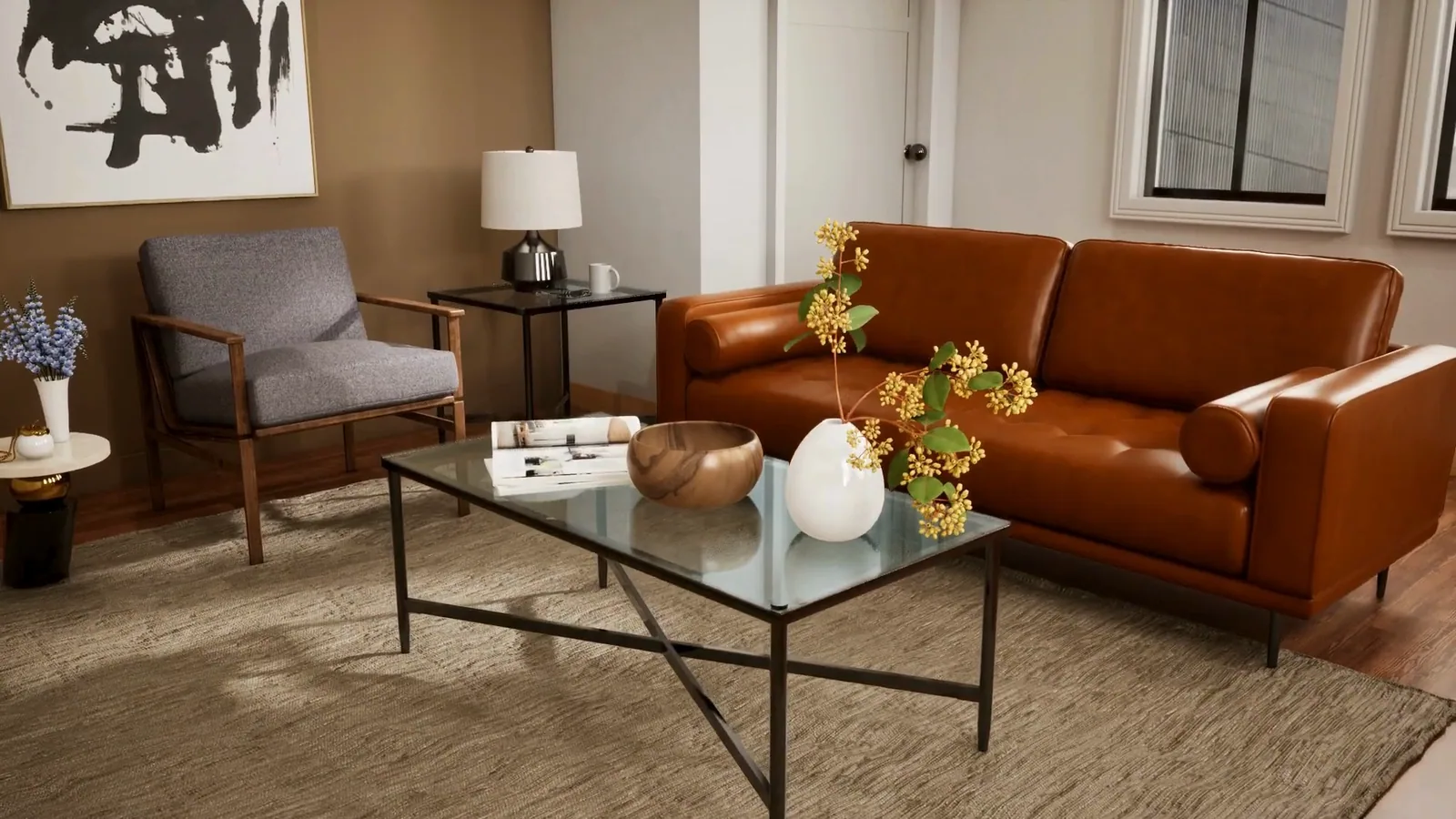
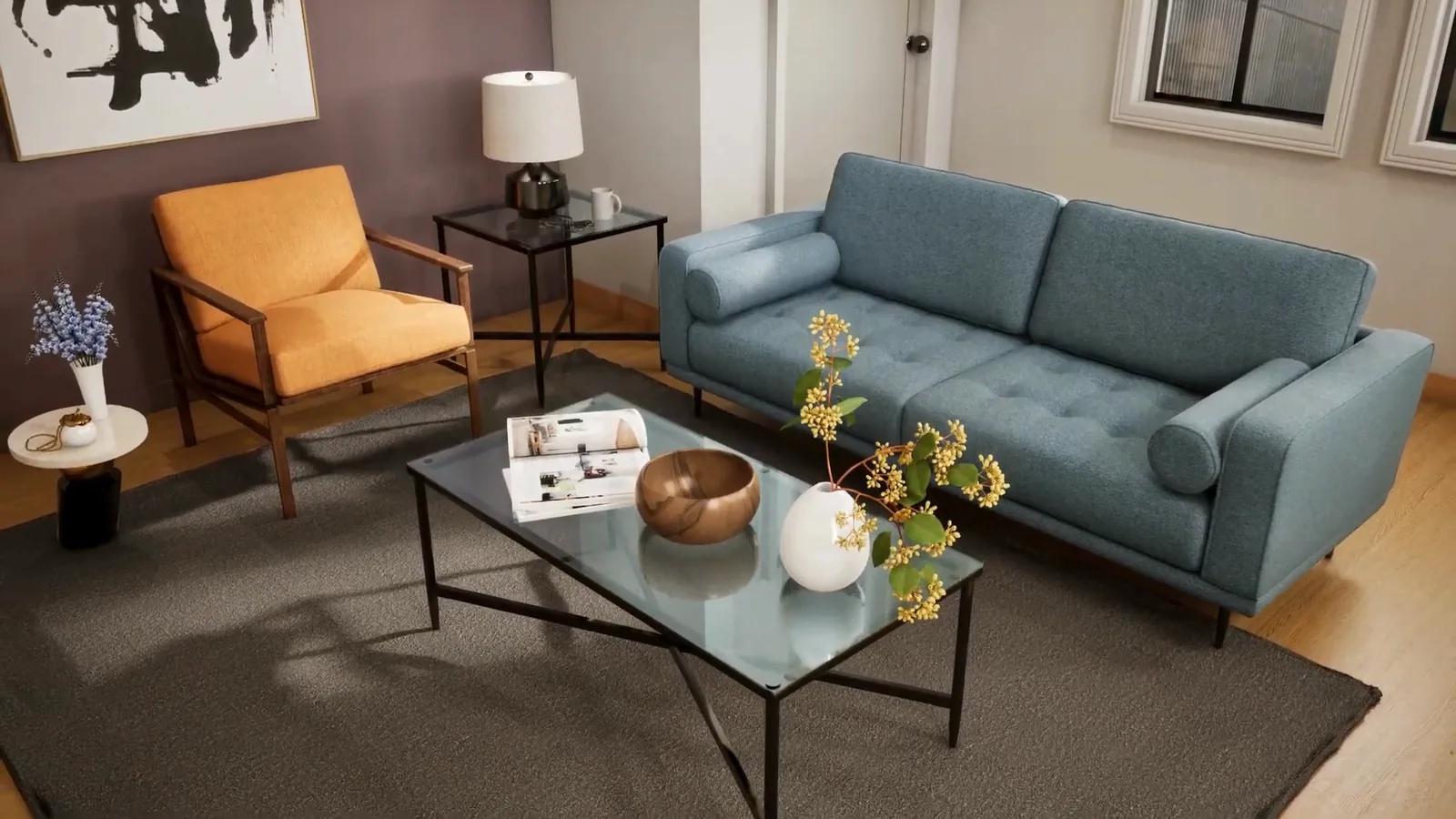
Comparing schemes like this, with the real furniture in view, is far more reliable than choosing a colour from a fan deck and hoping.
Why Does the Same Paint Look Different on Your Wall?
Because colour depends on the light falling on it. Three things change it:
- Direction of the window. A room with strong afternoon sun makes warm colours warmer. A room with soft, indirect light makes cool colours look cooler and greyer
- Artificial light at night. Warm white lights push colours yellow; cool white lights push them blue. Choose your lighting colour temperature before or with the paint, as our lighting guide explains
- Reflection from nearby surfaces. A large wood wall or a coloured floor tints the walls around it
The practical answer is test patches. Paint a large patch, ideally on two walls, and look at it in the morning, the afternoon and at night under the lights you will use. A small patch on one wall in daylight tells you very little.
Which Colour Combinations Work With Common Woodwork Finishes?
| Woodwork finish | Walls that usually sit well | Use with care |
|---|---|---|
| Warm walnut or teak tones | Warm off-whites, beige, sage, muted terracotta | Bright cool whites, which make the wood look orange |
| Light oak or ash tones | Soft whites, pale greys, muted blues and greens | Strong yellows, which merge with the wood |
| White or light grey shutters | Almost anything; a good base for an accent wall | All-white walls, which can feel flat |
| Dark or charcoal shutters | Light warm walls for contrast | Dark walls everywhere, which close the room in |
| Coloured shutters (sage, navy, blush) | Neutral walls that let the shutter colour lead | A second strong colour competing on the walls |
These are starting points, not rules. The test patch next to the real sample is what decides.
Where Should an Accent Wall Go?
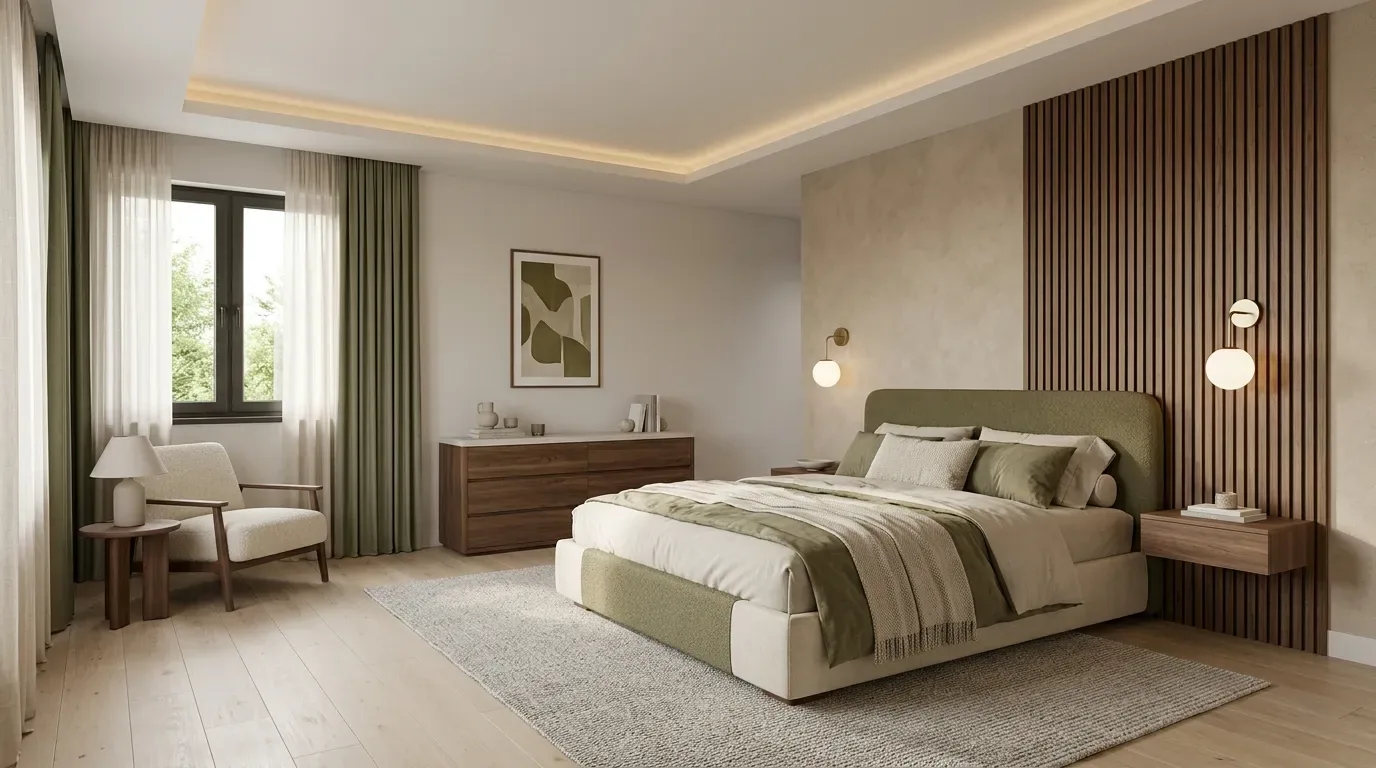
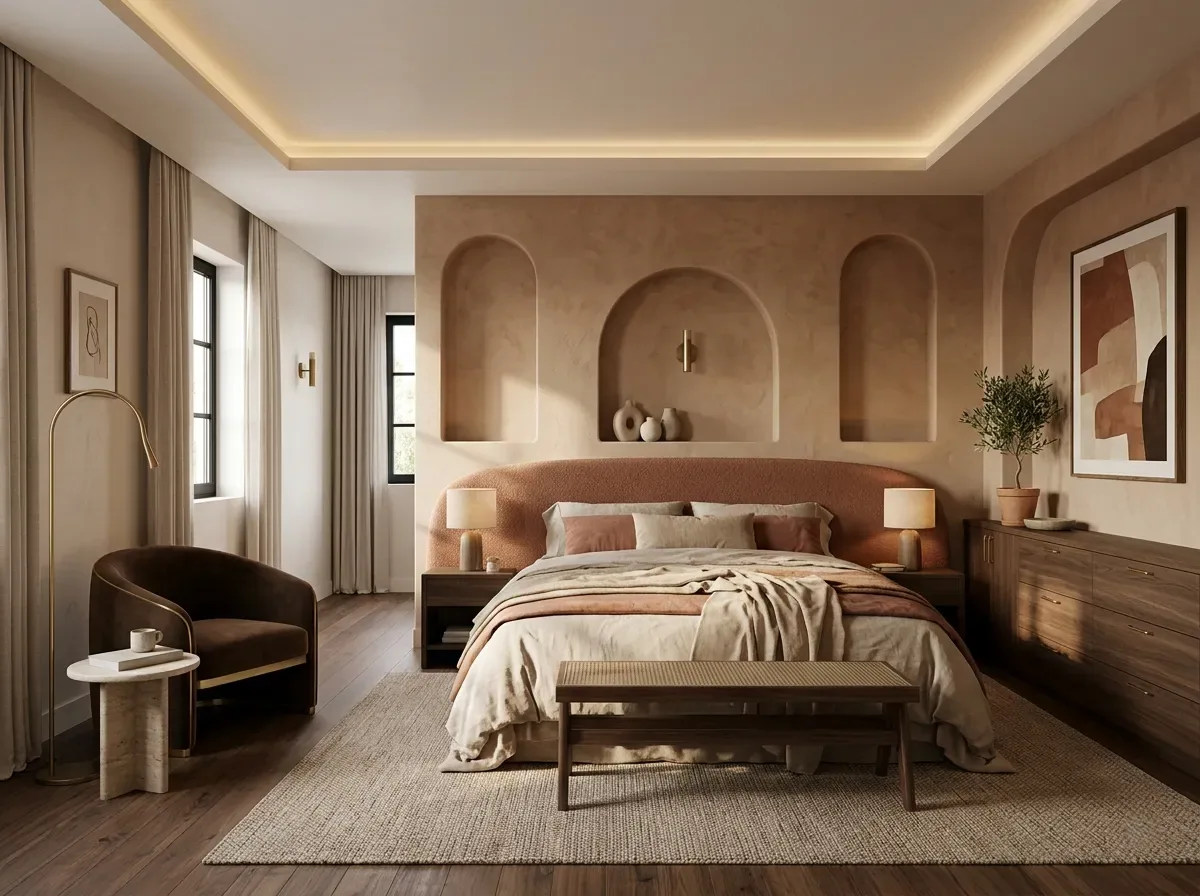
On the wall the room is arranged around: behind the bed in a bedroom, behind the TV or sofa in a living room. One accent wall per room is usually enough; two strong walls compete.
In a small Bengaluru bedroom, a darker accent wall behind the headboard can actually make the room feel deeper, because dark colours recede. Keep the other walls light so the room does not close in. Avoid an accent on the wall with the window, because you will rarely see it in good light.
Which Paint Finish Should Each Room Get?
The sheen affects both how the colour looks and how the wall survives daily life.
| Finish | Look | Suits |
|---|---|---|
| Matt | Flat, hides wall imperfections, colour reads soft | Bedrooms and living room walls that are not touched often |
| Eggshell or low sheen | Slight glow, easier to wipe | Living rooms, corridors, most walls in a family home |
| Satin or washable | More sheen, wipes clean | Children's rooms, dining walls, near switch boards |
Higher sheen shows every bump in the wall. If the plaster is not very even, a lower sheen hides more. Walls with any sign of damp need the damp dealt with before painting; paint over damp will bubble and peel whatever the finish.
How Do You Keep the Whole Flat Coherent?
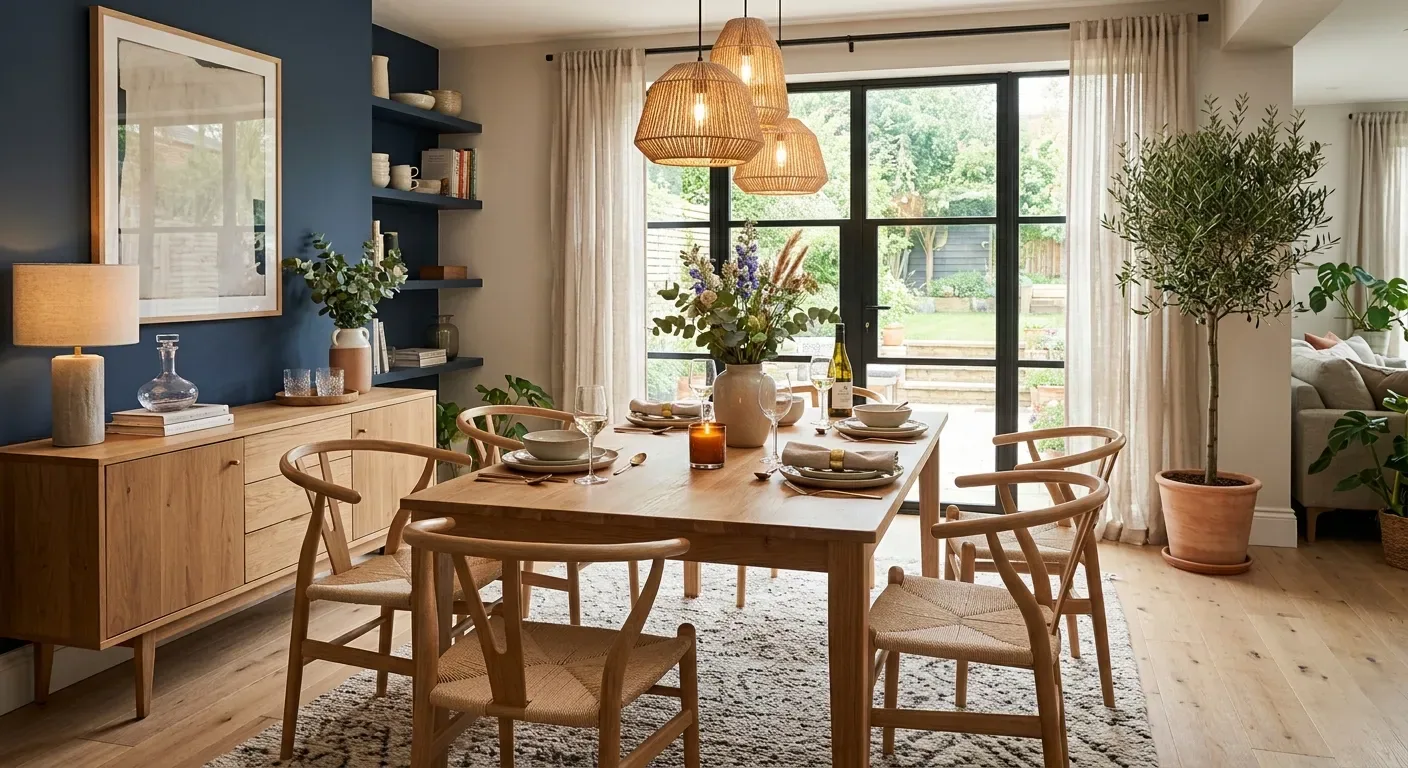
Choose one base neutral for most walls and ceilings across the flat, then let each room carry its own accent. A single base colour makes the flat feel connected as you move between rooms, especially in open-plan living and dining spaces.
Keep ceilings white or a very pale version of the wall colour, so they reflect light and keep rooms feeling tall. A coloured ceiling is a strong choice that rarely works in a standard-height apartment.
In What Order Should Colours Be Decided?
- Woodwork finishes for wardrobes, kitchen and TV unit
- Lighting colour temperature for each room
- Base neutral for the whole flat
- Accent wall colours, room by room
- Large test patches, checked by day and at night
- Finish and sheen for each room
On a turnkey fit-out, Gunmala Interiors chooses paint alongside the woodwork samples and lighting plan, so the three are seen together before anything goes on the wall. See also our guide to texture paint.
Frequently Asked Questions
How do I choose a wall colour combination?
Decide the woodwork finishes first, then the lighting colour temperature, then a base neutral for the whole flat, then accent walls. Paint large test patches and check them in the morning, afternoon and at night under your own lights before deciding.
Should I choose paint before or after the wardrobe laminate?
After. There are far more paint shades than laminate finishes, so it is easier to match paint to the woodwork than the other way round. Hold a real laminate sample against the paint patch.
Which wall colours go with walnut or teak wardrobes?
Warm off-whites, beige, sage and muted terracotta usually sit well with warm wood tones. Bright cool whites can make the wood look orange.
Where should an accent wall go in a bedroom?
Behind the headboard, which is the wall the room is arranged around. One accent wall per room is usually enough. Avoid putting it on the window wall, where it is rarely seen in good light.
Why does paint look different on my wall than on the shade card?
The light in your room, the direction of the window, the colour temperature of your lights and reflections from nearby wood or flooring all change how a colour looks. Large test patches checked at different times of day are the only reliable way to judge.
Which paint finish is best for a bedroom?
Matt or a low sheen for most bedroom walls, because it reads soft and hides imperfections. Use a washable satin finish in children's rooms and anywhere walls get touched often.
Can dark colours work in a small bedroom?
On one wall, yes. A dark accent behind the headboard can make the room feel deeper because dark colours recede. Keep the other walls light so the room does not close in.
Should the ceiling be painted a colour?
Usually not in a standard-height apartment. White or a very pale version of the wall colour reflects light and keeps the room feeling taller.
Key Takeaways
- Choose woodwork finishes first; paint is easier to match to wood than the reverse.
- Judge colour with large patches, by day and at night under your own lights.
- One base neutral across the flat, one accent wall per room.
- Match sheen to use: matt for calm walls, washable where hands go.
- Deal with any damp before painting; paint will not hide it.
- Keep ceilings white or very pale in standard-height flats.
See our guide to texture paint, or book a site visit to choose paint with your woodwork and lighting.