A dining table decides more of a flat's layout than its size suggests. It fixes where the pendant light hangs, how the walkway runs between living and kitchen, and whether the room feels crowded every evening. The right table is sized for daily meals, not for the festival dinner that happens twice a year.
How Many Seats Do You Actually Need?
Enough for the household every day, plus one or two. A four-seater suits most 1BHK and 2BHK households; a six-seater suits larger families and 3BHKs with space for it. For occasional larger gatherings, a bench, folding chairs or an extendable table cover the extra seats without crowding the room all year.
Round or Rectangular Dining Table?
| Shape | Suits | Notes |
|---|---|---|
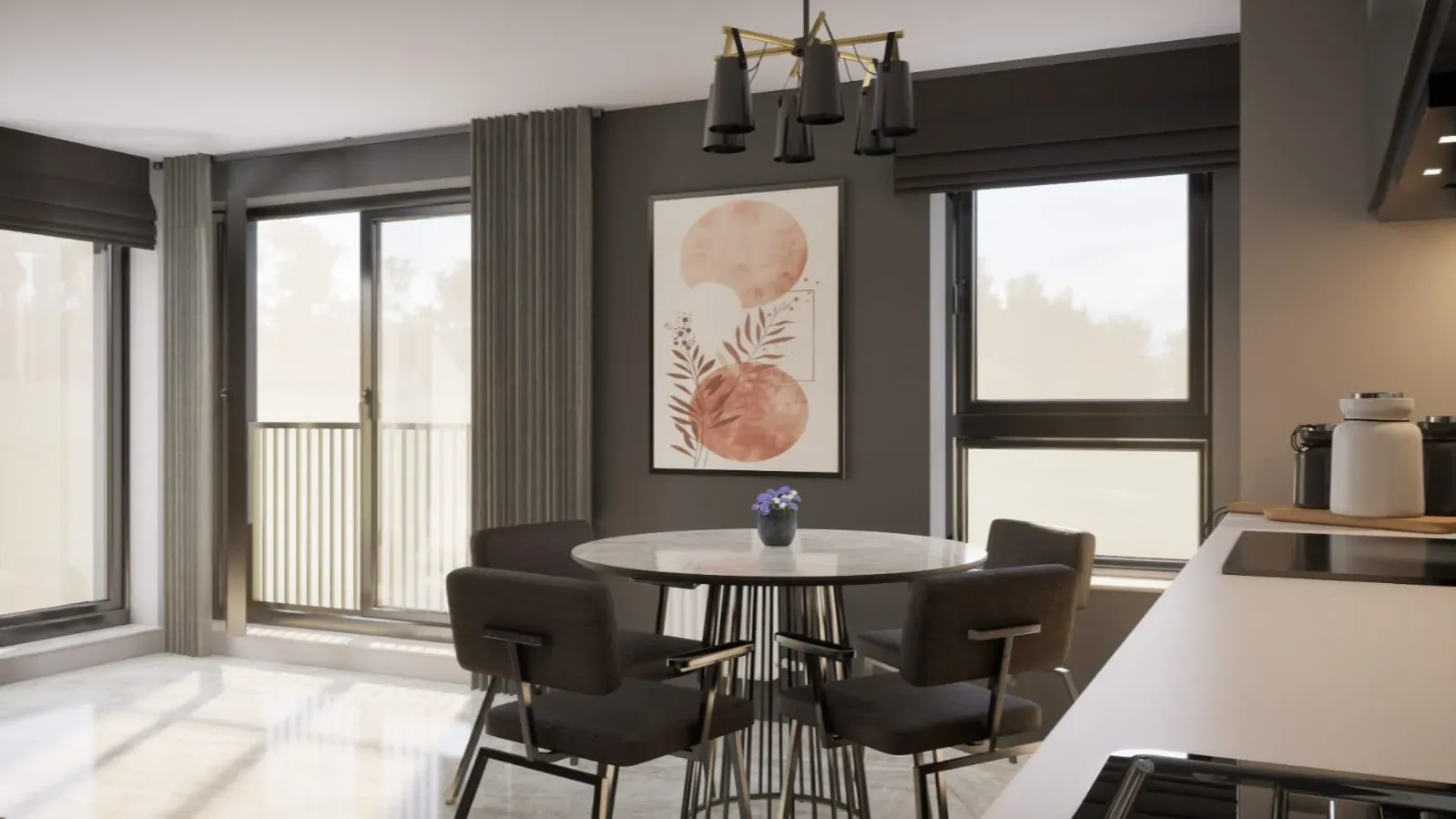
| Round | Small, square-ish spaces; four people | Easy to move around; everyone can see each other; no sharp corners |
| Rectangular | Longer spaces; six or more | Can sit against a wall; seats more per area |
| Oval | Between the two | Seats like a rectangle, flows like a round |
| Square | Small spaces, two to four | Compact; can push into a corner |
How Much Space Does a Dining Table Need Around It?
Enough to pull a chair out and sit down, plus room to walk behind a seated person where there is a walkway. Measure from the table edge to the nearest wall or furniture on every side where chairs will go.
Where the table sits against a wall, a bench on the wall side saves space, because a bench needs no pull-out room behind it. Check that crockery unit doors and drawers can open when chairs are in place; our guide to crockery unit design covers this.
Is a Dining Bench a Good Idea?
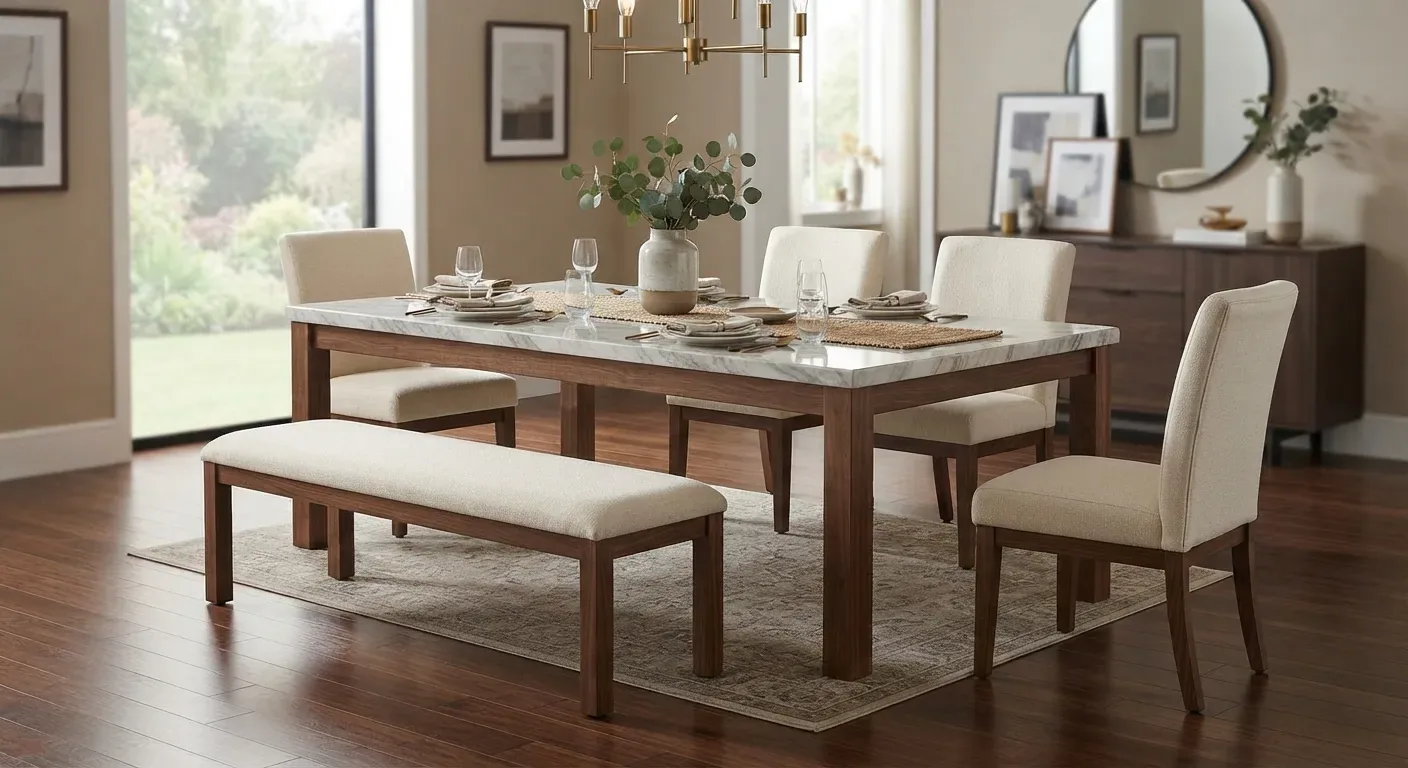
In a small dining area, often yes. A bench seats more people in the same length, tucks fully under the table and leaves a clean line when not in use. A bench against a wall, or a built-in banquette, saves the most space.
The trade-off is comfort: benches without backs are less comfortable for long meals and harder for older family members. A bench on one side with chairs on the other is a good compromise.
Which Table Top Surface Suits Indian Meals?
One that tolerates turmeric, oil, hot dishes and daily wiping.
- Solid wood or veneer: warm and repairable; needs coasters and mats, marks with heat and water
- Laminate: durable, easy to wipe, wide range of looks
- Marble: beautiful but porous; turmeric and lemon can stain and etch it
- Quartz or sintered stone: stain-resistant and durable; heavy
- Glass: easy to wipe but shows every mark and can feel cold
If you love marble, accept that it will develop marks, or use table mats consistently.
Are Extendable Dining Tables Worth It?
For households that host regularly but have a small dining area, yes. An extendable table stays compact for daily use and opens for guests. Check how the extension works, whether one person can do it, and where the leaf is stored. Cheap mechanisms stick or sag over time.
Why Must the Table Position Be Fixed Early?
Because the pendant light above it is wired before the ceiling is built. A pendant that does not line up with the table centre looks wrong every evening and is disruptive to move. Fix the table size and position before the electrical and false ceiling work.
Our guide to false ceiling design covers lighting over the dining table.
What Should You Decide Before Buying a Dining Table?
- Daily seats needed, and how you will seat guests
- Shape that suits the space
- Clearance on every side where chairs go
- Chairs, bench or a mix
- Top surface for how you eat
- Final position, before the pendant is wired
On a turnkey fit-out, Gunmala Interiors includes loose furniture, so the dining table is chosen with the crockery unit, pendant and partition rather than after them. See also our guide to living room partitions.
Frequently Asked Questions
What size dining table do I need?
One that seats the household daily plus one or two. A four-seater suits most 1BHK and 2BHK homes; a six-seater suits larger families. Use a bench, folding chairs or an extendable table for occasional guests.
Is a round or rectangular dining table better for a small space?
A round table suits small, square-ish spaces and four people, with no sharp corners. A rectangular table suits longer spaces and can sit against a wall.
How much space is needed around a dining table?
Enough to pull out a chair and sit, plus room to walk behind a seated person where there is a walkway. A bench against a wall needs no pull-out space.
Are dining benches comfortable?
Less so than chairs for long meals, and harder for older family members. A bench on one side with chairs on the other balances space and comfort.
Which table top is best for Indian food?
Laminate and quartz or sintered stone resist turmeric and oil stains well. Wood and veneer are warm but need mats. Marble is porous and can stain and etch.
Is an extendable dining table worth it?
For small dining areas in homes that host regularly, yes. Check the mechanism is easy for one person and that the leaf has somewhere to be stored.
When should the dining table position be fixed?
Before the electrical and false ceiling work, because the pendant light above it is wired then. A pendant off-centre from the table is disruptive to move.
Can a dining table go against a wall?
Yes, especially a rectangular one in a small space. A bench or banquette on the wall side saves the most room.
Key Takeaways
- Size the table for daily meals, and add a bench or extension for guests.
- Round tables suit small square spaces; rectangles suit long ones.
- Benches save space, especially against a wall.
- Choose a top that tolerates turmeric, oil and hot dishes.
- Fix the table position before the pendant is wired.
See our guide to crockery unit design, or book a site visit to plan your dining area.