In most Indian homes, shoes come off at the door. That single habit decides the foyer: it needs storage for every pair the household wears, a place to sit while taking them off, and a way to keep the smell of shoes out of the living room. Everything else (the mirror, the art, the lighting) comes after those three are solved.
What Does a Foyer Need to Do?
| Need | Usual answer |
|---|---|
| Shoe storage | A ventilated shoe cabinet sized for the household |
| A place to sit | A bench, often built over the shoe cabinet |
| Keys, wallets, masks | A small drawer or tray at hand height |
| A last look before leaving | A mirror |
| Umbrellas and bags | Hooks or a narrow tall section |
| Screening the living room | A partition or panel, where the layout needs it |
How Big Should the Shoe Cabinet Be?
Count the pairs. List the shoes each person wears regularly, add guests' and seasonal pairs, and size the cabinet for that number with some spare. A cabinet that is too small means shoes pile up on the floor in front of it, which defeats the purpose.
Seasonal and rarely worn shoes can live in a wardrobe loft or elsewhere, so the foyer cabinet only holds what is worn each week. Adjustable or tilted shelves fit more pairs in less depth.
How Do You Stop a Shoe Cabinet From Smelling?
With airflow and moisture-resistant materials. A closed cabinet with no ventilation traps moisture from shoes, especially in the monsoon, and smells within weeks.
- Ventilated shutters: louvres, jaali, or perforated panels
- A gap at the back or top to let air move
- Moisture-resistant board and edge banding on every edge
- Wipeable shelves, or removable trays that can be washed
- Wet shoes left out to dry before going in
Our guide on foyer shoe unit renovation covers what goes wrong with existing units.
Should a Foyer Have a Seat?
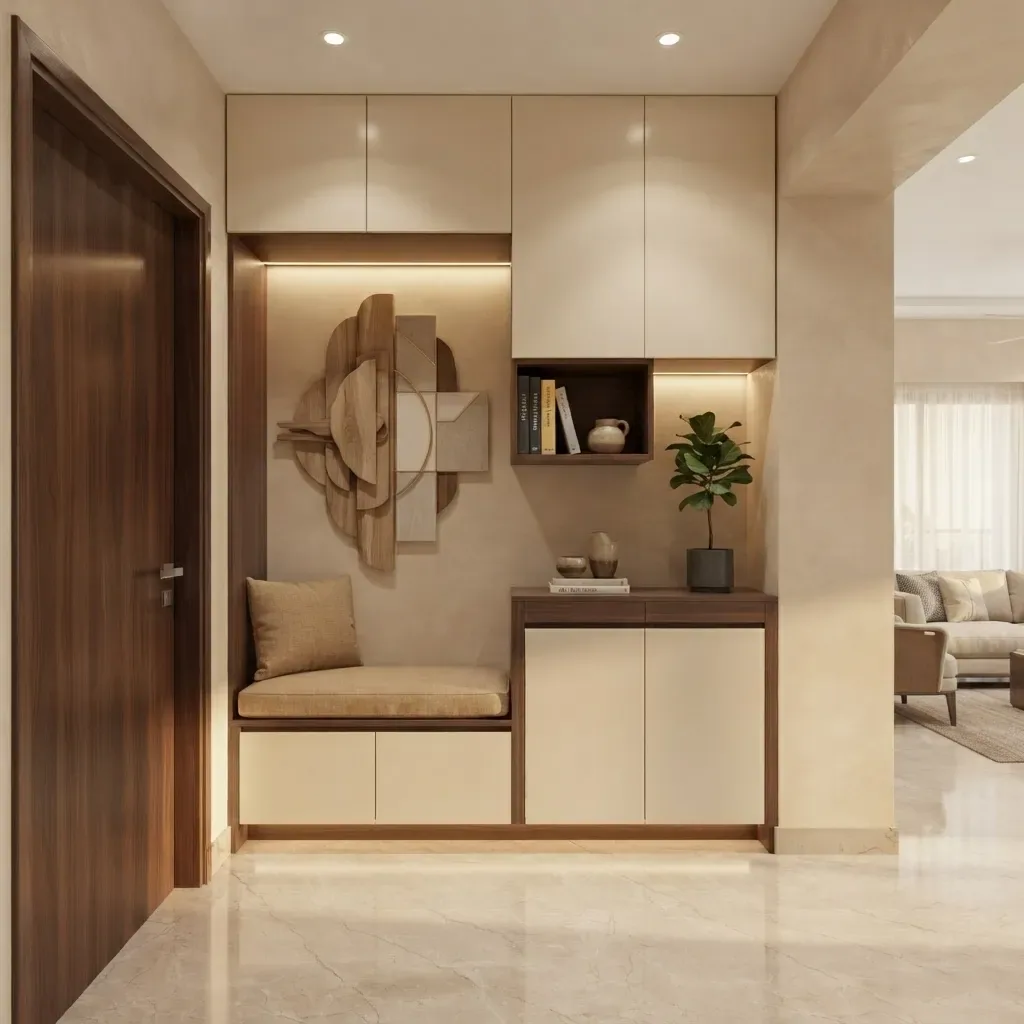
Yes, if there is any space for one. Taking shoes off and putting them on standing up is awkward, especially for older family members and children. A bench built over or beside the shoe cabinet uses the same footprint twice.
What If There Is No Real Foyer?
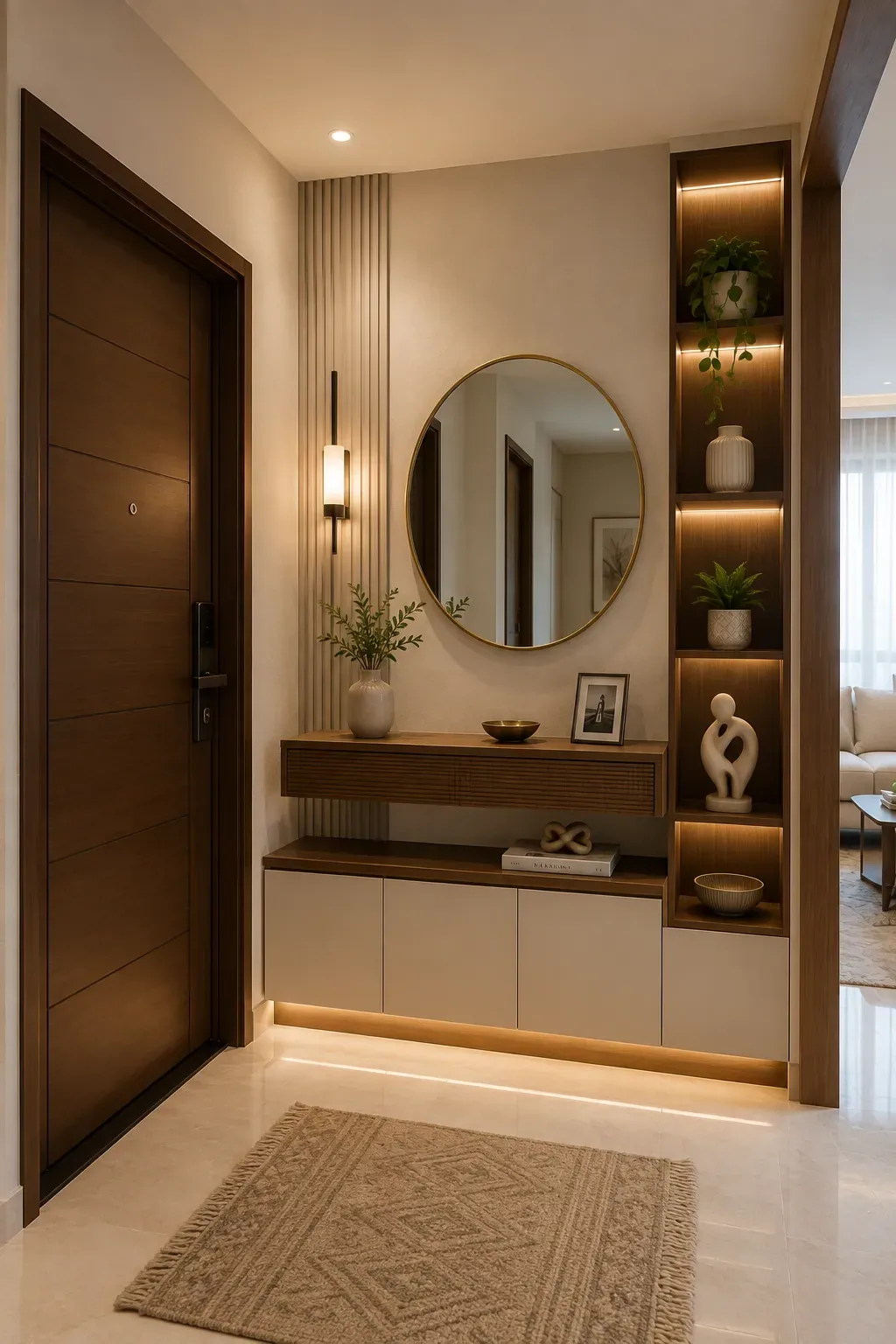
In many Bengaluru flats, the front door opens straight into the living room. A foyer can still be created along the wall beside the door: a slim shoe cabinet, a wall-mounted shelf or tray for keys, a mirror above, and a light. Keep the depth shallow so it does not narrow the walkway.
Where the door opens directly into the seating area, a partition or slatted screen can give the entrance its own zone. Our guide to partition design covers the options.
How Should a Foyer Be Lit?
With a switch you can reach from the door as you enter, and light on your face at the mirror. A downlight above, a wall light beside the mirror, or a soft strip under a floating cabinet all work. A light under the shoe cabinet makes the floor easy to see and makes the cabinet look lighter.
What Other Details Make a Foyer Work?
- A key drawer or tray at hand height, close to the door
- Hooks for bags and umbrellas, with a drip tray for wet umbrellas
- Hard-wearing flooring and a washable mat at the door
- Finishes that match the living room, since the two are seen together
Many families also follow vastu guidance on what is placed at the entrance; if yours does, mention it before the foyer is drawn.
What Should Be Decided Before Designing the Foyer?
- Number of pairs to store in the foyer
- Seat, and who needs it
- Mirror, keys, bags and umbrellas
- Ventilation for the shoe cabinet
- Switch and light positions
- Whether the living room needs screening
Gunmala Interiors designs foyers as part of the woodwork on a new flat. The existing foyer design cost guide covers budgeting.
Frequently Asked Questions
How big should a shoe rack be?
Count the pairs the household wears each week, add some for guests, and size the cabinet for that with spare space. Store seasonal pairs elsewhere. Tilted or adjustable shelves fit more pairs.
How do I stop my shoe cabinet from smelling?
Use ventilated shutters or jaali, leave a gap for airflow, use moisture-resistant board with edge banding, add washable trays, and let wet shoes dry before putting them away.
Should a foyer have a seat?
Yes, if there is space. A bench over or beside the shoe cabinet makes taking shoes on and off easier, especially for children and older family members.
How do I create a foyer if my door opens into the living room?
Use the wall beside the door for a slim shoe cabinet, a key shelf, a mirror and a light. A partition or slatted screen can give the entrance its own zone.
How should a foyer be lit?
With a switch reachable from the door, light on the face at the mirror, and optionally a strip under the shoe cabinet to light the floor.
What should a foyer include?
Shoe storage, a seat, a place for keys, a mirror, hooks for bags and umbrellas, and good lighting.
Which material is best for a shoe cabinet?
Moisture-resistant board with every edge banded, and wipeable or removable shelves.
Should the foyer match the living room?
Yes. The two are seen together from the door, so finishes and colours should work as one.
Key Takeaways
- Size the shoe cabinet by counting pairs, and keep seasonal shoes elsewhere.
- Ventilate the shoe cabinet and use moisture-resistant materials.
- Add a seat; it is the detail families value most.
- Even without a real foyer, the wall by the door can do the job.
- Put a switch where your hand reaches as you walk in.
See our guide to partition design, or book a site visit to plan your entrance.