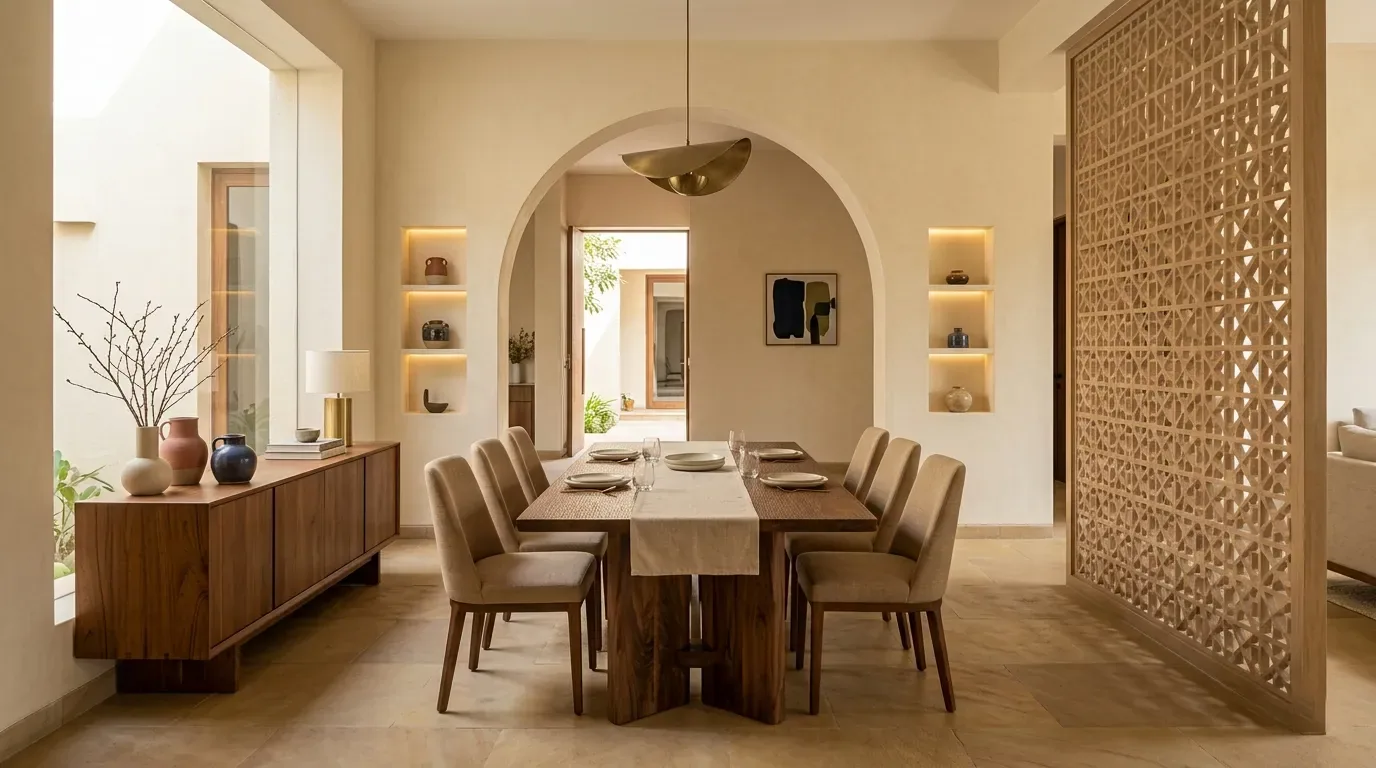
Jaali, the pierced screen of Indian architecture, has come back into modern flats through CNC cutting, which makes intricate patterns affordable in board and metal. It filters light and views, lets air through, and adds pattern without a single extra object in the room. The practical choices are the material, the scale of the pattern, and where it sits.
Which Material Should a CNC Jaali Be Made From?
| Material | Strengths | Watch for |
|---|---|---|
| MDF | Smooth cut edges; paints beautifully | Must be sealed; swells if moisture reaches cut edges |
| HDHMR | More moisture resistant and stronger than MDF | Heavier; still needs sealed edges |
| Metal (MS, aluminium, brass finish) | Thin, strong, heat tolerant | Can be colder looking; finish must resist rust |
| Solid wood or veneered board | Warm, natural grain | Fine patterns can chip; needs polishing |
Every cut edge in a board jaali is exposed board. Sealing and painting all those edges properly is what keeps it from swelling in humid months.
How Do You Choose the Pattern Size?
By the job and the distance it is seen from. Larger openings let more light and air through and are easier to clean; smaller, intricate patterns give more privacy and detail but collect dust and soot. A large screen seen from across a room suits a bolder pattern; a small pooja door seen up close suits finer detail.
Where Does Jaali Work in a Flat?
- Partitions between foyer, living and dining
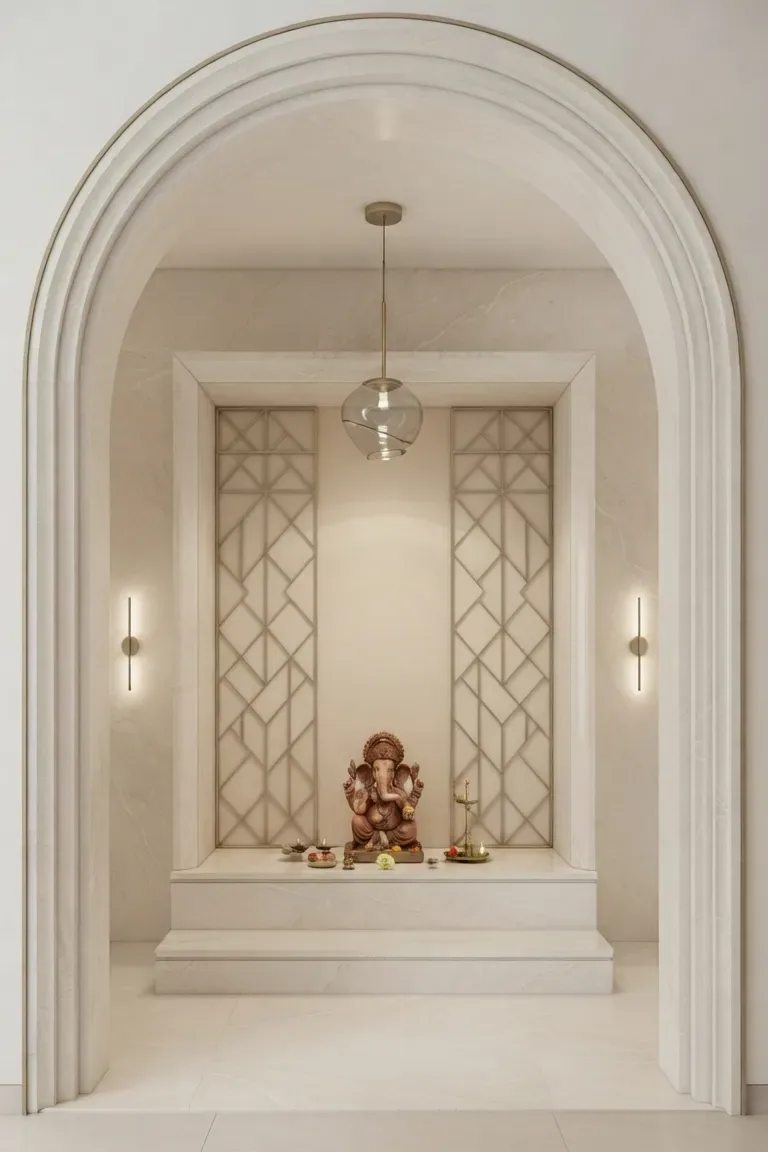
- Pooja unit doors and side panels, where it lets diya smoke out
- Shoe cabinet and utility doors, for ventilation
- Backlit wall panels as a feature
- Ceiling features, with lights above
- AC and service covers, hiding equipment while letting air flow
Why Is Jaali So Common in Pooja Units?
Because it solves the pooja unit's main problem: closing the shrine while letting diya smoke escape and light glow through. Our guides to pooja room doors and mandir design cover this in detail.
How Should a Jaali Be Backlit?
With an LED strip or panel set behind the jaali at enough distance for the light to spread evenly. Too close and you see bright spots through the openings. Warm white suits most jaali features. Plan the power point and driver access before the jaali is fixed.
How Do You Keep a Jaali Clean?
With a soft brush or vacuum brush attachment, regularly. Fine patterns trap more dust; matt painted finishes hide it better than gloss. In pooja units, soot settles on jaali near the flame, so choose a finish that can be wiped.
What Should Be Decided Before Ordering a Jaali?
- Its job: screen, ventilate, decorate or light
- Material for the location and moisture
- Pattern scale for the viewing distance
- Finish, with all cut edges sealed
- Backlighting and its power point
- Fixing to floor, ceiling or a frame
Gunmala Interiors makes CNC jaali as part of partitions, pooja units and panels. See our partition design guide.
Frequently Asked Questions
What is a CNC jaali?
A pierced decorative screen cut by a computer-controlled router from board or metal, which makes intricate traditional or modern patterns precise and affordable.
Which material is best for CNC jaali?
MDF for smooth painted finishes indoors, HDHMR for more moisture resistance, metal for thin, strong and heat-tolerant screens, and wood or veneer for natural warmth.
Does MDF jaali get damaged by moisture?
It can swell if moisture reaches the cut edges. All edges must be sealed and painted properly, and MDF jaali should be kept away from damp areas.
Where can jaali be used in a flat?
In partitions, pooja units and doors, shoe and utility cabinet doors, backlit wall panels, ceiling features and covers for AC units.
How do I choose a jaali pattern?
By its job and viewing distance. Larger openings let more light and air through and are easier to clean; finer patterns give more privacy and detail.
How should a jaali be backlit?
With an LED strip or panel set far enough behind the jaali for even light, in warm white, with the power point and driver access planned first.
How do I clean a jaali?
With a soft brush or vacuum brush attachment regularly. Matt finishes hide dust better; finishes near a diya should be wipeable.
Is metal jaali better for a pooja unit?
Metal tolerates heat from a diya better than board and is thinner, which makes it a good choice near the flame.
Key Takeaways
- Jaali filters light, view and air in one panel.
- Seal every cut edge of a board jaali.
- Choose pattern scale by job and viewing distance.
- Backlight from a distance to avoid hot spots.
- Fine patterns look rich but need more cleaning.
See our pooja room door guide, or book a site visit.