A TV unit is judged on one thing people rarely mention: whether you can see a single wire. Everything else (the panel, the console, the shelves) is easy to get right once the TV height, the devices underneath and the cable route are fixed. Those three decisions have to be made before the electrician starts, which is why most TV walls that look unfinished were planned in the wrong order.
How High Should the TV Be Mounted?
So that the centre of the screen is roughly at eye level when you are seated. In most living rooms that is lower than people expect, because sofas are low. A TV mounted high, like in a showroom, makes you tilt your head back for every film.
Viewing distance depends on the screen size; a larger TV needs more distance. Measure from the sofa to the TV wall before choosing the screen size, and before designing the unit around it. In many Bengaluru 2BHKs the living room is not deep, which favours a moderate screen at the right height over a very large one.
If the TV may be replaced with a larger one later, allow for it: leave the mounting backing and the panel wide enough for the next size up.
Wall-Mounted or Floor-Standing TV Unit?
| Wall-mounted (floating) console | Floor-standing unit | |
|---|---|---|
| Look | Light, floor visible underneath | Grounded, more substantial |
| Cleaning | Easy to mop under | Dust collects at the base unless sealed to the floor |
| Storage | Limited by wall strength and depth | More, including heavy items |
| Wall needed | Solid wall for fixing | Any wall |
| Suits | Small and medium living rooms | Rooms needing more storage |
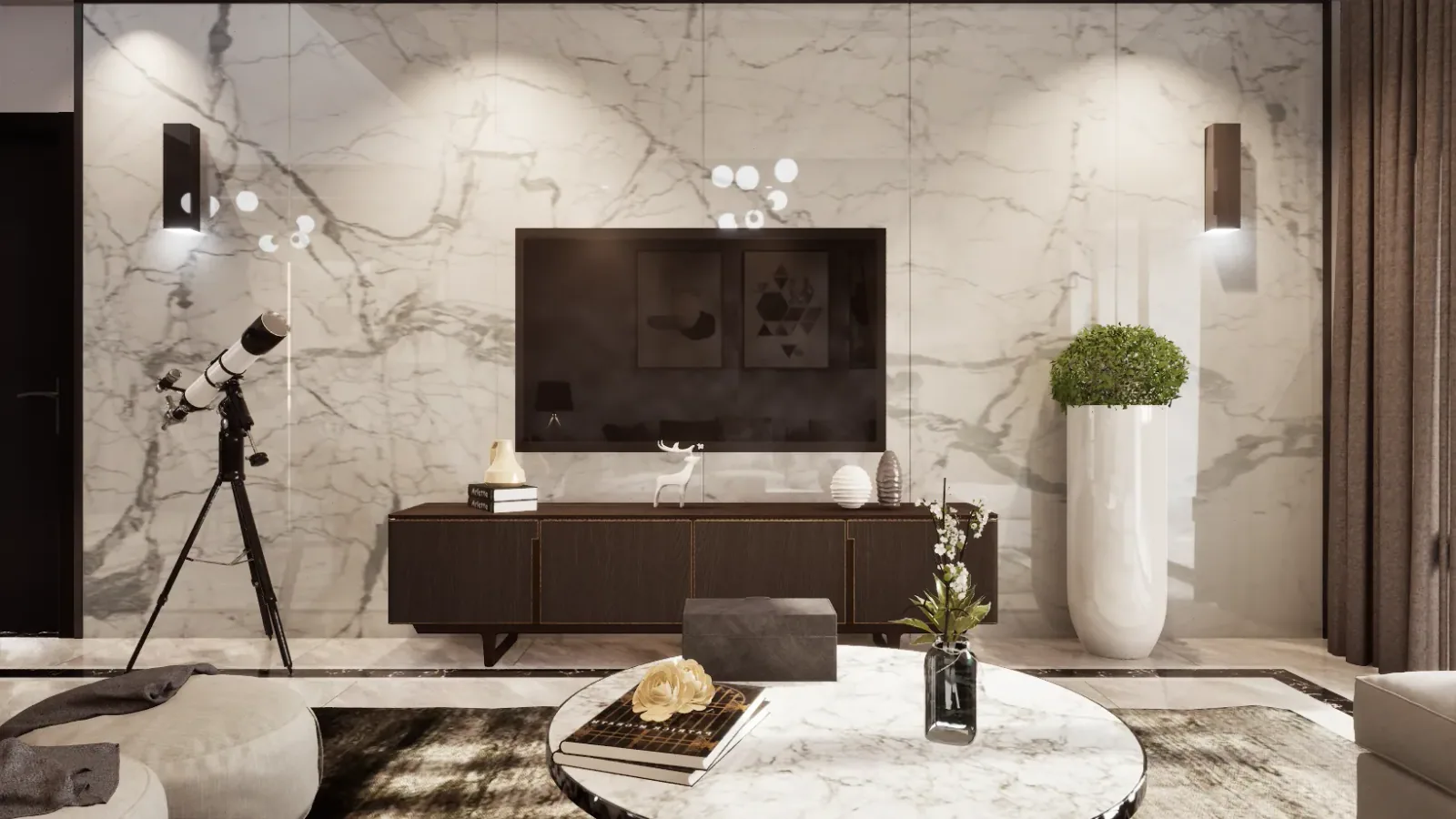
A floating console makes a small living room feel larger because the floor runs uninterrupted under it. It needs a wall that can take the fixing; a hollow or partition wall needs a different approach.
What Storage Should a TV Unit Have?
Closed drawers for most things, a little open space for devices that need airflow and a remote signal.
- An open or perforated section for the set-top box, router and console, because closed doors block remote signals and trap heat
- Closed drawers for remotes, chargers, board games, documents and the clutter a living room collects
- A few open shelves for display, kept to a minimum because they gather dust
A TV unit with only open shelves looks good on the day of installation and cluttered by the end of the month. Our guide on TV unit design and materials covers finishes and costs.
How Do You Hide the Wires Behind a TV?
By planning the cable route before anything is built. Three approaches work:
- A conduit in the wall from behind the TV down to the console, laid during the electrical work, before painting
- A back panel with a cable channel: the TV is mounted on a panel that stands slightly off the wall, with cables running behind it
- A grommet and cable tray in the console, so cables drop neatly into the unit
Place a power socket and a data point directly behind the TV position, at the height where the TV will hang. A socket at skirting level means a visible cable running down the wall.
Does a TV Unit Need a Back Panel?
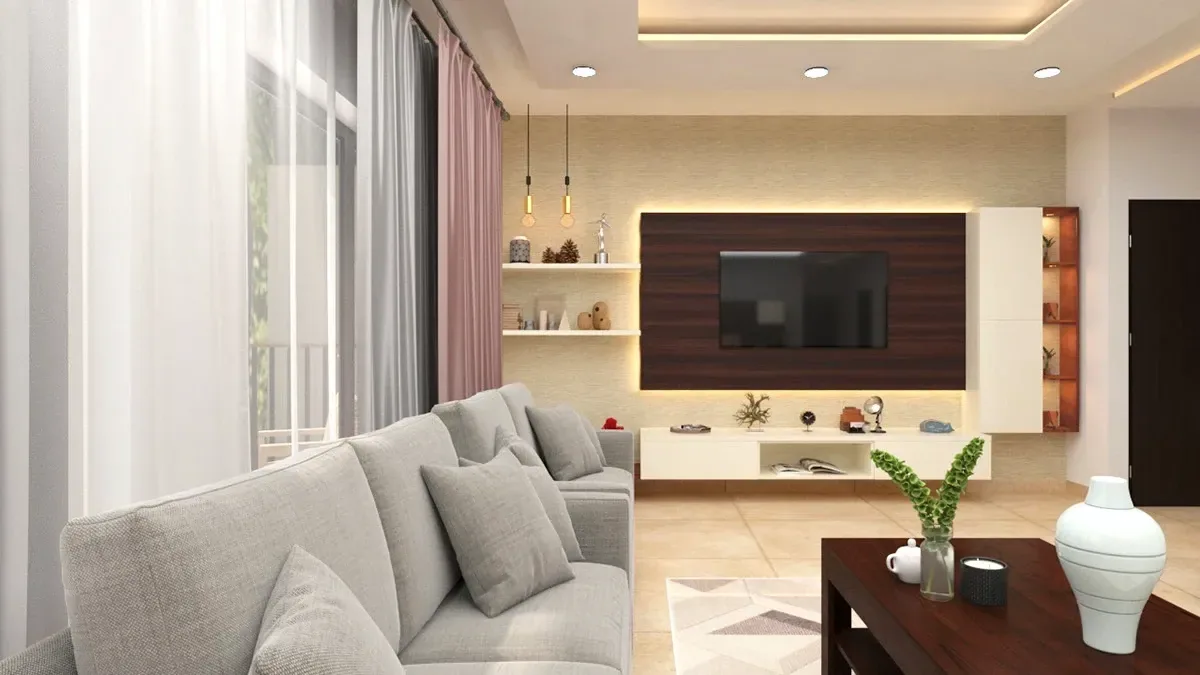
Not always, but it helps. A back panel frames the TV, hides the cables and gives the wall a focal point. It can be laminate, veneer, fluted panelling, or a stone or marble-effect surface.
Keep the panel in proportion to the wall. A panel that runs the full width and height of a small wall can overwhelm the room; one framing the TV with space around it usually looks more considered. Our guide on fluted panels and wall panelling covers materials and dust.
Backlighting a panel with an LED strip gives soft light behind the screen, which is easier on the eyes when watching in a dark room. Plan its power point too.
Can a TV Unit Double as a Partition?
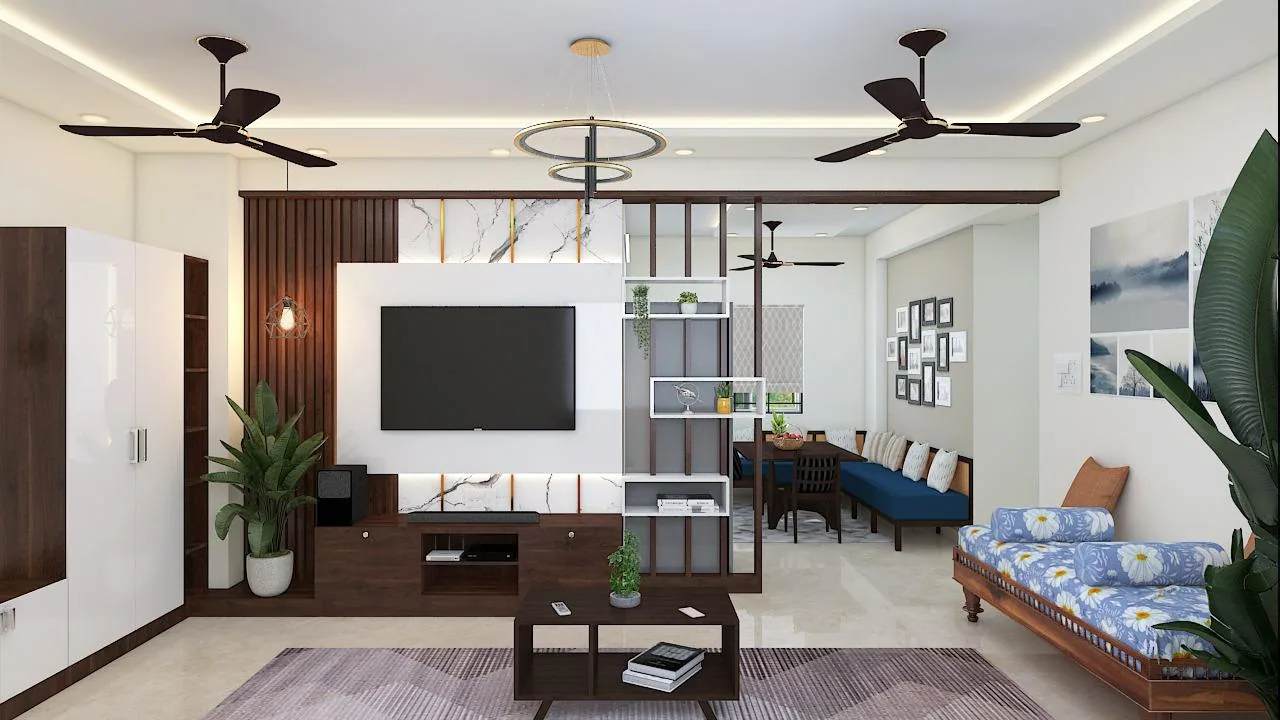
Yes, and in many open-plan Bengaluru flats it does. A TV wall with an open shelving column beside it can separate the living area from the dining area while letting light pass through.
The trade-off is that a partition TV unit has no wall to fix to on one side, so it needs its own structure, fixed to the floor and ceiling. Our guide to living room partition design covers the options.
Which Materials Suit a TV Unit?
A sturdy carcass board for the console, especially if it is floating, because it carries weight from a wall fixing alone. Laminate is the most durable finish for the console top, which gets handled daily. Veneer, PU paint and stone-effect panels suit the back panel, where they are seen more than touched.
Keep the TV unit's tones consistent with the rest of the living room woodwork and the flooring. A dark unit on a light floor becomes a strong feature; a light unit on a light floor recedes. Either can work; decide which you want.
What Must Be Decided Before the Electrician Arrives?
- Sofa position and viewing distance
- TV size and mounting height
- Devices that will sit in the console
- Power and data points behind the TV and inside the console
- The cable route, conduit or panel
- Power for any backlighting or shelf lighting
- Whether the wall can take a floating console
On a turnkey fit-out, Gunmala Interiors draws the TV wall with the electrical plan, so the conduit and sockets are where the TV and console will be. If you have an existing unit that has dated, see TV unit renovation.
Frequently Asked Questions
How high should a TV be mounted in the living room?
So that the centre of the screen is roughly at eye level when seated. That is usually lower than showroom height, because sofas are low. A TV mounted too high strains the neck.
Is a wall-mounted TV unit better than a floor unit?
A wall-mounted floating console suits small and medium living rooms: it looks lighter and is easy to clean under. A floor-standing unit holds more and suits rooms needing extra storage. A floating console needs a solid wall for fixing.
How do you hide TV wires?
Plan the cable route before building: a conduit in the wall laid during electrical work, a back panel with a cable channel, or a grommet and tray in the console. Put a power socket and data point directly behind the TV.
What storage should a TV unit have?
Mostly closed drawers for remotes, chargers and clutter, an open or perforated section for the set-top box and router so remote signals and heat can pass, and a few open shelves for display.
Does a TV unit need a back panel?
Not always, but a panel frames the TV, hides cables and gives the wall a focal point. Keep it in proportion to the wall; a panel covering an entire small wall can overwhelm the room.
Can a TV unit work as a room partition?
Yes. A TV wall with an open shelving column can separate living and dining areas while letting light through. It needs its own structure fixed to floor and ceiling.
Should the set-top box be inside a closed cabinet?
No. Closed doors block remote signals and trap heat. Use an open or perforated section for devices.
Which material is best for a TV unit?
A sturdy carcass board for the console, laminate for the console top which is handled daily, and veneer, PU paint or stone-effect surfaces for the back panel.
Key Takeaways
- Mount the TV with the screen centre near seated eye level.
- Floating consoles suit small rooms but need a solid wall.
- Put a socket and data point directly behind the TV.
- Plan the cable route before the electrician and painter.
- Mostly closed storage, with an open section for devices.
- Keep any back panel in proportion to the wall.
See our guide to fluted panels, or book a site visit to plan your TV wall.