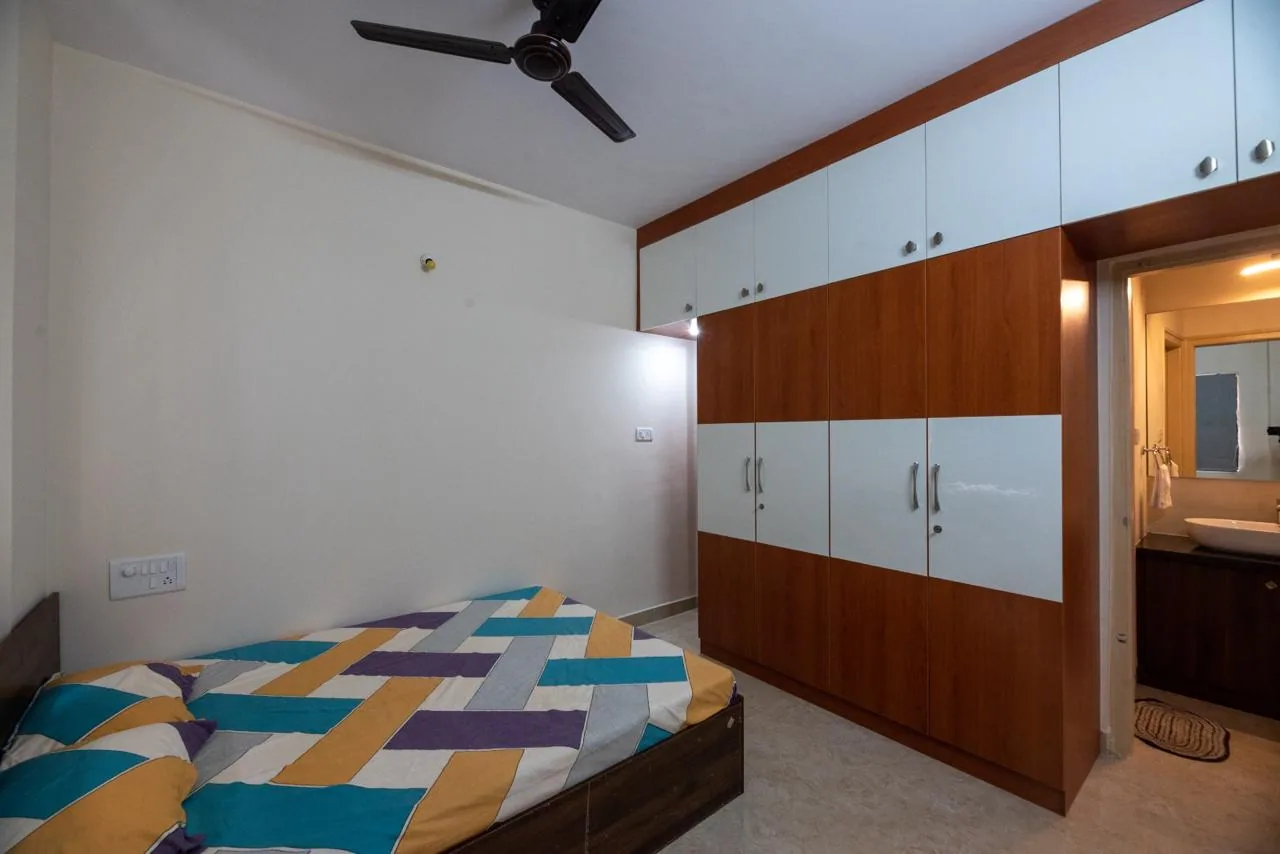
The space between the top of a wardrobe and the ceiling is some of the most useful storage in a flat, for exactly the things that have no other home: suitcases, spare bedding, festival items, things kept for one season a year. A loft makes that space usable. Designed badly, it becomes a dusty, hard-to-reach box with sagging doors.
What Should Go in a Loft?
Things used rarely and not too heavy to lift down: suitcases, spare quilts and pillows, seasonal clothes, festival decorations, boxed appliances. Daily items do not belong there, and nor do very heavy boxes, because lifting them down from height is a safety risk.
Separate Loft or One Tall Unit to the Ceiling?
| Separate loft | One tall unit | |
|---|---|---|
| Look | Visible joint between wardrobe and loft | Clean, uninterrupted shutters |
| Shutters | Short, light loft shutters | Very tall shutters, more prone to warping |
| Access | Clear separation of rarely used storage | Top shelves inside are hard to reach |
| Making and fitting | Easier | Needs good hinges and stable board |
How Deep and High Should a Loft Be?
Usually the same depth as the wardrobe below, so it lines up, and as tall as the space to the ceiling allows. A suitcase is the item most lofts are sized for, so measure your largest suitcase lying down before the loft height is fixed. In kitchens, loft depth is often less, to avoid hitting your head on the edge when standing at the counter below.
How Do You Stop Loft Shutters Sagging?
Use lighter shutters, good hinges and the right opening style. Lift-up shutters on gas struts are easy to open from below and stay open while you reach in; hinged shutters need the right number of hinges for their width. A loft shutter opened rarely still needs quality hinges, because the weight of a sagging door works on them all the time. Our guide on sagging loft doors explains what goes wrong.
How Do You Reach a Loft Safely?
With a proper step stool or a fold-away ladder, not a chair. Some families keep a slim ladder in the loft section itself or behind a wardrobe door. In kitchens, a pull-down mechanism can bring a lower loft shelf within reach. For older family members, keep anything they need below shoulder height and treat lofts as long-term storage.
How Do You Keep Lofts Free of Dust and Damp?
Close them fully with shutters rather than leaving them open, and store items in breathable bags or boxes. Lofts on outside walls or near bathrooms can get damp in the monsoon; check the wall and leave a small air gap. Open lofts high on a wall become dust traps within weeks in most Bengaluru flats.
What Goes in a Kitchen Loft?
Bulk stores, rarely used vessels, festival cookware and spare appliances. Keep oil and anything heavy lower down. A kitchen loft above the chimney needs space for the duct and should not trap heat; plan around it. Our guide to small kitchen design covers using height in the kitchen.
What Should Be Decided Before Building a Loft?
- What will be stored, and the largest item
- Separate loft or full-height unit
- Shutter type and hinges
- How it will be reached
- Wall condition and AC or duct positions above
Gunmala Interiors builds lofts with wardrobes and kitchens. If you have an existing wardrobe without a loft, see adding a loft to an existing wardrobe.
Frequently Asked Questions
What should be stored in a loft?
Rarely used items that are not too heavy to lift down: suitcases, spare bedding, seasonal clothes, festival items and boxed appliances.
Is a separate loft or a full-height wardrobe better?
A separate loft has shorter, lighter shutters and is easier to make; a full-height unit looks cleaner but its tall shutters need good hinges and stable board.
How high should a loft be?
As high as the space to the ceiling allows, and at least tall enough for your largest suitcase lying down.
Why do loft doors sag?
Usually because of too few or poor-quality hinges, or heavy shutters. Lift-up shutters on gas struts are a good alternative.
How do I reach a loft safely?
With a proper step stool or fold-away ladder, never a chair. Keep items older family members need below shoulder height.
Should lofts have shutters or be open?
Shutters. Open lofts high on a wall collect dust very quickly in most Bengaluru flats.
What goes in a kitchen loft?
Bulk stores, rarely used vessels, festival cookware and spare appliances. Keep oil and heavy items lower.
Can a loft be added to an existing wardrobe?
Often, yes, if the wardrobe carcass and wall can take it. A site check confirms whether it is possible.
Key Takeaways
- Lofts are for rarely used, not-too-heavy items.
- Size the loft for your largest suitcase.
- Good hinges or gas-strut lift-up shutters stop sagging.
- Always close lofts with shutters to keep dust out.
- Reach lofts with a proper step stool, not a chair.
See our guide to modular wardrobe design, or book a site visit.