The wall behind the bed is the one every visitor sees and the one you look at least, because you have your back to it. That makes it a feature wall that also has to be practical: something to lean against when reading, lights you can reach without getting up, and switches where your hand falls. Get those right and the design can be almost anything.
What Are the Main Options for a Bed Back Wall?
| Option | What it is | Suits |
|---|---|---|
| Upholstered headboard | A padded headboard on the bed or fixed to the wall | Anyone who reads or sits up in bed |
| Wall panelling | Laminate, veneer or fluted panels behind the bed | A warm, finished look; hides wiring |
| Paint or texture | An accent colour or textured finish | Simple, easy to change |
| Combination | Padded section in front of a panelled or painted wall | Comfort and a feature together |
The combination is the most common in current bedrooms: a padded headboard for comfort, with panelling or colour on the wall around it for the feature.
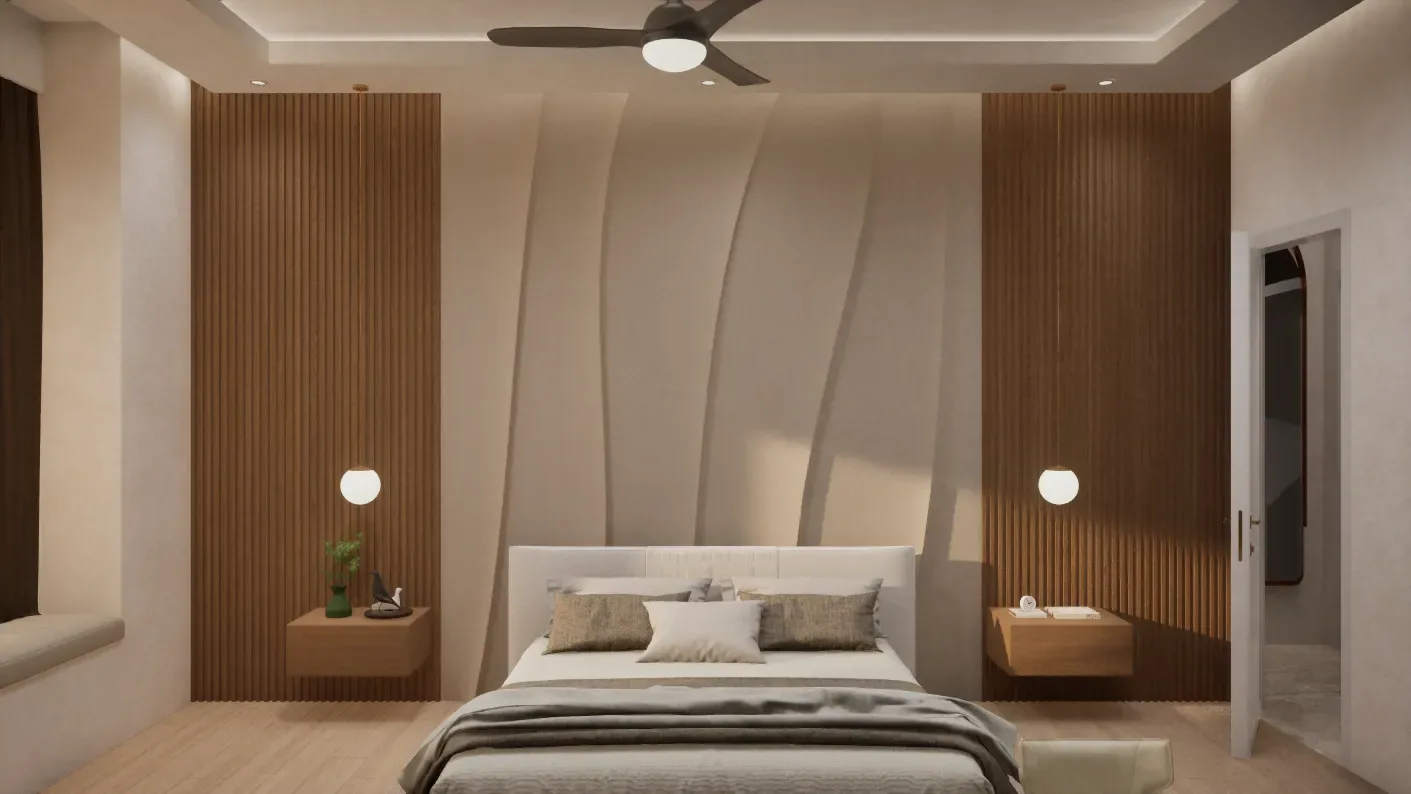
How Do You Make a Headboard Comfortable to Lean On?
Padding at the right height. If you read, work or watch in bed, the part your back and head rest on must be soft. A hard panel, stone or fluted wood directly behind your back is uncomfortable within minutes.
The padded section should start just above the mattress and rise high enough to support your head when sitting up. Choose a fabric that can be cleaned or a removable cover, because hair oil and daily contact mark a headboard faster than any other furniture surface. Leather-look and performance fabrics clean more easily than linen or velvet.
Which Materials Work for a Bed Back Wall?
- Laminate or veneer panels: warm, durable, can be grooved or framed
- Fluted or slatted wood: rhythm and shadow; collects dust in the grooves. Our fluted panel guide covers the details
- Stone or stone-effect panels: dramatic; keep them above head height or to the sides, not where you lean
- Wallpaper or printed panels: pattern without depth; easy to change
- Texture paint: subtle depth at low cost. See our texture paint guide
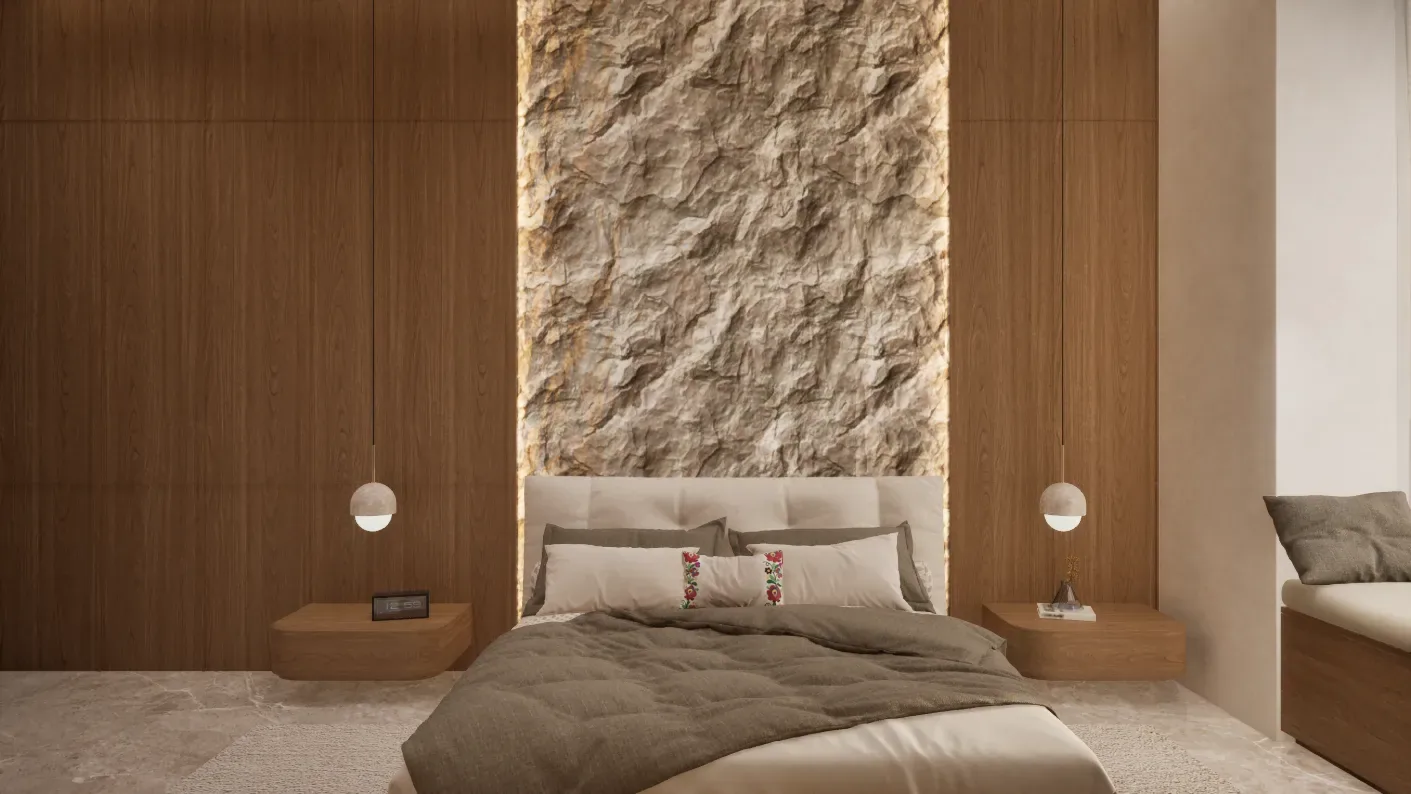
Where Should Bedside Lights and Switches Go?
Within reach of each person lying in bed, without getting up. This is the detail that most changes how a bedroom feels to live in.
- A reading light on each side: wall-mounted lights or pendants save side-table space
- A switch for the main room lights at each bedside, two-way with the door switch
- A charging socket at each bedside, above the side table rather than at floor level
- Optional backlighting behind a panel or along its top edge for soft evening light
These points are fixed by the electrician before the panel goes up, and the panel is drawn around them. Our lighting guide covers switching in more detail.
Should Side Tables Be Fixed or Freestanding?
Floating side tables fixed to the wall, or built into the panelling, keep the floor clear and make the bed wall read as one design. They suit small bedrooms. Freestanding side tables can be moved and replaced, and hold more in drawers.
Either way, the side table top should be roughly level with the mattress top, so reaching for a glass or phone is natural. Fix the height after the bed and mattress are chosen.
What If There Is a Window Behind the Bed?
It is common in Bengaluru flats, and it can work. Design the headboard to stop below the windowsill, and use panels or colour around the window rather than over it. Choose blinds that sit inside the window frame so they do not clash with the headboard.
Check for draughts and rain. A window behind the bed lets in light early, so blackout blinds may be worth it, and a leaking window frame in the monsoon will wet the headboard first.
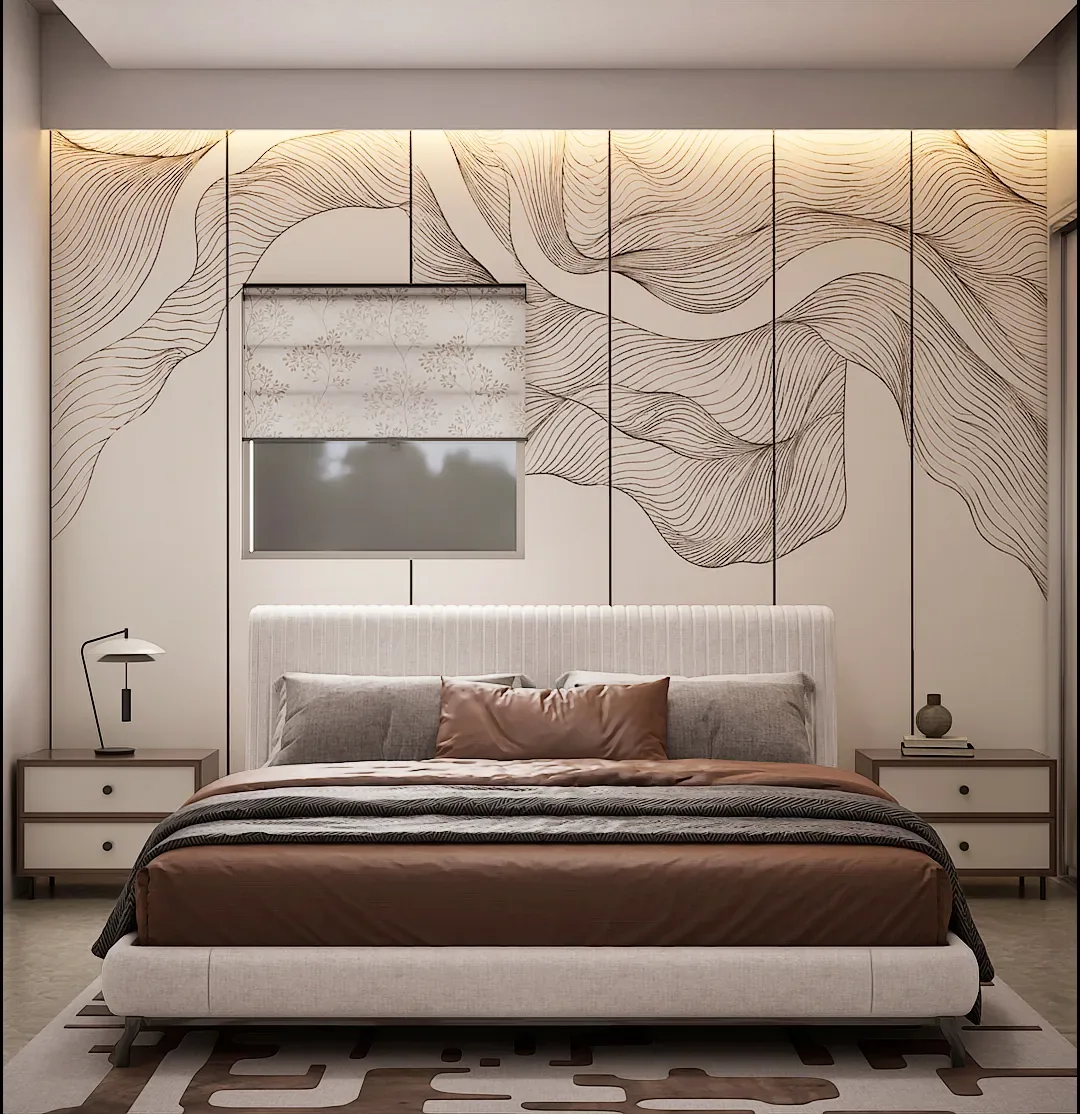
How Wide and Tall Should the Feature Be?
Wider than the bed, so side tables sit within it, and tall enough to feel deliberate. A feature the exact width of the bed looks pinched. A feature that runs wall to wall works in most bedrooms and is easier to finish cleanly at the corners.
For height, a panel that stops partway up the wall with a clean top edge keeps a small room from feeling closed in. Full-height panelling suits larger rooms and higher ceilings.
What Should Be Decided Before the Bed Wall Is Built?
- Bed size and position, and mattress height
- Whether you sit up in bed, and where the padding goes
- Bedside lights, switches and charging sockets on both sides
- Side tables: fixed or freestanding
- Any window, AC or switch board on that wall
- The wall is dry, with no damp
Gunmala Interiors builds bed walls with the rest of the bedroom woodwork, drawn together with the electrical plan. For updating an existing bed or headboard, see bed storage and headboard renovation.
Frequently Asked Questions
What is the best headboard design for a bedroom?
For most people, a padded headboard for comfort combined with panelling, colour or texture on the wall around it. That gives a feature wall and somewhere soft to lean when reading.
Which material is best for a bed back wall?
Laminate or veneer panels are warm and durable. Fluted wood adds rhythm but collects dust. Stone-effect panels are dramatic but should sit above head height. Paint and texture are simple and easy to change.
Where should bedside switches go?
Within reach of each person lying in bed: a two-way switch for the main lights at each bedside, plus a charging socket above the side table. These must be fixed before the panel is built.
Can you put a headboard under a window?
Yes. Keep the headboard below the windowsill, use panels or colour around the window, and choose blinds that sit inside the frame. Check the window does not leak in the monsoon.
Should side tables be wall-mounted?
Wall-mounted side tables keep the floor clear and suit small bedrooms. Freestanding ones hold more and can be moved. Set the height roughly level with the mattress top.
How wide should a headboard wall feature be?
Wider than the bed, so the side tables sit within it, or wall to wall. A feature exactly the width of the bed looks pinched.
Which fabric is best for an upholstered headboard?
One that cleans easily or has a removable cover, such as a performance fabric or leather-look material. Headboards get marked by hair oil and daily contact.
Can wiring be hidden behind a bed wall panel?
Yes. Panelling is a good way to hide wiring for bedside lights and sockets, provided the points are positioned by the electrician before the panel is made.
Key Takeaways
- Combine a padded headboard for comfort with a feature wall around it.
- Keep hard materials like stone above head height.
- Put a reading light, two-way switch and charging socket at each bedside.
- Make the feature wider than the bed, so side tables sit within it.
- Plan around windows, AC units and switch boards before drawing it.
See our guide to wall colour combinations, or book a site visit to plan your bedroom.