Most kitchens are lit from a single ceiling point behind the cook. That puts your own shadow exactly where you are chopping, and the wall units cast another over the back of the counter. Good kitchen lighting is mostly about getting light onto the counter from above and in front, which is why under-cabinet lights matter more than anything on the ceiling.
Why Is a Single Ceiling Light Not Enough?
Because you stand between it and the counter. A light behind you casts your shadow on the work surface; wall units above cast a second shadow along the back. The result is dim, uneven light where you need it most.
Which Lights Does a Kitchen Need?
| Light | Job | Notes |
|---|---|---|
| Under-cabinet strip | Lights the counter | The most useful kitchen light; on its own switch |
| Ceiling downlights | General light | Placed over the counter edge, not the room centre |
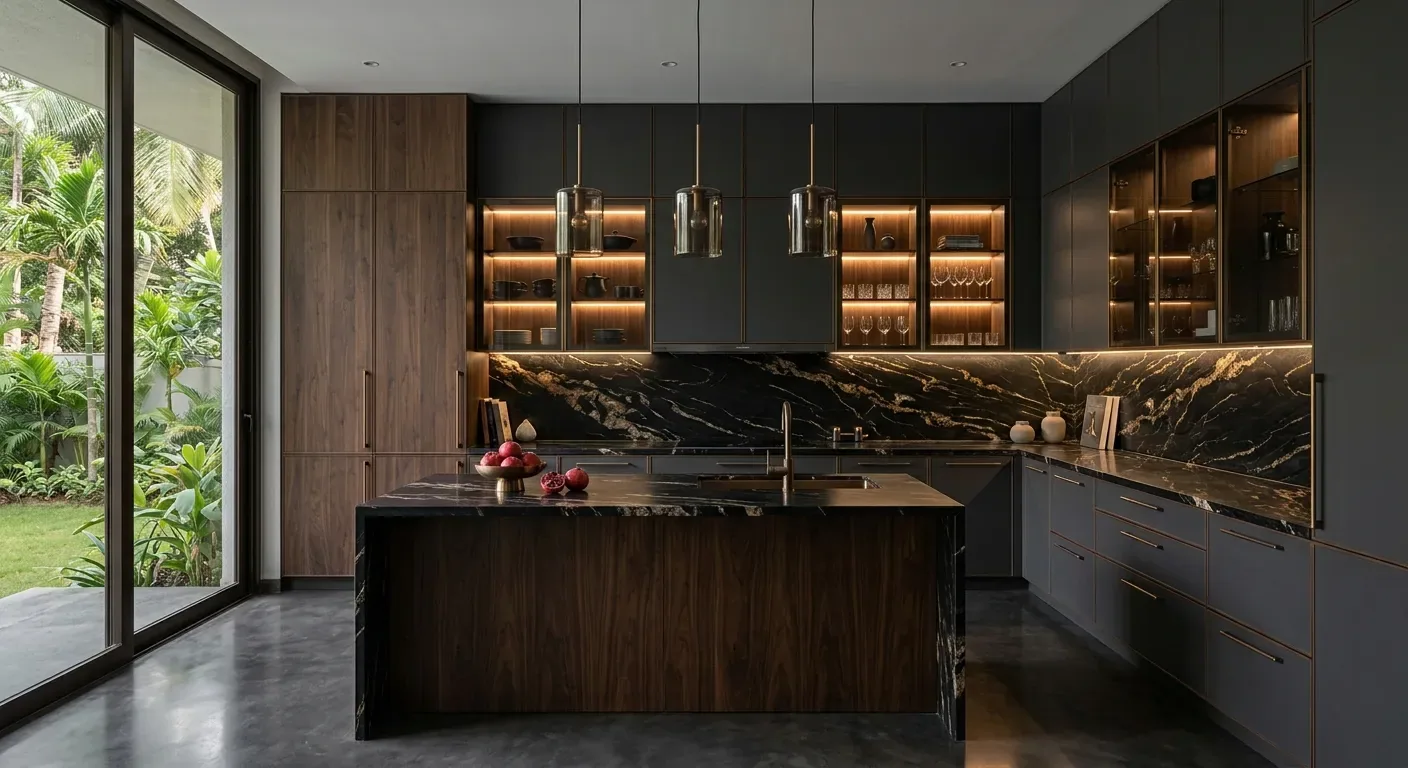
| Pendants | Light a breakfast counter or island | Centred on the counter |
| In-cabinet lights | Light glass or open display units, tall units | Optional; good in deep tall units |
| Chimney light | Lights the hob | Usually built into the chimney |
How Should Under-Cabinet Lights Be Fitted?
Toward the front edge of the wall unit, so light falls on the whole counter rather than only the backsplash. A recessed aluminium profile with a diffuser hides the LED dots and gives an even line of light. Use a continuous run along the counter, with a driver placed where it can be reached.

Where Should Kitchen Ceiling Lights Go?
Over the front edge of the counter, roughly above where you stand, so they light the work surface rather than the floor. A line of downlights following the counter run works better than a grid in the middle of the room.
Is Lighting Inside Cabinets Worth It?
In glass-fronted or open display units, yes: it turns glassware and crockery into a feature in the evening. In tall units, a sensor light that switches on when the door opens helps find things at the back. In ordinary closed wall units, it is rarely needed.
Warm or Cool Light in a Kitchen?
Neutral white (around 4000K) for under-cabinet and task lights, because it shows food colour accurately. If the kitchen is open to the living room, warmer pendants or a dimmable setting let the kitchen blend in after cooking. Keep colour temperatures consistent within each layer. Our lighting guide explains colour temperature and colour rendering.
How Should Kitchen Lights Be Switched?
By layer. Under-cabinet lights, ceiling lights and pendants should each have their own switch, reachable from the kitchen entrance and the counter. In open kitchens, a dimmer on the pendants is useful. Plan switch positions so they are not behind a fridge or tall unit; our switch and socket guide covers this.
What Should Be Decided Before the Kitchen Is Wired?
- Wall unit layout, so under-cabinet lights have points
- Ceiling light positions over the counter edge
- Breakfast counter or island position, for pendants
- Any display or tall unit lighting
- Driver locations with access
- Switch positions and layers
On a turnkey fit-out, Gunmala Interiors plans kitchen lighting with the kitchen woodwork drawings. See also small and parallel kitchen design.
Frequently Asked Questions
What is the most important light in a kitchen?
Under-cabinet lighting, because it lights the counter directly without your shadow or the wall units getting in the way.
Where should kitchen downlights go?
Over the front edge of the counter, roughly above where you stand, following the counter run, rather than in a grid in the middle of the room.
What colour temperature is best for a kitchen?
Neutral white, around 4000K, for task lighting, because it shows food colours accurately. Warmer or dimmable pendants suit open kitchens in the evening.
Are lights inside kitchen cabinets worth it?
In glass-fronted or open display units and deep tall units, yes. In ordinary closed wall units, rarely.
How should under-cabinet lights be fitted?
Toward the front edge of the wall unit, in a recessed aluminium profile with a diffuser, as a continuous run, with the driver placed where it can be reached.
Should kitchen lights be on separate switches?
Yes. Under-cabinet lights, ceiling lights and pendants should each have their own switch, so you can use them independently.
How should pendants over a counter be placed?
Centred over the breakfast counter or island, at a height that lights the surface without blocking the view across. Fix the counter position first.
When should kitchen lighting be planned?
With the kitchen woodwork drawings, before the electrician starts, so points are where the wall units and counters will be.
Key Takeaways
- Under-cabinet lights matter more than any ceiling light.
- Place downlights over the counter edge, not the room centre.
- Neutral white for cooking; warmer or dimmable for open kitchens.
- Switch each layer separately.
- Plan kitchen lighting with the woodwork drawings.
See our guide to open kitchen design, or book a site visit.