A showcase is where a household keeps the things it wants seen: brass and silver pieces, gifts, crockery sets, souvenirs, books. The design challenge is that most households own more of these than look good on display. A showcase works when it shows a few pieces well, behind glass or with light, and hides the rest in closed storage below.
What Should a Showcase Display?
A selection, not everything. Pick the pieces you value and look at, and give them space. A shelf with three objects reads as a display; a shelf with fifteen reads as storage. Rotate pieces seasonally or for festivals, keeping the rest in closed cabinets below.
Open, Glass-Fronted or Closed Sections?
| Section | Best for | Watch for |
|---|---|---|
| Glass-fronted | Silver, brass, crystal, collectibles | Fingerprints on glass |
| Open, lit | A few sculptural pieces, books | Dust, especially near windows |
| Closed cabinets | Everything not on display | None; the most useful part |
A good showcase is usually closed at the bottom, glass or lit open shelves at eye level, and closed or empty at the top.
How Should a Showcase Be Lit?
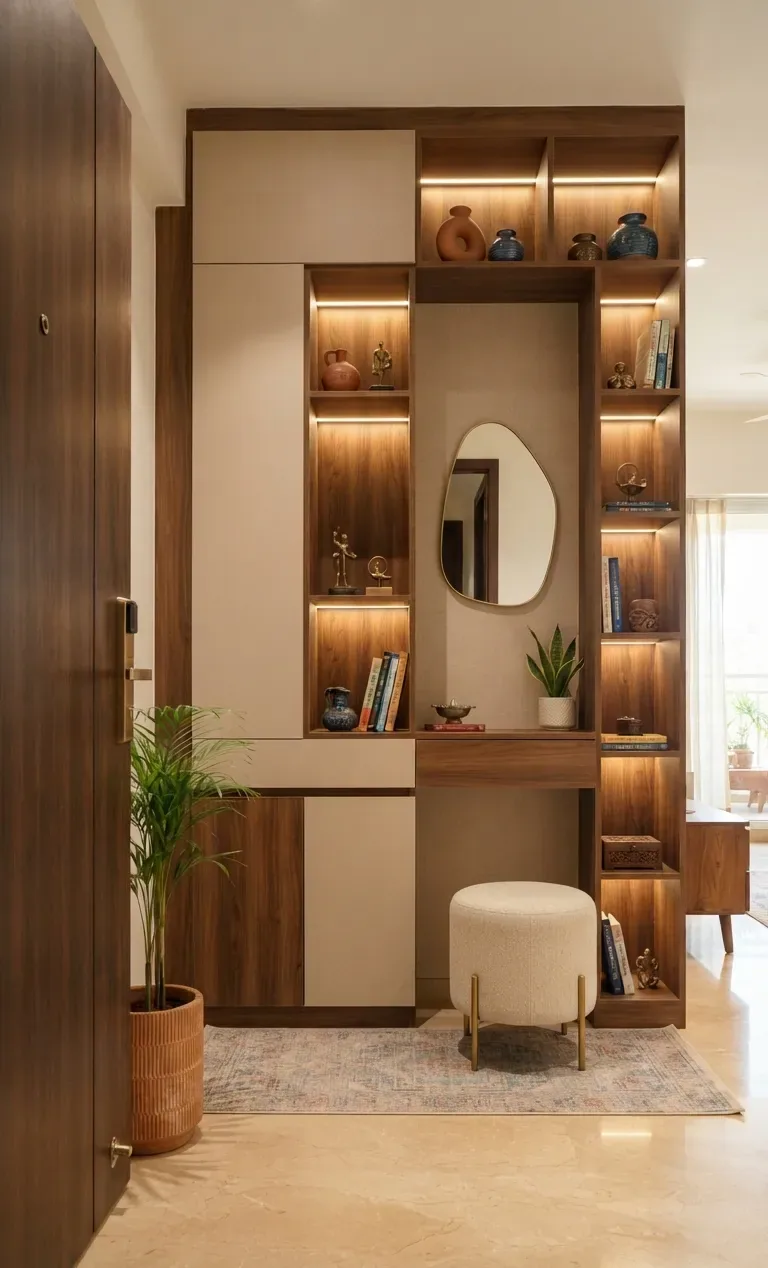
With lights inside each display section: LED strips along the shelf edges or at the back, in warm white. Glass shelves let light pass through to lower shelves. Lit display sections become a soft light source for the hall in the evening. Plan the power point inside the unit before painting.
Where Should a Showcase Go?
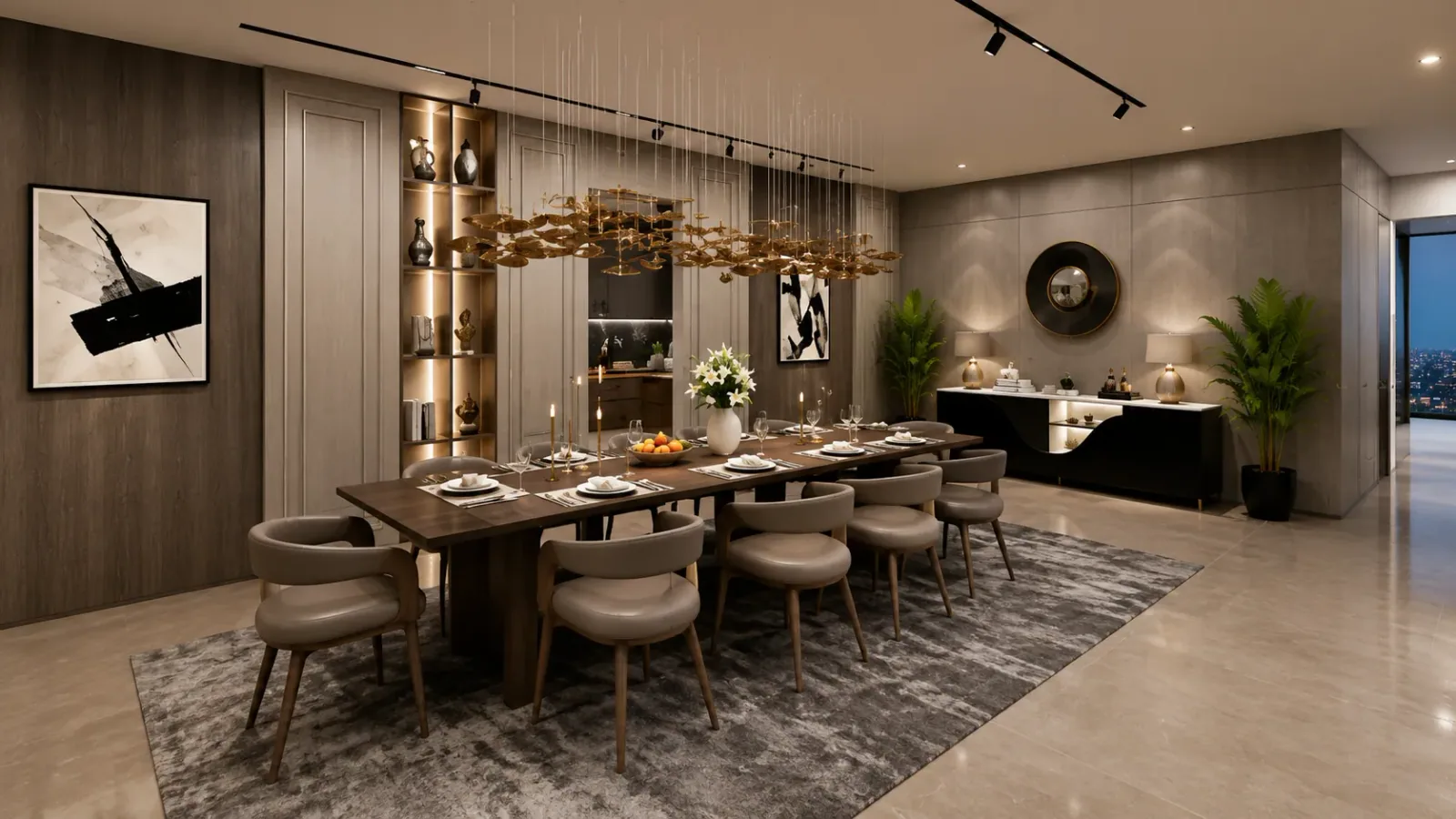
On a wall seen from the sofa or the entrance, away from direct sun, which fades and heats displayed items. Beside the TV, as part of the TV wall, or on the dining wall are common places. It can also be a partition between living and dining; our partition guide covers that.
How Deep Should Display Shelves Be?
Shallow for most objects, deeper only for plates or larger pieces. Deep display shelves invite things to be stacked two rows deep, and the back row disappears. Shallow shelves keep every piece visible.
Can a Showcase Be Combined With Other Units?
Yes, often: with the TV unit on one wall, with a crockery unit by the dining table, or with a bar unit. Our guides to crockery units, bar units and bookshelves cover each.
What Should Be Decided Before Building a Showcase?
- What will be displayed, and what stored
- The mix of glass, open and closed sections
- Lighting and its power point
- Location away from direct sun
- Shelf depths for the pieces
Gunmala Interiors builds showcases as part of the living and dining woodwork. See our hall interior design guide.
Frequently Asked Questions
What is a showcase in a living room?
A display unit for pieces the household wants seen, such as brass, silver, crystal, gifts and books, usually combined with closed storage.
Should a showcase have glass doors?
For silver, brass, crystal and collectibles, yes, because glass keeps dust off. A few sculptural pieces can sit on lit open shelves.
How should a showcase be lit?
With warm LED strips along shelf edges or at the back of each display section, with the power point planned inside the unit.
Where should a showcase go?
On a wall seen from the sofa or entrance, away from direct sun: beside the TV, on the dining wall, or as a partition.
How deep should display shelves be?
Shallow for most objects, so nothing hides behind something else. Deeper only for plates or large pieces.
How do I keep a showcase from looking cluttered?
Display a few pieces with space around them, rotate them seasonally, and keep the rest in closed cabinets.
Can a showcase be part of the TV unit?
Yes. A display section beside the TV is common, as long as it is kept sparse and the TV area stays calm.
What is the difference between a showcase and a crockery unit?
A crockery unit stores dinnerware for use; a showcase mainly displays. Many homes combine them by the dining table.
Key Takeaways
- Display a selection; store the rest.
- Closed below, glass or lit open shelves at eye level.
- Light display sections from within, in warm white.
- Keep shelves shallow so every piece is visible.
- Keep showcases out of direct sun.
See our hall interior design guide, or book a site visit.